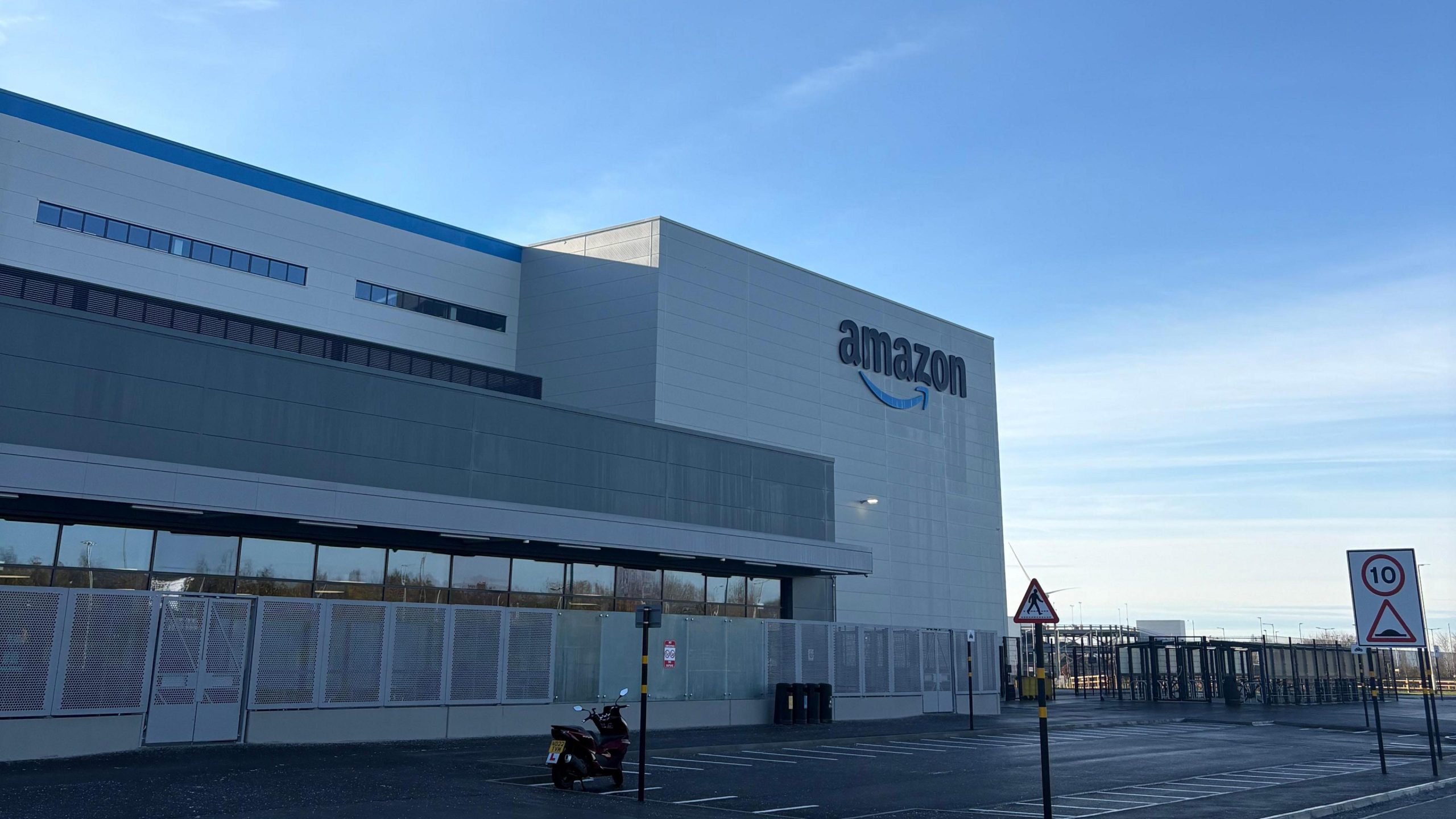
Amazon has opened one of its most advanced facilities in Europe — a sprawling £550 million warehouse packed with towering robots, autonomous vehicles, and state-of-the-art automation systems designed to redefine the speed and scale of modern e-commerce. The new fulfillment centre, located in the UK, stands as a landmark in Amazon’s long-term strategy to push deeper into robotics, AI-driven logistics, and hyper-efficient distribution technologies.
The warehouse covers more than half a million square feet and represents the company’s biggest single investment in the region. Inside, tens of thousands of products move through a synchronized system of robotic arms, conveyor belts, and automated storage grids that operate with near-perfect precision. Amazon says the technology increases speed, reduces human error, and allows workers to focus on specialized tasks rather than repetitive manual labor.
Robotic Giants Move Inventory at Unmatched Speed
At the core of the warehouse are Amazon’s new “Titan” and “Pegasus” robots — huge, multi-ton machines capable of lifting heavy pallets and navigating complex warehouse layouts without human guidance. These robots move across the floor on embedded digital tracks that map the building’s layout in real time. Their advanced sensors help them detect obstacles, adjust routes, and avoid collisions, ensuring smooth and continuous movement of inventory.
Other robots, including the smaller but faster autonomous shelf-carriers, glide under massive storage racks, lifting them effortlessly and bringing them to human pickers stationed around the facility. Workers say the system feels “like a dance,” with human and machine roles blending seamlessly as goods move across different stages of sorting, packing, and dispatch.
AI Handles the Flow of Millions of Items
Artificial intelligence sits at the center of the warehouse’s operations. Amazon’s proprietary AI forecasting tools analyze buying trends, optimize stock placement, and plan routes for robots long before orders are even placed. This predictive system reduces delays and ensures popular items stay closer to shipping lanes.
AI also monitors machine performance, predicting maintenance needs and preventing breakdowns that could slow order fulfillment. With millions of items passing through the center each week, any interruption can affect deliveries nationwide, making predictive maintenance essential.
A New Role for Human Workers
Although the warehouse is heavily automated, thousands of employees still work inside. Their responsibilities now focus on tasks that require judgment, safety oversight, and quality control. Workers receive real-time updates from handheld devices that guide them through each step, from scanning items to inspecting packaging for defects.
Amazon insists the technology enhances jobs rather than replacing them. The company says automation helps reduce physical strain, cuts down workplace injuries, and creates new technical positions in robotics maintenance, software support, and mechanical operations.
Safety Innovations Built Into the Facility
The facility includes advanced safety systems that track movements of both robots and humans. Sensors built into the floor, ceilings, and racks alert workers if they enter restricted zones. Some employees wear smart safety vests that communicate directly with robots, forcing the machines to slow or stop when humans approach.
Emergency protocols are also AI-managed, ensuring that fire doors, ventilation systems, and evacuation routes respond automatically to smoke or heat detection. These systems reflect Amazon’s growing emphasis on workplace safety, especially as robotic density increases.
A Warehouse Built for the Future of E-Commerce
Amazon designed the warehouse with expansion in mind. Modular robotics lanes, adjustable storage grids, and scalable software systems enable rapid upgrades as new technologies emerge. The company says this flexibility will allow the facility to remain state-of-the-art for decades.
The site also plays a major role in Amazon’s sustainability goals. Energy-efficient lighting, recycled construction materials, and smart power systems reduce emissions. Robots help optimize space usage, meaning fewer trucks are needed to move goods between facilities — lowering Amazon’s carbon footprint.
Impact on the UK Economy and Workforce
The £550m investment is expected to support thousands of new jobs and strengthen Amazon’s distribution network across the UK and Europe. Local officials say the warehouse will stimulate regional economic growth, attract suppliers, and position the UK as a leader in high-tech logistics innovation.
Industry analysts view the facility as a glimpse into the future of global retail, where AI, robotics, and rapid automation will define how products move from manufacturer to customer. As online demand continues to rise, Amazon’s strategy suggests that massive, intelligent warehouses will become the backbone of next-generation supply chains.
For now, the new warehouse stands as one of Amazon’s boldest steps toward redefining modern fulfillment — where huge robots, smart algorithms, and human expertise blend to deliver orders with unprecedented speed and efficiency.