
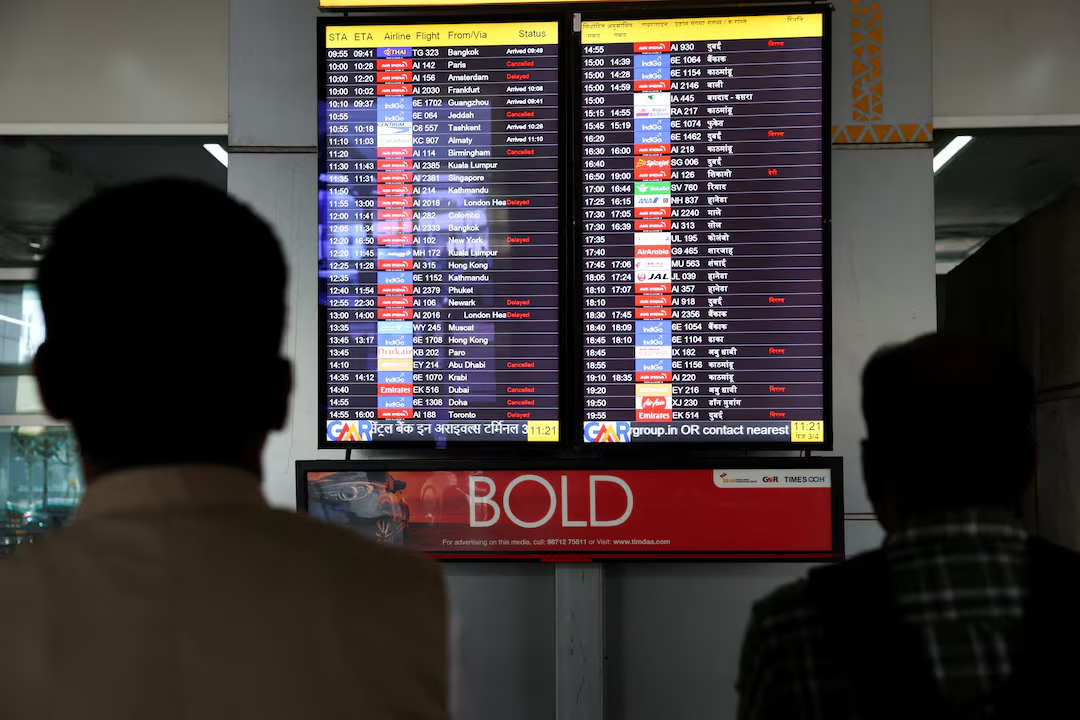
Dozens of repatriation flights were due to take off from the Middle East on Wednesday as governments try to bring tens of thousands of stranded citizens home. The airline shares selloff eased even as the US and Israeli air war against Iran escalated. Investors showed cautious optimism that the worst impacts might be manageable. The airline shares selloff had wiped tens of billions from market value in recent days.
The airspace over most of the Middle East remained largely empty on Wednesday. Major Gulf hubs, including Dubai, the world’s busiest international airport, remained shut for a fifth day. The crisis represents the biggest travel disruption since the COVID-19 pandemic. The airline shares selloff reflects this unprecedented situation.
Repatriation Efforts Begin
The first repatriation flights were due to leave for Britain and France on Wednesday. The United Arab Emirates opened special corridors to allow some citizens to return home. These operations contrast with the thousands of flights that normally take off in the region. The airline shares selloff moderates as evacuation progress occurs.
Marooned tourists and some expatriates have also tried to find their own way out. Ground transportation options remain limited given regional geography. The airline shares selloff may have overshot if repatriation proves feasible.
Share Price Stabilization
Airline shares were less volatile on Wednesday after double-digit percentage drops in the past few days. Lufthansa was up 1.7 percent at 1013 GMT, while Qantas was 2.7 percent lower. Both have lost more than 10 percent of their value this week so far, their worst week in almost a year. The airline shares selloff pause provides some relief.
BA-owner ICAG was up 2 percent, having fallen more than 11 percent in the past three days. The stabilization suggests investors are reassessing worst-case scenarios. The airline shares selloff may have been overdone.
Operational Challenges
Airline executives have said that crew and pilots are now scattered across the world. This dispersal complicates the process of resuming flights when airspace reopens. The airline shares selloff reflects these logistical hurdles. Soaring prices of oil will also add to carriers’ costs.
Other analysts said that flights will become more expensive as longer routes become the only options for international carriers. Rerouting adds time and fuel consumption. The airline shares selloff incorporates these higher cost expectations.
Cargo Disruption
The Gulf is also a major hub for air cargo, putting further pressure on international trade routes. Freight operators face same airspace closures as passenger carriers. The airline shares selloff affects cargo divisions as well. Supply chain disruptions may ripple through global economy.
Time-sensitive goods including pharmaceuticals and perishables face particular challenges. Alternative routes may not preserve required transit times. The airline shares selloff reflects broader trade implications.
Asian Airline Performance
Most Asian airline shares pared losses from earlier this week. Korean Air Lines shares fell 7.9 percent, after dropping 10.3 percent on Tuesday. The pattern shows gradual stabilization across markets. The airline shares selloff moderates in Asia as well.
Gary Ng, a senior economist at Natixis, offered perspective on regional differences. “It is just a different market reaction time as many European airlines have already reacted more since the war started,” he said. The shares selloff occurred earlier in Europe.
“As the market prices in a longer-duration war with higher energy prices and weaker currencies, it affects the whole sector broadly, including APAC airlines,” Ng added. Regional impacts may converge over time.
Market Timing Factors
South Korea’s stock market was closed on Monday when most airline and travel stocks bore the brunt of the impact from the conflict. This timing explains some of the delayed reaction. The shares selloff hit different markets at different times.
Japan Airlines stock fell 2.9 percent on Wednesday, after losses of 6.4 percent on Tuesday. Major Chinese carriers Air China and China Southern Airlines closed down between 1 and 3 percent. The shares selloff continues but at reduced pace.
Oil Price Impact
Oil prices have risen sharply this week, with Brent crude up around 14 percent since the US-Israeli strikes on Iran. Higher fuel costs directly affect airline operating margins. The airline shares selloff reflects this input cost pressure. Hedging is expected to help mitigate some of the increases.
Lorraine Tan, director of equity research for Asia at Morningstar, provided analysis on fuel cost management. “Recent guidance indicates that the airlines have hedged around 50 percent of their jet fuel needs,” she said. The airline shares selloff may overstate unhedged exposure.
“In general, they should be able to pass through the balance of the price rise to passengers,” Tan added. Demand conditions will determine how much can be passed through. The airline shares selloff assumes some pricing power.
Passenger Impact
Thousands of travelers remain stranded across the Middle East. Repatriation flights offer hope but cannot accommodate everyone immediately. The airline shares selloff reflects operational paralysis. Hotels and other accommodations face extended stays.
Travel insurance may cover some costs but policies vary widely. Airlines have cancellation and refund policies for affected flights. The airline shares selloff incorporates compensation liabilities.
Duration Uncertainty
The conflict’s duration remains highly uncertain. Airspace closures could continue weeks or months depending on military developments. The airline shares selloff prices in extended disruption. Diplomatic efforts could accelerate resolution but no clear path evident.
Alternative routes add significant time to journeys. Europe-Asia flights normally overflying the region must find new paths. The airline shares selloff reflects permanent route changes.
Historical Comparison
Industry observers compare current situation to COVID-19 pandemic disruptions. That crisis lasted years with profound industry restructuring. The airline shares selloff raises questions about similar scale. However, regional conflict differs from global pandemic in important ways.
Government support during COVID kept many airlines solvent. Similar assistance may be forthcoming given strategic importance. The airline shares selloff may anticipate political response.
Outlook
The airline shares selloff has paused but could resume if conflict escalates further. Repatriation progress provides positive news amid otherwise bleak situation. Market stabilization reflects cautious reassessment.
Investors will watch for airspace reopening announcements and fuel price trends. Diplomatic developments could quickly change market sentiment. The airline shares selloff may prove temporary if conflict resolves.
For now, airlines face unprecedented operating environment with major hubs closed indefinitely. The airline shares selloff reflects these challenges while awaiting clarity on duration and resolution.


