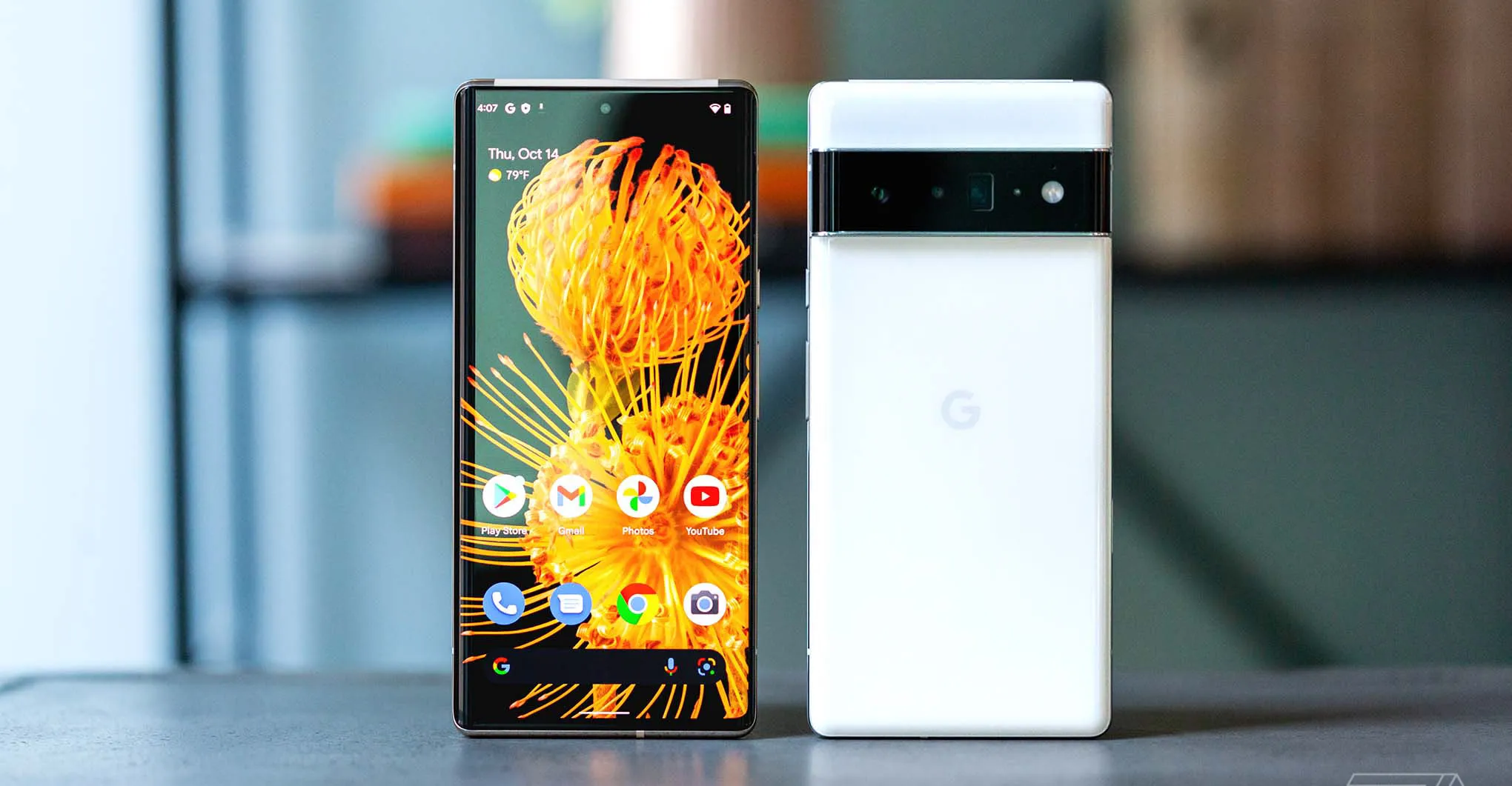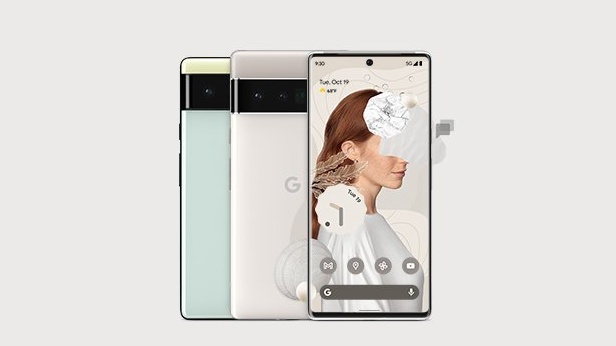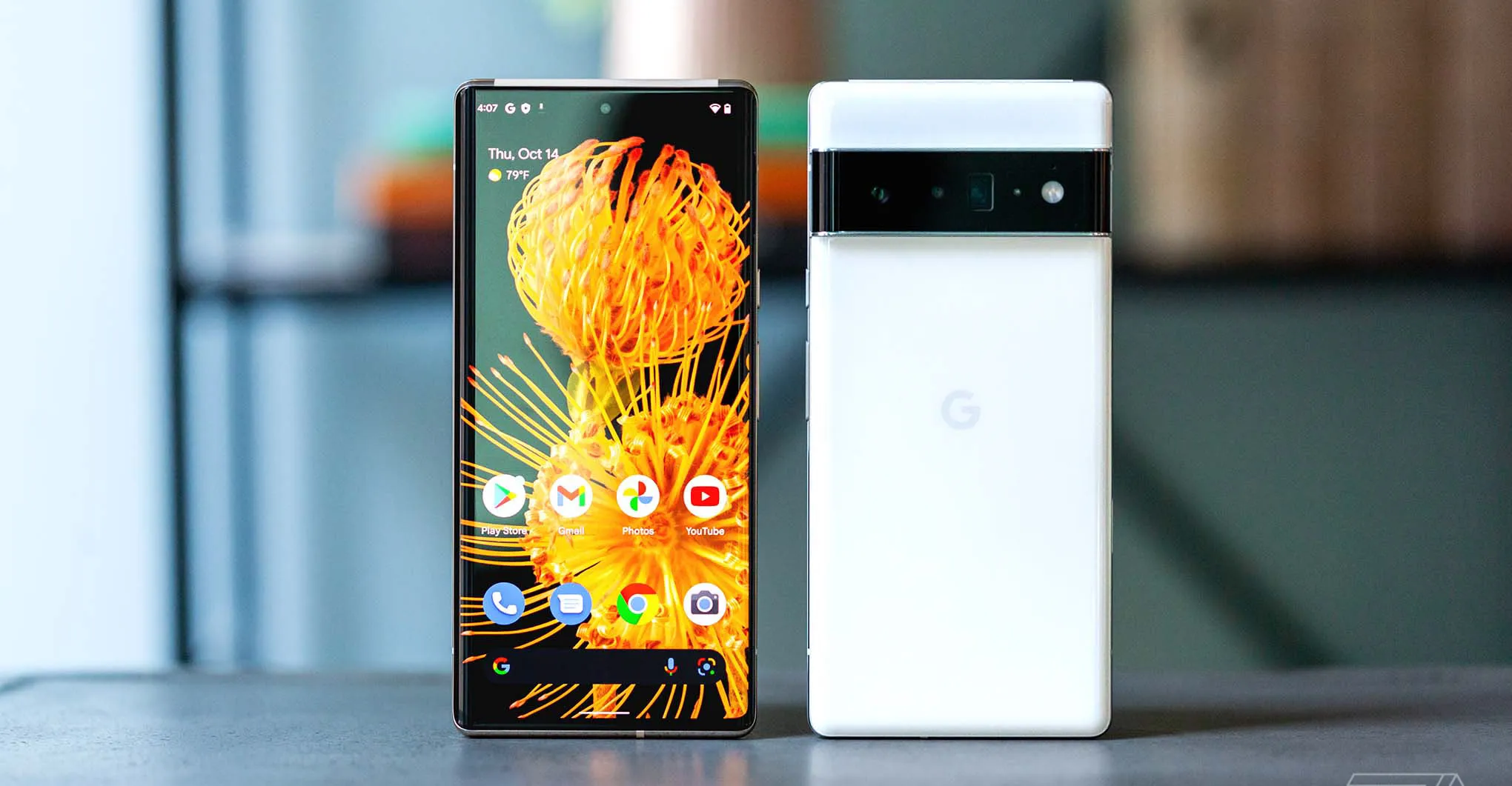
The Google Pixel 6 marked a significant evolution in Google’s smartphone lineup when it was released in October 2021. It introduced the first-ever Google Tensor chipset, showcasing Google’s vision for integrating AI, machine learning, and performance within its own hardware ecosystem. With a redesigned camera bar, vibrant color options, and advanced computational photography, the Pixel 6 became a symbol of Google’s renewed focus on innovation and design. Moreover, it balanced flagship performance with exceptional camera quality, making it one of the most compelling Android devices of its generation.
Additionally, the Google Pixel 6 was designed for power, intelligence, and longevity. It shipped with Android 12 and promised up to five years of major Android updates, making it one of the most future-proof phones available. Its 6.4-inch AMOLED HDR10+ display, 8GB of RAM, and dual 50MP camera system combined cutting-edge features with simplicity and refinement. With a large 4614mAh battery, 21W wireless charging, and reverse wireless support, it was engineered to meet the demands of modern smartphone users while maintaining efficiency and elegance.
Google Pixel 6 Full Phone Specifications
| Category | Specification |
|---|---|
| Launch | Announced October 19, 2021; Released October 28, 2021 |
| Status | Available |
| Network | GSM / CDMA / HSPA / EVDO / LTE / 5G |
| Body Dimensions | 158.6 x 74.8 x 8.9 mm (6.24 x 2.94 x 0.35 in) |
| Weight | 207 g (7.30 oz) |
| Build | Glass front (Gorilla Glass Victus), glass back (Gorilla Glass 6), aluminum frame |
| SIM | Nano-SIM + eSIM |
| Water Resistance | IP68 dust/water resistant (up to 1.5m for 30 min) |
| Display Type | AMOLED, 90Hz, HDR10+ |
| Display Size | 6.4 inches, 98.9 cm² (~83.4% screen-to-body ratio) |
| Resolution | 1080 x 2400 pixels, 20:9 ratio (~411 ppi density) |
| Protection | Corning Gorilla Glass Victus |
| OS | Android 12, upgradable to Android 15 (5 years of updates) |
| Chipset | Google Tensor (5 nm) |
| CPU | Octa-core (2×2.80 GHz Cortex-X1 & 2×2.25 GHz Cortex-A76 & 4×1.80 GHz Cortex-A55) |
| GPU | Mali-G78 MP20 |
| Internal Storage | 128GB / 256GB UFS 3.1, 8GB RAM |
| Card Slot | No |
| Main Camera | Dual: 50 MP (wide) + 12 MP (ultrawide) |
| Camera Features | Laser AF, Dual-LED flash, Pixel Shift, Auto-HDR, panorama |
| Video | 4K@30/60fps, 1080p@30/60/120/240fps; gyro-EIS, OIS |
| Selfie Camera | 8 MP, f/2.0, 24mm (wide), 1.12µm |
| Selfie Features | HDR, panorama |
| Video | 1080p@30fps |
| Sound | Stereo speakers, no 3.5mm headphone jack |
| Connectivity | Wi-Fi 802.11 a/b/g/n/ac/6e, Bluetooth 5.2, GPS, GLONASS, BDS, GALILEO, QZSS, NFC, USB Type-C 3.1 |
| Sensors | Fingerprint (under display, optical), accelerometer, gyro, proximity, compass, barometer |
| Battery | Li-Ion 4614 mAh, non-removable |
| Charging | 30W wired (PD3.0), 21W wireless, reverse wireless |
| Colors | Sorta Seafoam, Kinda Coral, Stormy Black |
| Models | GB7N6, G9S9B16, G9S9B, GR1YH |
| Price | $145 / €202.89 / £155.28 / ₹23,499 |
Camera
The Google Pixel 6 transformed smartphone photography with its 50MP wide primary sensor and 12MP ultrawide lens, supported by Google’s Tensor-driven computational imaging. The large sensor captured 150% more light than previous Pixels, resulting in exceptional clarity and detail even in dim lighting. Furthermore, features like Magic Eraser, Real Tone, and Motion Mode revolutionized photo editing and realism. Magic Eraser effortlessly removed unwanted objects, while Real Tone ensured accurate skin representation for all complexions.
The camera’s 4K video recording at 60fps, combined with optical and electronic image stabilization, produced cinema-quality footage. The ultrawide sensor expanded creativity, perfect for landscapes and group shots. Meanwhile, the 8MP selfie camera delivered crisp, well-balanced portraits with HDR support. Consequently, the Pixel 6 redefined smartphone photography by combining powerful hardware with intelligent software.
Design and Display
The Google Pixel 6 introduced a bold design featuring a horizontal camera bar, giving it a distinctive and modern identity. Its aluminum frame and dual-glass construction offered both strength and style, while the Gorilla Glass Victus protection ensured resilience against scratches and drops. The IP68 rating guaranteed water and dust resistance, adding an extra layer of reliability. Moreover, the device’s premium matte finish provided a comfortable grip, and the color options — Sorta Seafoam, Kinda Coral, and Stormy Black — gave it a vibrant personality.
The 6.4-inch AMOLED HDR10+ display provided excellent contrast, rich color accuracy, and smooth visuals thanks to its 90Hz refresh rate. With a resolution of 1080 x 2400 pixels, it achieved sharp detail ideal for streaming and gaming. The screen’s adaptive brightness optimized power consumption while maintaining vivid clarity outdoors. Thus, the Pixel 6 offered both aesthetic appeal and visual brilliance in a balanced package.
Performance
Powered by Google Tensor, the company’s first in-house chipset, the Google Pixel 6 delivered remarkable efficiency and intelligence. The Tensor chip combined machine learning and AI acceleration for real-time translation, enhanced voice recognition, and improved photography processing. With 8GB of RAM and UFS 3.1 storage, the device provided lightning-fast performance and quick app load times. Additionally, the Mali-G78 GPU ensured smooth gaming and media playback.
Running on Android 12, the Pixel 6 debuted the Material You interface, offering deep customization and improved user experience. Google promised five years of updates, enhancing security and longevity. Advanced features like Live Translate, Now Playing, and Adaptive Sound further showcased Tensor’s capabilities. Consequently, the Pixel 6 combined power, intelligence, and longevity into one cohesive ecosystem.
Battery and Charging
The 4614 mAh battery in the Google Pixel 6 offered excellent endurance, optimized through AI-based power management. It supported 30W fast wired charging, 21W wireless charging, and reverse wireless sharing for smaller accessories. Moreover, the adaptive battery system learned user habits to maximize daily efficiency. With up to 86 hours of endurance, it ensured consistent performance for heavy users. The PD3.0 fast charging standard also allowed a 50% charge in just 30 minutes, ensuring minimal downtime.
Durability
The Google Pixel 6 prioritized durability through its Gorilla Glass Victus protection, aluminum frame, and IP68 certification. These materials provided a strong defense against accidental drops and water exposure. The device also featured a robust in-display fingerprint sensor for security and convenience. Over time, its strong software support and premium build quality ensured that it remained reliable and relevant in the competitive smartphone landscape.
Ultimately, the Google Pixel 6 signaled a new chapter in Google’s smartphone evolution. It merged AI innovation, premium hardware, and longevity into a device that embodied Google’s vision for the future of mobile technology. Its combination of camera prowess, processing power, and design excellence made it a landmark release in the Pixel family.