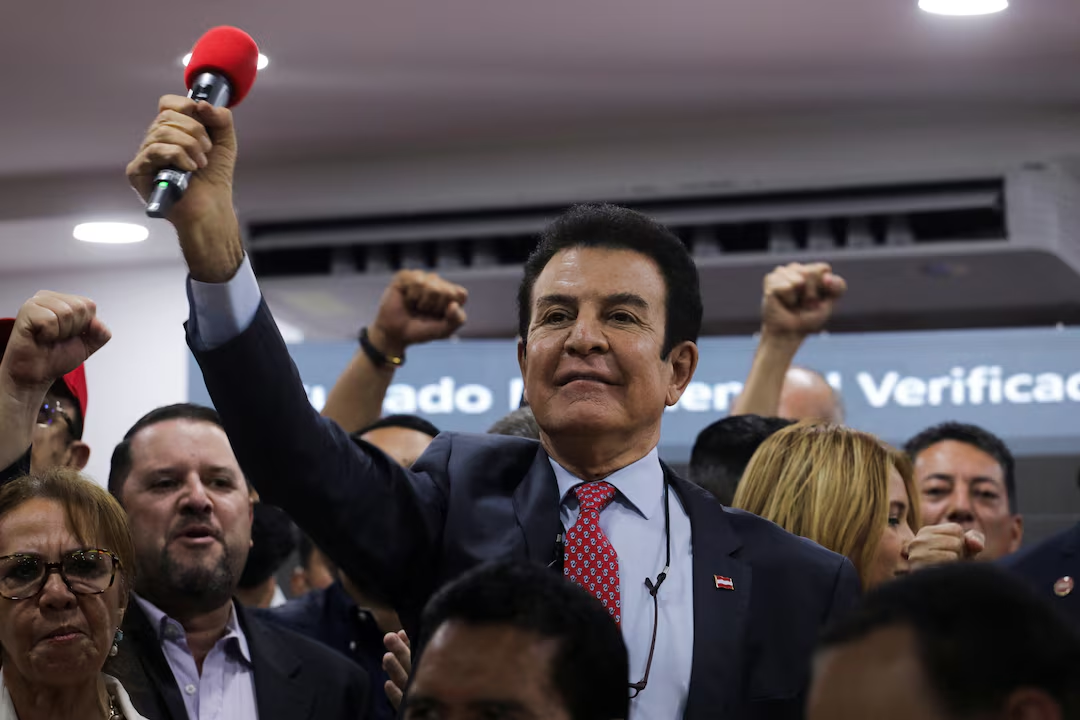
Honduran presidential candidate Salvador Nasralla, a centrist figure from the Liberal Party, has widened his lead over conservative rival Nasry Asfura as the vote counting continues for the fourth day. With 80.29% of ballots counted, Nasralla now holds 40.23% of the vote, while Asfura, who is supported by former U.S. President Donald Trump, lags slightly behind at 39.69%. Despite this narrow lead, the election remains unresolved, with several technical issues delaying the final vote tally.
Nasralla’s Lead Grows Amid Election Complications
The Honduran presidential election, held on November 30, 2025, has been fiercely contested, with Nasralla and Asfura remaining neck-and-neck throughout the vote counting process. As of Wednesday, Nasralla’s lead had widened slightly, but it remains too close to declare victory. The margin between the two candidates is still under 14,000 votes, making it impossible to predict the final outcome with certainty.
Nasralla, a 72-year-old television presenter turned politician, has expressed confidence despite the challenges. “Either way, we’re going to win,” he posted on social media, reiterating his belief that the Liberal Party’s platform is resonating with voters. Asfura, who has the backing of the National Party and former President Hernández’s supporters, continues to hold onto his hope of a comeback as the final votes are counted.
Ongoing Vote Counting Delays and Technical Issues
The delays in counting the votes have been attributed to technical difficulties with the vote transmission system. The Honduran National Electoral Council (CNE) has faced criticism over the handling of the counting process, with officials acknowledging repeated halts and interruptions. Cossette Lopez-Osorio, a CNE official, expressed frustration over the situation, calling the unannounced system maintenance “inexcusable.”
Ballots from remote regions are still arriving, and the CNE has warned that it may take several more days before a winner is officially declared. These areas, which are sometimes only accessible by donkey or river boats, have added an additional layer of complexity to the election process. CNE officials are urging patience, but the ongoing delays have contributed to an increasingly tense atmosphere in the country.
Trump’s Allegations of Election Fraud and Interference
Adding to the political tension, former U.S. President Donald Trump has weighed in on the Honduran election, alleging fraud without providing evidence. Trump, who has publicly supported Asfura, claimed that there was a concerted effort to “change the results” of the election. He voiced his concerns on social media, stating that “the people of Honduras voted in overwhelming numbers on November 30th” and threatening severe consequences if Asfura did not win.
Trump’s comments have sparked controversy and heightened concerns about foreign interference in the election. Critics, including some Honduran officials and analysts, argue that Trump’s remarks violate international election protocols and could undermine the credibility of the democratic process in Honduras. Rixi Moncada, the candidate from the ruling LIBRE Party, condemned Trump’s comments, calling them “direct interference” in the interests of the Honduran people.
A Tight and Divisive Race
This year’s election has been one of the most contentious in recent Honduran history. Both Nasralla and Asfura represent competing visions for the country’s future. Nasralla has positioned himself as a centrist alternative to the political establishment, focusing on economic reforms, improved governance, and social justice. Asfura, supported by many conservatives and former President Hernández’s loyalists, has campaigned on a platform of continued economic growth and security improvements.
The stakes are high in this election, not only because of the ongoing political and economic challenges in Honduras but also due to the international interest in the results. The U.S. government, particularly under Trump’s leadership, has been closely monitoring the election, and the outcome could have significant implications for future relations between the two countries.
The Role of the Hyde Amendment and U.S. Influence
In addition to Trump’s vocal support for Asfura, the election has been further complicated by U.S. political involvement. Former President Hernández, who was convicted in the United States for drug trafficking, was granted a pardon by Trump ahead of the election. This move has led to accusations that the U.S. is using its political power to influence the outcome of the Honduran election, further inflaming tensions between the two nations.
Trump’s interference in the election, combined with the timing of Hernández’s release, has raised concerns about the integrity of the electoral process. The Honduran people and their elected leaders are now grappling with the implications of foreign involvement and the potential consequences of outside interference in their democratic process.
A Prolonged Wait for a Winner
As the vote counting continues and the technical issues persist, the Honduran people are left in limbo, awaiting the final results. While Nasralla’s lead has grown, the election is still too close to call, and the situation remains fluid. CNE officials have indicated that it may take several more days to complete the counting and announce the winner. Both candidates have expressed confidence in their chances, but with tensions running high and external pressures mounting, the final outcome of this election remains uncertain.
Election observers from the European Union and the Organization of American States have called for calm and patience, emphasizing the importance of allowing the CNE to finish its work without undue pressure. As Honduras waits for a resolution, the international community will be closely watching the results, hoping for a fair and transparent conclusion to this highly charged race.