Ruben Amorim’s tenure as Manchester United head coach has come to an abrupt end after just 14 months. The Portuguese manager’s sacking follows a turbulent period at Old Trafford, characterized by inconsistent results, tactical struggles, and a highly publicized clash with the club’s board. Amorim’s departure marks the end of a brief yet contentious chapter for Manchester United, who now find themselves looking for a new leader to steer the ship in the second half of the Premier League season. In this article, we’ll take a comprehensive look at the reasons behind Amorim’s sacking, the impact of his leadership on the club, and the road ahead for United as they search for a permanent manager.
Ruben Amorim’s Appointment: A New Hope for Manchester United
In November 2024, Ruben Amorim was appointed as the head coach of Manchester United after the club parted ways with Erik ten Hag. The Portuguese manager arrived with a solid reputation built on his time at Sporting CP, where he revitalized the team and led them to domestic success. His appointment was hailed as a strategic move, as United sought a young, progressive coach who could bring tactical innovation and stability to the club.
At the time, Amorim was seen as the right choice to rebuild Manchester United, a club that had struggled for consistency and success since the departure of Sir Alex Ferguson. United fans were optimistic about his ability to implement a possession-based, high-pressing style of play—a system that had worked so well for him at Sporting. The appointment was also part of the club’s broader desire to move away from the previous tactical approaches and embrace a more modern style of football.
A Rocky Start: Amorim’s Tactical Struggles
Despite the initial excitement surrounding Amorim’s appointment, his time at Old Trafford quickly became defined by struggles on the pitch. One of the main issues was Amorim’s continued insistence on playing his preferred 3-4-2-1 formation, a system that worked well at Sporting but failed to click with the players at Manchester United. While the formation is inherently fluid, it left United’s defense exposed at times, and the team struggled to find balance between attacking and defensive duties.
Amorim’s tactical rigidity became a source of frustration for fans and players alike. He remained loyal to his system, despite evidence that alternatives might have been more effective, particularly when United suffered setbacks against weaker opposition. The team’s lack of fluidity in their build-up play and failure to break down defensive sides led to dropped points in crucial matches. Most notably, United could only manage a 1-1 draw against a struggling Wolves side in December 2025, a result that only added to the mounting pressure on Amorim.
As United’s struggles continued, Amorim’s inability to adapt tactically to the Premier League’s demands became a significant talking point. His style of play, while progressive, often left the team vulnerable, and he appeared unable to motivate the squad to consistently perform at a high level. This lack of progress, despite a talented squad, was one of the key factors that led to his eventual sacking.
The Explosive Outburst: A Final Straw
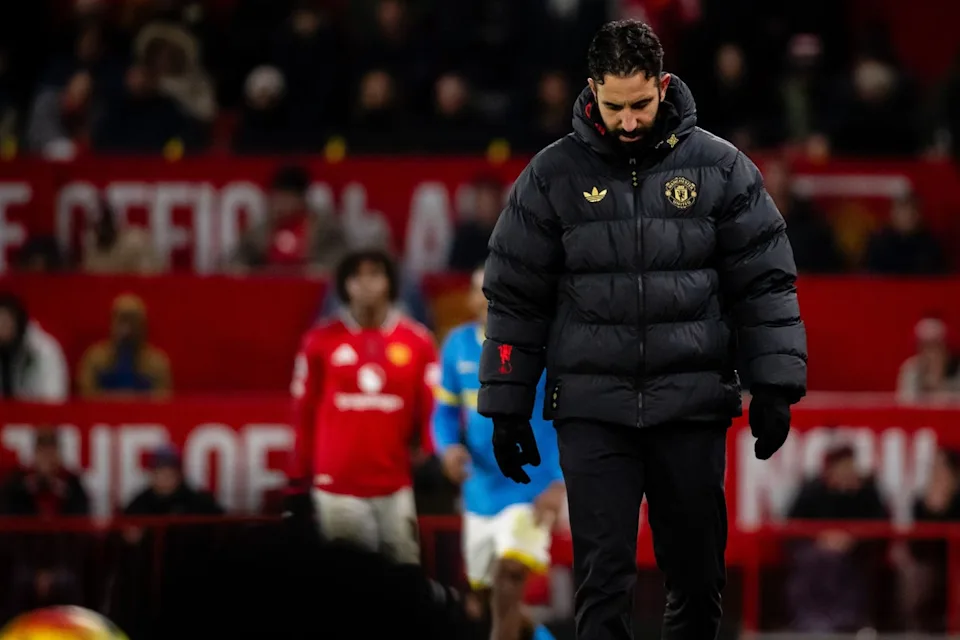
Ruben Amorim’s public outburst following Manchester United’s 1-1 draw with Leeds United on December 28, 2025, was the breaking point. In an emotionally charged post-match interview, Amorim aimed a direct challenge at the club’s board, stating that he had come to Manchester United to be the “manager” of the team, not merely the “head coach,” a title he was officially given upon his appointment.
“I came here to be the manager of Manchester United, not to be the coach,” Amorim declared, making it clear that he expected to have a broader remit and more authority in terms of the club’s operations. He went on to criticize the board’s handling of key footballing decisions, including recruitment and the tactical direction of the club. Amorim implied that his role went beyond just overseeing training sessions and matchdays, suggesting that he should have more control over other club functions like scouting and transfers.
These comments were seen as a direct challenge to the club’s leadership and, in particular, to sporting director Jason Wilcox. Amorim’s frustration appeared to stem from a perceived lack of support and alignment with the board. His remarks came at a time when Manchester United was underperforming and facing increasing pressure to deliver results. The outburst alienated key members of the board, who felt that Amorim had overstepped his bounds and undermined their authority.
Manchester United’s Official Statement: A Reluctant Decision
In a brief statement released on January 5, 2026, Manchester United confirmed that Ruben Amorim had been sacked. The club’s leadership stated that the decision had been made in order to give the team the best chance of finishing as high as possible in the Premier League. With United sitting in sixth place, three points behind fourth-placed Liverpool, the board deemed it necessary to make a change in order to secure a top-four finish and qualification for the Champions League.
“Ruben Amorim has departed his role as head coach of Manchester United,” the statement read. “Ruben was appointed in November 2024 and led the team to a UEFA Europa League Final in Bilbao in May. With Manchester United sitting sixth in the Premier League, the club’s leadership has reluctantly made the decision that it is the right time to make a change.”
While the club thanked Amorim for his contributions and wished him well for the future, it was clear that his tenure had failed to meet expectations. United had hoped that Amorim would bring stability and a more modern approach to the club, but his inability to implement his philosophy consistently, combined with the public power struggle with the board, left the club with little choice but to part ways with him.
The Interim Appointment: Darren Fletcher Takes Charge
Following Amorim’s dismissal, former United midfielder Darren Fletcher was named as the interim manager for the club’s upcoming Premier League match against Burnley on January 7, 2026. Fletcher, who has been working as the club’s under-18s coach, is a familiar figure at Old Trafford and will bring a sense of continuity to the team during the interim period.
As an experienced player at United, Fletcher is well-acquainted with the club’s culture and values, and he will look to steady the ship as the club searches for a permanent replacement. His brief tenure will be focused on maintaining the club’s momentum in the league and ensuring that they stay in the hunt for a Champions League spot.
The Search for a Permanent Manager: Potential Replacements
With the interim period now in place, Manchester United’s board will turn their attention to finding a permanent manager to lead the club forward. Several names have already emerged as potential candidates to take over, including former United player Michael Carrick, who has enjoyed success at Middlesbrough. Other names mentioned include Crystal Palace’s Oliver Glasner, former Chelsea boss Enzo Maresca, and ex-Barcelona manager Xavi Hernandez.
The club’s search for a new manager will be focused on finding someone who can implement a long-term vision, restore stability to the team, and get the best out of the talented squad at his disposal. The new manager will be tasked with addressing United’s defensive frailties, improving tactical discipline, and leading the team back to the top of the Premier League and Europe.
The Road Ahead for Manchester United
Manchester United now finds themselves at a critical juncture. With a talented squad that includes players like Bruno Fernandes, Jadon Sancho, and Marcus Rashford, the club has the potential to compete for top honors. However, the inconsistency that has plagued the team in recent years will need to be addressed. The next manager will need to instill a clear tactical identity, improve the team’s defensive solidity, and ensure that United remains competitive in both domestic and European competitions.
As the club searches for its next permanent manager, the fans will be hoping for a swift and decisive appointment that brings stability and success to the team. For now, Darren Fletcher will be tasked with keeping the ship afloat and ensuring that United’s Champions League aspirations remain intact.
A Missed Opportunity for Ruben Amorim
Ruben Amorim’s time at Manchester United will be remembered as a brief and ultimately unsuccessful spell. Despite arriving with high hopes, his inability to implement his tactical philosophy and the public clash with the board made his position untenable. United’s decision to part ways with Amorim was necessary to restore stability and pursue the club’s long-term goals. As the club embarks on yet another managerial search, the challenge remains to find a manager who can deliver consistent results and guide Manchester United back to the top of English and European football.