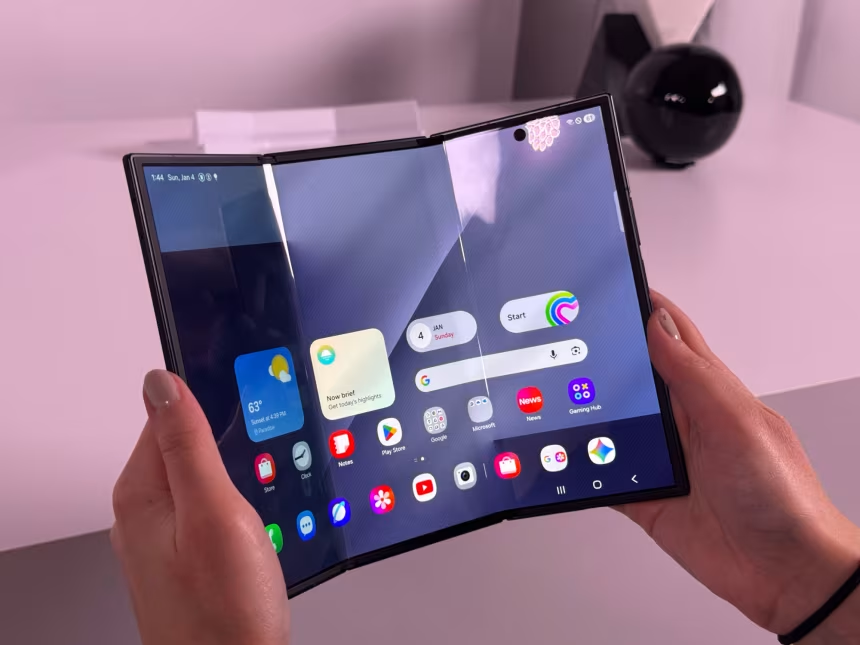
Samsung has once again taken a bold step in redefining what smartphones can be. The new Samsung Galaxy Z TriFold unveiled at the CES 2026 tech conference looks like it was plucked straight from a sci-fi movie. For years, science fiction has shown us devices with shapeshifting screens that expand and fold based on the user’s needs. Now, Samsung is taking that vision and trying to turn it into reality.
The Galaxy Z TriFold is a truly innovative device, folding not once but twice, much like a brochure, to create an iPad-sized screen that can fit into your pocket. This concept is both exciting and groundbreaking, but, as with many cutting-edge technologies, it comes with a few trade-offs.
A Giant Screen in Your Pocket
Samsung’s goal with the Galaxy Z TriFold is to offer a 10-inch display that expands when you need it and folds into a pocket-friendly form when you don’t. The phone features two folding hinges, making it significantly larger than its predecessor, the Galaxy Z Fold 7, which has a single folding hinge and a smaller 8-inch screen.
When open, the device behaves like a mini tablet, but when closed, it is reminiscent of carrying two smartphones stacked on top of each other. The foldable nature of the phone allows users to take advantage of the larger display without sacrificing portability, a challenge that Samsung has faced with earlier foldable phones.
Targeting Productivity and Workflows
Samsung’s focus for the Z TriFold is clear: productivity. The device is designed to function like a mini-laptop, offering users a more immersive experience for work-related tasks. The 10-inch screen supports split-screen mode, allowing users to multitask with ease. Whether you’re using apps side-by-side or even running desktop-like windows that can be resized and dragged around, the TriFold provides a level of multitasking that is not possible on traditional smartphones.
Additionally, the integration of Google’s Gemini assistant enhances the user experience by providing contextual support across multiple apps. This could make managing tasks more intuitive, cutting down the number of taps and swipes required for multitasking.
For those who want to push the device’s productivity potential even further, pairing it with a Bluetooth keyboard and mouse could make the TriFold a viable alternative for light laptop tasks. While it’s not quite a full desktop replacement, it does open up possibilities for professionals on the go.
Slim Tablet, Clunky Phone
One of the first impressions when handling the Galaxy Z TriFold is its thinness when unfolded—it’s almost paper-thin. However, when folded, the device becomes quite thick, resembling two phones stacked together. This could be off-putting for some users, especially if you prefer a slim, pocketable phone.
Despite the TriFold‘s impressive technology, Samsung still faces challenges in balancing portability with usability. While the device offers a much larger screen than most smartphones, it might feel cumbersome in the hand compared to traditional, slimmer devices.
Camera Quality: A Pleasant Surprise
In terms of camera quality, Samsung has made significant strides. The Galaxy Z TriFold features the same high-end cameras as the Galaxy S25 Ultra, which means you won’t have to sacrifice much in terms of photo and video quality. Previous foldable phones were often criticized for their mediocre cameras, but Samsung seems to have resolved this issue with the TriFold.
The device also avoids one of the major flaws of earlier foldables: the visible crease down the center of the screen. While the two creases on the TriFold’s display are still noticeable, they don’t detract much from the overall experience. This marks a big improvement over earlier foldable models, where the crease was much more prominent.
More Flash Than Function?
While the Galaxy Z TriFold is an exciting concept, it still doesn’t offer a compelling argument for why the average consumer should invest in a foldable phone. Yes, the larger screen allows for easier multitasking and viewing of content, but it doesn’t bring much that’s truly unique compared to existing phones like the Galaxy Z Fold 7.
For now, the TriFold might be more about showcasing Samsung’s innovation rather than offering a product that radically changes the way we use smartphones. It’s more flash than function, and its high price tag could deter many potential buyers.
The Future of Foldables
Samsung’s foldable phones, including the Z Fold 7 and Z TriFold, have faced an uphill battle in the smartphone market. Despite being on the cutting edge of technology, foldables still represent a small slice of the market. The higher price points of these devices make them a niche product, appealing mainly to early adopters and tech enthusiasts.
Samsung, however, seems committed to the foldable phone trend. Drew Blackard, Senior Vice President of Mobile Product Management at Samsung Electronics America, shared that the company’s approach is about experimenting with different form factors and learning from the market. The TriFold is, in essence, a strategic pilot, allowing Samsung to test the waters with a new product and see how consumers react.
The future of foldables may not rest solely on the TriFold, but Samsung’s continued push to innovate and experiment with new designs could shape the future of the smartphone industry.
A Glimpse Into the Future
The Samsung Galaxy Z TriFold represents a major leap forward in smartphone innovation, offering an intriguing combination of a large, portable screen and enhanced productivity features. While the device is impressive in many ways, it is still in its early stages, with some compromises, such as its bulk when folded and its high price tag. However, this is just the beginning. As foldable technology continues to evolve, Samsung’s push for a more versatile phone could open doors to even more exciting innovations in the future.
For now, the Galaxy Z TriFold is a bold experiment—a proof of concept that shows Samsung is willing to push boundaries and explore new frontiers in the smartphone world.