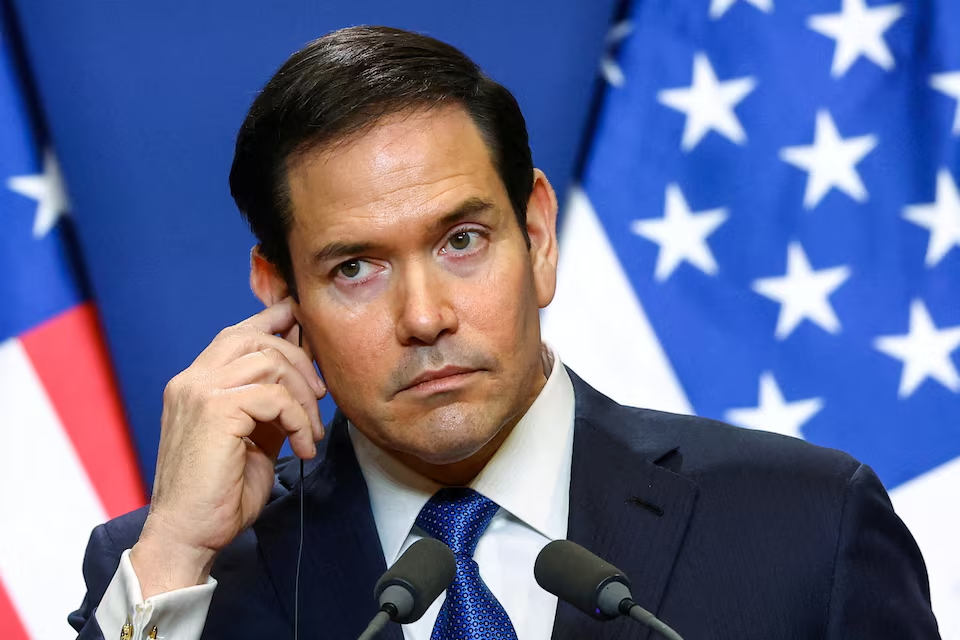
The Trump administration has ordered US diplomats to lobby against attempts to regulate American tech companies’ handling of foreigners’ data. An internal diplomatic cable seen by Reuters reveals the directive. The US data sovereignty fight targets initiatives that could interfere with artificial intelligence-related services. Secretary of State Marco Rubio signed the February 18 cable instructing embassies worldwide.
The State Department said such laws would disrupt global data flows, increase costs and cybersecurity risks. They would also limit AI and cloud services while expanding government control in ways that undermine civil liberties and enable censorship. The cable pushes for a more assertive international data policy. Diplomats should counter unnecessarily burdensome regulations including data localization mandates.
Confrontational Approach Returns
Experts say the move signals the Trump administration is reverting to a more confrontational approach. Some foreign countries seek limits around how Silicon Valley firms process and store citizens’ personal information. These initiatives are often described as data sovereignty or data localization. The US data sovereignty fight represents a sharp departure from previous engagement.
Where the previous administration attempted to woo European customers, the current one demands Europeans disregard their own data privacy regulations that could hinder American business. This shift reflects growing tensions over tech regulation. The cable makes clear the administration views foreign data rules as obstacles to US commercial interests.
The State Department did not return a request for comment on the cable. Its contents, however, provide clear guidance to diplomatic posts worldwide. Ambassadors and embassy staff must now actively oppose data sovereignty measures in host countries.
European Context
Data sovereignty initiatives have gathered pace particularly in Europe. Tensions between the United States and European Union have flared over Washington’s protectionist trade policies and support for far-right political parties. The dominance of US artificial intelligence companies has underlined European concerns around privacy and surveillance. Many AI firms draw on massive stores of personal data to power their models.
European officials have increased pressure on American social media giants. The EU’s 2018 General Data Protection Regulation (GDPR) imposed restrictions on transferring Europeans’ data abroad. It has led to a series of stiff fines on American tech firms. Rubio’s cable specifically cited GDPR as an example of unnecessarily burdensome data processing restrictions and cross-border data flow requirements.
Bert Hubert, a Dutch cloud computing expert and former intelligence oversight board member, commented on the shift. He noted Europe’s increasing wariness of America’s tech companies may be spurring Washington to take a more aggressive tack. The US data sovereignty fight targets the very regulations Europeans have enacted to protect citizens.
Data Sovereignty Explained
Data sovereignty laws vary significantly in scope and application. Some impose rules around where information is kept by requiring that data collected from a certain nation only be stored within that country. Others put restrictions around how data is shared, limiting its distribution to foreign companies. These measures aim to protect citizens’ privacy and ensure local legal jurisdiction over sensitive information.
Proponents argue data sovereignty prevents foreign surveillance and ensures accountability. Critics including the US government contend it fragments the internet and harms innovation. The US data sovereignty fight frames these measures as protectionist rather than protective. The cable emphasizes negative impacts on AI development and cloud services.
The administration supplied talking points promoting the Global Cross-Border Privacy Rules Forum. This group established in 2022 includes the United States, Mexico, Canada, Australia, Japan and others. It aims to support the free flow of data and effective data protection and privacy globally. The Forum did not respond to requests for comment.
China Reference
The cable also addressed China’s approach to data governance. It stated that China was bundling enticing technology infrastructure projects with restrictive data policies that expand its global influence. These policies give China access to international data for surveillance and strategic leverage. The cable did not provide much more detail on this assertion.
China has over the past few years tightened regulations over how its companies store and transfer user data. The Chinese Embassy in Washington said it was not familiar with the cable but emphasized that Beijing has always attached great importance to cybersecurity and data security. The reference positions the US data sovereignty fight within broader strategic competition.
The contrasting treatment of European and Chinese data policies is notable. The US opposes European regulations while criticizing Chinese practices. This reflects different relationships and strategic calculations with each partner.
Tracking and Reporting Requirements
The cable, whose headline described it as an action request, tasked American diplomats with specific duties. They must track the development of proposals to restrict cross-border data flows. They must report back to Washington on emerging regulations, must engage host governments using provided talking points.
This represents a significant operational commitment. Diplomatic posts worldwide will now prioritize data sovereignty issues. The US data sovereignty fight becomes embedded in routine embassy work. Host governments will face consistent US messaging on these matters.
The cable is the latest in a series of initiatives aimed at thwarting European regulation of the digital sphere. Last year, Rubio ordered diplomats to whip up opposition to the EU’s Digital Services Act. That law aims to make the internet safer by compelling major social media firms to remove illegal content including extremist or child sexual abuse material.
Online Portal Initiative
Last week, Reuters reported that the United States planned to launch an online portal intended to help Europeans and others bypass censorship. The portal would allow users to access material including alleged hate speech and terrorist propaganda that platforms have removed. This initiative complements the diplomatic pressure campaign.
Together, these actions represent a coordinated assault on European digital regulations. The US data sovereignty fight extends beyond diplomacy to practical tools for circumventing local rules. European officials face pressure on multiple fronts.
The European Commission in Washington did not respond to a request for comment. EU officials are likely reviewing their options in response to US pressure. The relationship between the two partners faces continued strain over digital issues.
Industry Implications
The US data sovereignty fight carries significant implications for American technology companies. Clear rules across jurisdictions reduce compliance costs and uncertainty. A patchwork of conflicting national regulations creates complexity and risk. The administration argues that unified global standards benefit US firms.
European companies face different calculations. Strong data protection rules create competitive advantages for local firms. They also align with citizen preferences for privacy. The US push against these rules may face resistance from European industry as well as governments.
AI development particularly depends on data access. Models require vast training data to achieve performance. Restrictions on data flows could hamper US AI leadership. The US data sovereignty fight aims to preserve this competitive edge.
Broader Context
The cable reflects broader Trump administration approach to international engagement. Unilateral assertion of US interests replaces multilateral cooperation. Pressure tactics substitute for negotiation. Allies face demands rather than consultations.
This approach has generated friction across multiple policy areas. Trade, security and now digital policy all show similar patterns. The US data sovereignty fight fits this larger framework of assertive nationalism.
Whether this strategy succeeds remains uncertain. European countries have strong domestic support for privacy protections. Public opinion favors regulation of American tech giants. Diplomatic pressure may prove insufficient to change these fundamentals.
The State Department cable marks a clear policy direction. American diplomats will now actively oppose foreign data sovereignty measures. The US data sovereignty fight has begun in earnest across global capitals.