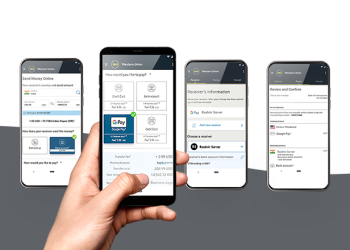
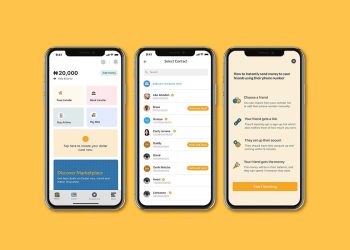
The Central Bank of Kenya (CBK) has announced ambitious plans to drastically lower the cost of mobile money transactions, targeting a reduction of the average charge from Sh23 to Sh10 by 2028. This bold move is designed to enhance financial inclusion, make digital transactions more affordable, and ensure that the benefits of Kenya’s mobile money revolution reach the widest possible population.
Mobile money has transformed Kenya into a global leader in digital finance, with services like M-Pesa and Airtel Money handling millions of daily transactions across urban and rural areas. However, the relatively high cost of transferring money has long been a barrier for low-income users. CBK’s intervention aims to remove these barriers while reshaping the revenue models of telecom operators who rely heavily on mobile money earnings.
Why CBK is Intervening
The regulator has consistently emphasized the importance of affordable digital finance in driving economic development. High mobile money fees have discouraged many Kenyans from making frequent or low-value transactions, slowing down progress toward a fully cashless economy. By capping fees and steadily lowering transaction costs, CBK expects to:
- Boost digital payment adoption across all income levels.
- Encourage micro and small businesses to use mobile payments more frequently.
- Support rural communities where mobile money is often the only viable banking option.
- Align Kenya’s financial system with global best practices in low-cost digital finance.
The regulator also notes that cheaper transactions could encourage higher volumes, offsetting some of the revenue losses mobile operators may face.
Impact on Safaricom and Airtel
The reform poses significant challenges for providers like Safaricom and Airtel Kenya, whose mobile money divisions generate a large share of their profits. For Safaricom, M-Pesa contributes over 40% of total revenues, while Airtel has relied on Airtel Money as its main growth driver in Kenya’s highly competitive telecom market.
A sharp reduction in fees is expected to squeeze margins, pushing both firms to diversify their services. Possible responses include:
- Expanding into adjacent services such as microloans, insurance, wealth management, and merchant solutions.
- Pushing merchant payments and integration with point-of-sale systems to increase transaction volumes.
- Developing regional synergies, leveraging mobile money platforms across East Africa.
Analysts suggest that while the short-term impact may hurt profitability, innovation and volume growth could offset the losses in the long term.
Consumer Benefits
For ordinary Kenyans, the CBK’s plan promises significant relief. Lower transaction fees mean more affordable remittances, easier bill payments, and cost-effective transfers for businesses in the informal sector. This is particularly impactful for rural populations and low-income earners who often pay a disproportionately high percentage of their incomes in transaction fees.
The reforms also complement Kenya’s broader financial inclusion strategy, which has successfully brought millions of unbanked citizens into the digital economy over the past 15 years. By making services cheaper, CBK hopes to cement Kenya’s position as a model for financial technology innovation globally.
Market and Regional Implications
Kenya’s decision could ripple across East Africa, where mobile money is also widely used but fees remain relatively high. Neighboring countries may adopt similar models if Kenya proves that lower costs can drive higher transaction volumes and sustain telecom operators’ profitability. International observers are also likely to study the policy as a blueprint for integrating financial technology into development goals.
For investors and the private sector, the reforms introduce both risk and opportunity. Reduced margins may initially dampen telecom stock performance, but new opportunities in fintech services, merchant integration, and cross-border remittances could emerge as mobile money evolves beyond simple transfers.
CBK’s plan to lower mobile money charges represents a bold attempt to balance consumer protection, financial inclusion, and market stability. While the move will squeeze Safaricom and Airtel’s earnings, it could ultimately expand the ecosystem by encouraging more transactions and pushing providers to innovate.
If the initiative succeeds, Kenya will not only strengthen its digital economy but also reinforce its reputation as the global pioneer of mobile money services. The coming years will reveal whether telecom operators can adapt fast enough to thrive in this new low-cost environment, and whether Kenya’s financial inclusion targets can be achieved by 2028.