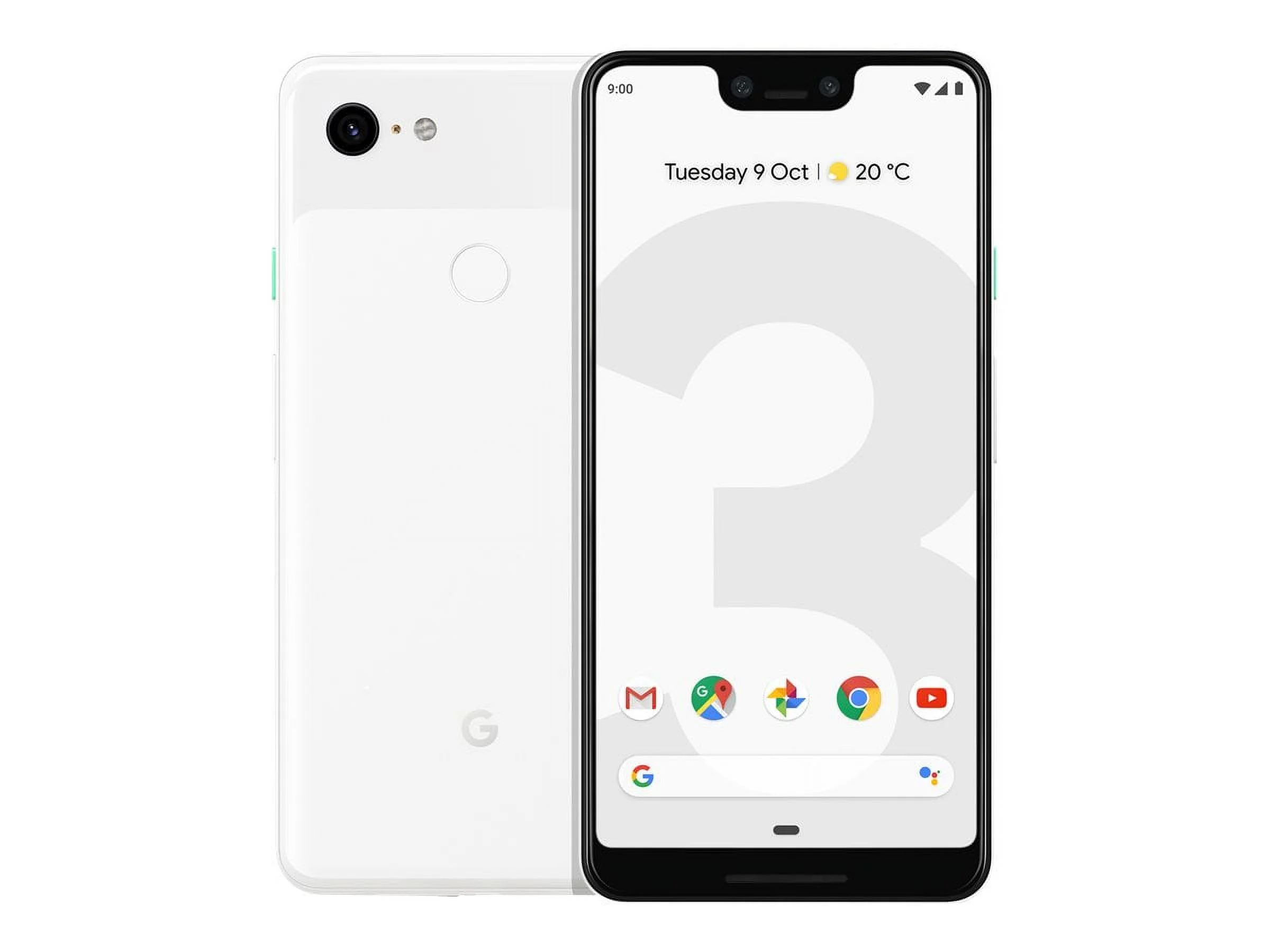
The Google Pixel 3 XL debuted in October 2018 as the larger sibling to the standard Pixel 3, representing Google’s continued refinement of its smartphone design and software integration. It combined premium hardware with the intelligence of pure Android, offering users an AI-powered experience that emphasized simplicity, speed, and photography excellence. Moreover, the Pixel 3 XL introduced a striking design upgrade featuring a glass body, wireless charging, and an immersive edge-to-edge P-OLED display with HDR support.
In addition, the Google Pixel 3 XL carried forward Google’s legacy of computational photography, setting new industry benchmarks for single-lens camera performance. Equipped with the Snapdragon 845 chipset, dual front cameras, and a larger battery, it delivered enhanced performance and endurance. Even years after its release, it remains a favorite among enthusiasts for its combination of design sophistication, responsive software, and exceptional imaging capabilities.
Google Pixel 3 XL Full Phone Specifications
| Category | Specification |
|---|---|
| Launch | Announced October 09, 2018; Released October 18, 2018 |
| Status | Discontinued |
| Network | GSM / CDMA / HSPA / EVDO / LTE |
| Body Dimensions | 158 x 76.7 x 7.9 mm (6.22 x 3.02 x 0.31 in) |
| Weight | 184 g (6.49 oz) |
| Build | Glass front (Gorilla Glass 5), glass back (Gorilla Glass 5), aluminum frame |
| SIM | Nano-SIM + eSIM |
| Water Resistance | IP68 dust tight and water resistant (up to 1.5m for 30 min) |
| Display Type | P-OLED, HDR |
| Display Size | 6.3 inches, 100.3 cm² (~82.8% screen-to-body ratio) |
| Resolution | 1440 x 2960 pixels, 18.5:9 ratio (~523 ppi density) |
| Protection | Corning Gorilla Glass 5 |
| OS | Android 9.0 (Pie), upgradable to Android 12 |
| Chipset | Qualcomm Snapdragon 845 (10 nm) |
| CPU | Octa-core (4×2.5 GHz Kryo 385 Gold & 4×1.6 GHz Kryo 385 Silver) |
| GPU | Adreno 630 |
| Internal Storage | 64GB/128GB UFS 2.1, 4GB RAM |
| Card Slot | No |
| Main Camera | 12.2 MP, f/1.8, 28mm (wide), 1/2.55″, 1.4µm, dual pixel PDAF, OIS |
| Camera Features | Dual-LED flash, Pixel Shift, Auto-HDR, panorama |
| Video | 4K@30fps, 1080p@30/60/120fps (gyro-EIS) |
| Selfie Camera | Dual: 8 MP, f/1.8, 28mm (wide), PDAF + 8 MP, f/2.2, 19mm (ultrawide) |
| Selfie Features | HDR |
| Sound | Stereo speakers, no 3.5mm jack |
| Connectivity | Wi-Fi 802.11 a/b/g/n/ac, Bluetooth 5.0, GPS, GLONASS, BDS, GALILEO, NFC, USB Type-C 3.1 |
| Sensors | Fingerprint (rear-mounted), accelerometer, gyro, proximity, compass, barometer |
| Battery | Li-Po 3430 mAh, non-removable |
| Charging | 18W wired (PD2.0), 5W wireless |
| Models | G013C |
| Colors | Clearly White, Just Black, Not Pink |
| Price | About 260 EUR |
Camera
The Google Pixel 3 XL’s camera system represented Google’s mastery of software-based imaging. Its 12.2 MP rear camera combined optical image stabilization, dual-pixel phase detection, and HDR+ processing, resulting in photos that were rich, sharp, and beautifully exposed. Furthermore, features such as Night Sight and Top Shot used AI to capture perfectly timed and well-lit images, even in challenging lighting. Video quality was also outstanding, with smooth 4K recording at 30fps supported by gyro-based stabilization for steady results.
The dual front camera setup, featuring 8 MP wide and ultrawide lenses, revolutionized selfie photography. Users could capture more people in one shot without losing detail or clarity. Moreover, the Auto-HDR feature enhanced highlights and shadows for a balanced composition. Consequently, the Pixel 3 XL remained a leader in smartphone photography, consistently outperforming many dual and triple-camera flagships through computational excellence.
Design and Display
The Google Pixel 3 XL showcased a bold design refresh, pairing elegance with practicality. Its Gorilla Glass 5 front and back and aluminum frame delivered a refined yet durable build. Meanwhile, the IP68 certification ensured reliable resistance to dust and water. The most noticeable design feature was its notch display, which allowed for a higher screen-to-body ratio, giving users more immersive visuals. Additionally, the matte finish on the back offered a comfortable grip and reduced fingerprint smudges.
The 6.3-inch P-OLED HDR display was vibrant and detailed, featuring 1440 x 2960 resolution and 523 ppi density. With HDR support and a high contrast ratio, it provided deep blacks, bright whites, and excellent viewing angles. Moreover, Corning Gorilla Glass 5 protection improved durability against scratches and drops. Therefore, whether watching videos, gaming, or browsing, the Pixel 3 XL offered a cinematic experience that few devices at the time could match.
Performance
At its core, the Google Pixel 3 XL was powered by the Qualcomm Snapdragon 845 chipset, a top-tier processor known for efficiency and speed. Combined with the Adreno 630 GPU and 4GB of RAM, the phone handled multitasking, high-end gaming, and productivity apps with ease. In addition, UFS 2.1 storage ensured faster app loading and smoother file management. The integration between Google’s software and hardware further optimized real-world performance, providing a seamless and responsive experience.
Running Android 9.0 Pie out of the box, the Pixel 3 XL received updates up to Android 12, ensuring a modern, secure, and stable ecosystem. Features like Active Edge allowed users to launch Google Assistant by squeezing the phone’s sides, while Now Playing automatically identified songs in the background. Moreover, AI-based adaptive brightness and battery management enhanced usability and efficiency. Consequently, the Pixel 3 XL delivered both raw power and smart adaptability, making it one of the most reliable Android flagships of its time.
Battery and Charging
The Google Pixel 3 XL was equipped with a 3430 mAh Li-Po battery, designed for all-day endurance. It supported 18W fast charging via USB Power Delivery 2.0, allowing rapid top-ups when needed. Additionally, it was the first Pixel XL model to include wireless charging, compatible with Google’s Pixel Stand for convenient power-ups. Furthermore, adaptive battery technology extended longevity by learning user patterns and prioritizing essential apps. As a result, the Pixel 3 XL combined modern charging versatility with long-lasting performance.
Durability
The Google Pixel 3 XL offered both strength and sophistication. Its Gorilla Glass 5 build and metal frame provided structural integrity, while the IP68 certification made it resilient to water and dust exposure. The matte glass finish added a touch of elegance and improved grip during everyday use. Even after years, the phone’s design and materials have aged gracefully, maintaining functionality and durability.
Overall, the Google Pixel 3 XL remains one of the most iconic smartphones Google has ever built. It combined cutting-edge AI software with premium craftsmanship and industry-leading photography. Furthermore, it stood as a milestone in Google’s smartphone journey, setting the stage for future Pixel devices that continued to push the boundaries of intelligent mobile technology.