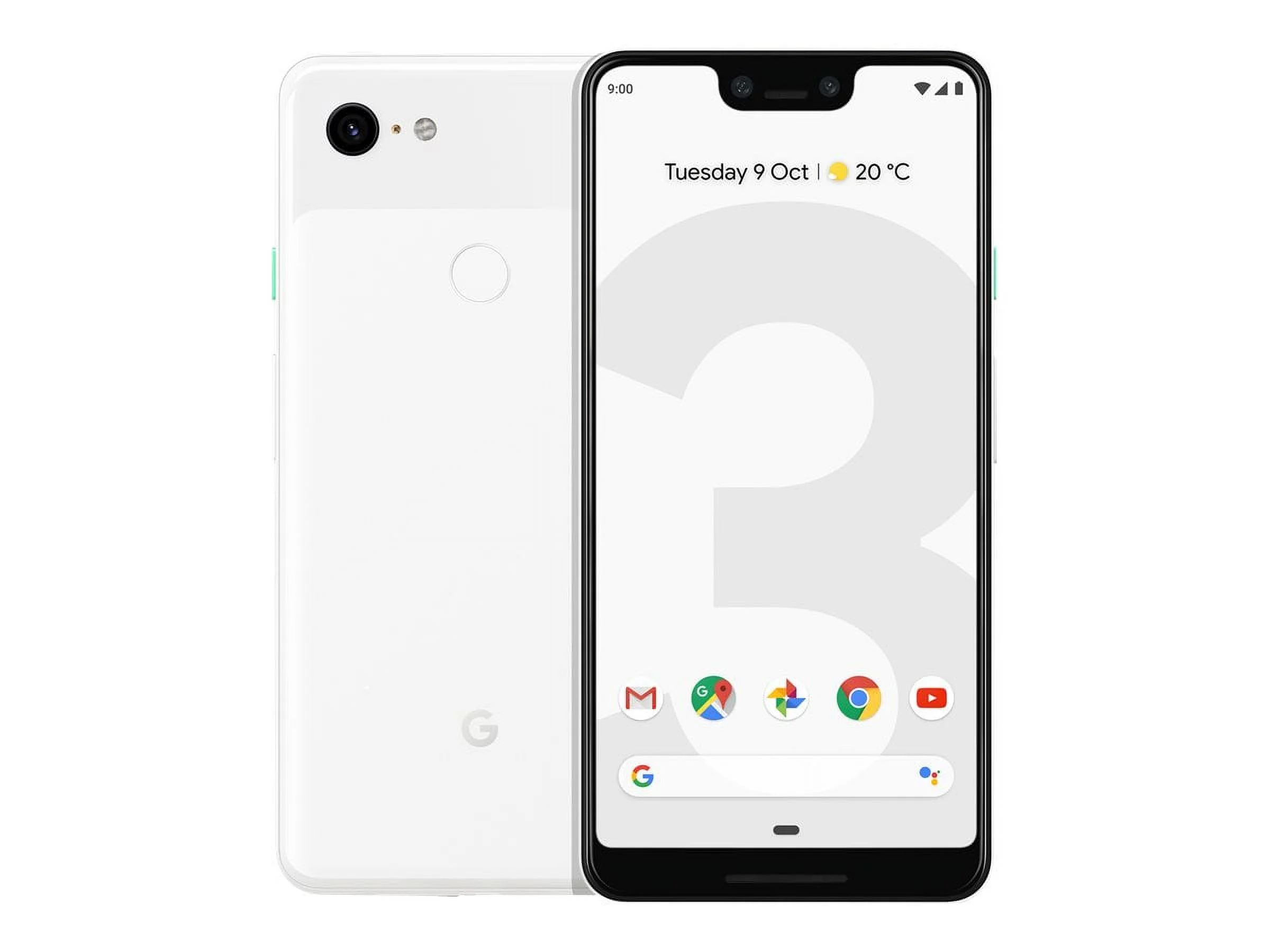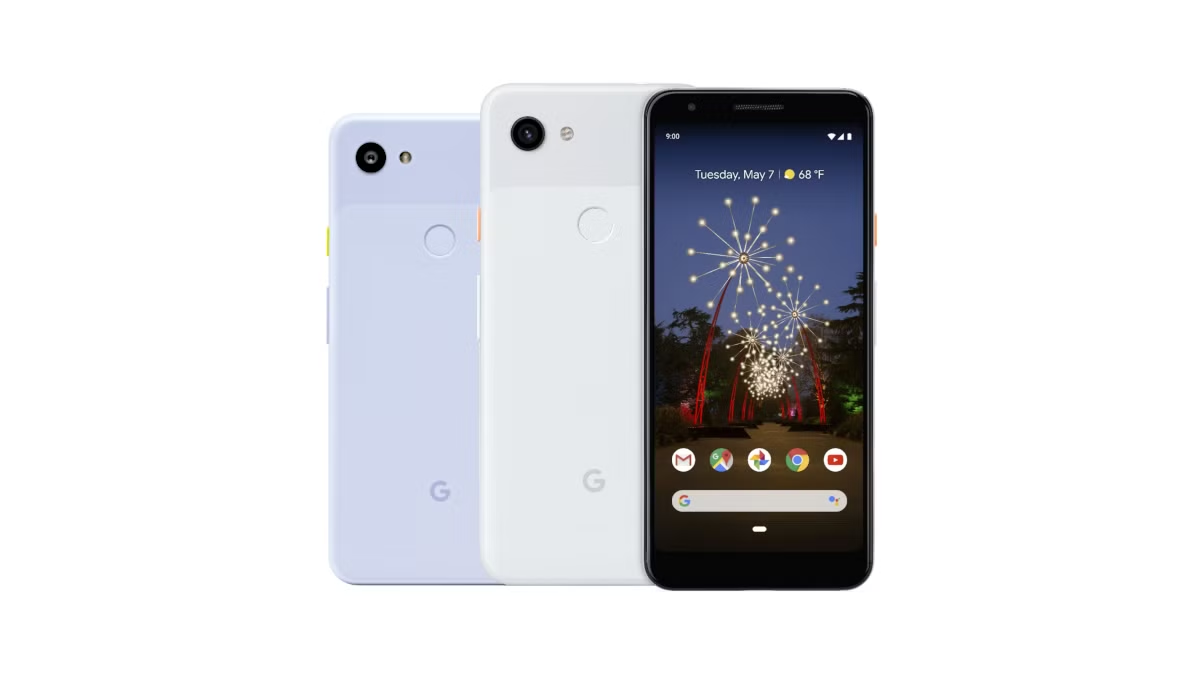
The Google Pixel 3 was unveiled in October 2018 as part of Google’s continued effort to refine the Android experience through in-house design and innovation. Building on the success of the Pixel 2, this model offered a more elegant glass design, wireless charging, improved cameras, and enhanced AI features. It showcased Google’s deep focus on integrating artificial intelligence and machine learning into photography, battery optimization, and system performance. Moreover, its clean software, guaranteed updates, and pure Android interface made it one of the most stable smartphones of its time.
In addition, the Google Pixel 3 packed the powerful Snapdragon 845 chipset, a P-OLED HDR display, and stereo speakers — creating a balanced combination of performance, design, and usability. Its refined dual front camera system introduced a wider field of view for group selfies, while the single rear camera continued to outperform even dual-camera flagships through software brilliance. Even though it is now discontinued, the Pixel 3 remains a benchmark for Google’s intelligent and photography-first smartphone philosophy.
Google Pixel 3 Full Phone Specifications
| Category | Specification |
|---|---|
| Launch | Announced October 09, 2018; Released October 18, 2018 |
| Status | Discontinued |
| Network | GSM / CDMA / HSPA / EVDO / LTE |
| Body Dimensions | 145.6 x 68.2 x 7.9 mm (5.73 x 2.69 x 0.31 in) |
| Weight | 148 g (5.22 oz) |
| Build | Glass front (Gorilla Glass 5), glass back (Gorilla Glass 5), aluminum frame |
| SIM | Nano-SIM + eSIM |
| Water Resistance | IP68 dust tight and water resistant (up to 1.5m for 30 min) |
| Display Type | P-OLED, HDR |
| Display Size | 5.5 inches, 76.7 cm² (~77.2% screen-to-body ratio) |
| Resolution | 1080 x 2160 pixels, 18:9 ratio (~443 ppi density) |
| Protection | Corning Gorilla Glass 5 |
| OS | Android 9.0 (Pie), upgradable to Android 12 |
| Chipset | Qualcomm Snapdragon 845 (10 nm) |
| CPU | Octa-core (4×2.5 GHz Kryo 385 Gold & 4×1.6 GHz Kryo 385 Silver) |
| GPU | Adreno 630 |
| Internal Storage | 64GB/128GB UFS 2.1, 4GB RAM |
| Card Slot | No |
| Main Camera | 12.2 MP, f/1.8, 28mm (wide), 1/2.55″, 1.4µm, dual pixel PDAF, OIS |
| Camera Features | Dual-LED flash, Pixel Shift, Auto-HDR, panorama |
| Video | 4K@30fps, 1080p@30/60/120fps (gyro-EIS) |
| Selfie Camera | Dual: 8 MP, f/1.8, 28mm (wide), PDAF + 8 MP, f/2.2, 19mm (ultrawide) |
| Selfie Features | HDR |
| Sound | Stereo speakers, no 3.5mm jack |
| Connectivity | Wi-Fi 802.11 a/b/g/n/ac, Bluetooth 5.0, GPS, GLONASS, BDS, GALILEO, NFC, USB Type-C 3.1 |
| Sensors | Fingerprint (rear-mounted), accelerometer, gyro, proximity, compass, barometer |
| Battery | Li-Po 2915 mAh, non-removable |
| Charging | 18W wired (PD2.0), 5W wireless |
| Models | G013A |
| Colors | Clearly White, Just Black, Not Pink |
| Price | About 450 EUR |
Camera
The Google Pixel 3’s camera system continued Google’s dominance in computational photography. The 12.2 MP rear camera with dual-pixel phase detection autofocus, optical image stabilization, and f/1.8 aperture captured extraordinary detail and dynamic range. Furthermore, its HDR+ and Night Sight modes enhanced both daylight and low-light photography, producing balanced, noise-free images. Video recording was equally impressive, supporting 4K at 30fps and 1080p slow motion, stabilized by gyro-EIS for cinematic results.
The dual 8 MP front cameras introduced versatility to selfies, combining a wide-angle and an ultrawide sensor. This allowed users to capture group selfies without distortion while maintaining excellent detail and natural skin tones. Moreover, the integration of AI-driven features such as Top Shot and Photobooth Mode ensured every moment was perfectly framed and timed. Consequently, the Pixel 3 remained one of the best photography phones of its generation.
Design and Display
The Google Pixel 3 refined Google’s minimalist design approach. Constructed with a Gorilla Glass 5 front and back, and a durable aluminum frame, it offered a sleek, premium feel while maintaining sturdiness. The matte-textured finish improved grip and minimized fingerprints, while IP68 water resistance added reliable protection. Additionally, its rear fingerprint sensor provided fast authentication and gesture support for quick navigation.
The 5.5-inch P-OLED HDR display delivered sharp and vibrant visuals with 1080 x 2160 resolution and a 443 ppi density. Its 18:9 aspect ratio ensured a comfortable grip and optimal screen space for multimedia and browsing. Moreover, the display’s HDR support provided deeper contrast and more lifelike color reproduction, enhancing both video playback and gaming. Therefore, the Pixel 3 offered a visually immersive experience within a compact form factor.
Performance
Powered by the Qualcomm Snapdragon 845 chipset, the Google Pixel 3 delivered fast and consistent performance. The Octa-core CPU and Adreno 630 GPU, supported by 4GB of RAM, handled multitasking, gaming, and app usage with ease. Furthermore, Google’s clean Android software ensured smooth animations and responsive navigation without unnecessary background processes.
The Pixel 3 launched with Android 9.0 Pie and later received Android 12, maintaining stability and receiving security updates for years. Features like Active Edge allowed users to squeeze the phone to activate the Google Assistant instantly, while Now Playing identified music automatically in the background. Moreover, Google’s AI integration learned user habits to optimize battery life, app performance, and notifications, making the device smarter with time.
Battery and Charging
The 2915 mAh battery of the Google Pixel 3 provided solid all-day performance, aided by intelligent power management. It supported 18W fast wired charging via Power Delivery 2.0 and 5W wireless charging, marking the first Pixel phone to introduce Qi wireless compatibility. Moreover, adaptive battery technology extended longevity by prioritizing frequently used apps and limiting background consumption. Despite its modest capacity, efficient optimization ensured that the Pixel 3 handled daily tasks without running out of power prematurely.
Durability
Durability was a major highlight of the Google Pixel 3. The Gorilla Glass 5 construction, IP68 water resistance, and solid aluminum frame offered premium protection against drops and moisture. Additionally, the matte-textured glass reduced wear and provided better handling comfort. Even after years of use, the Pixel 3 retained its structural integrity and performance reliability, proving Google’s commitment to quality craftsmanship.
Ultimately, the Google Pixel 3 combined AI-driven intelligence, camera excellence, and thoughtful design in one elegant package. It demonstrated Google’s ability to merge hardware innovation with software precision. Furthermore, it remains an iconic smartphone that helped shape the evolution of Android devices in both performance and photography.