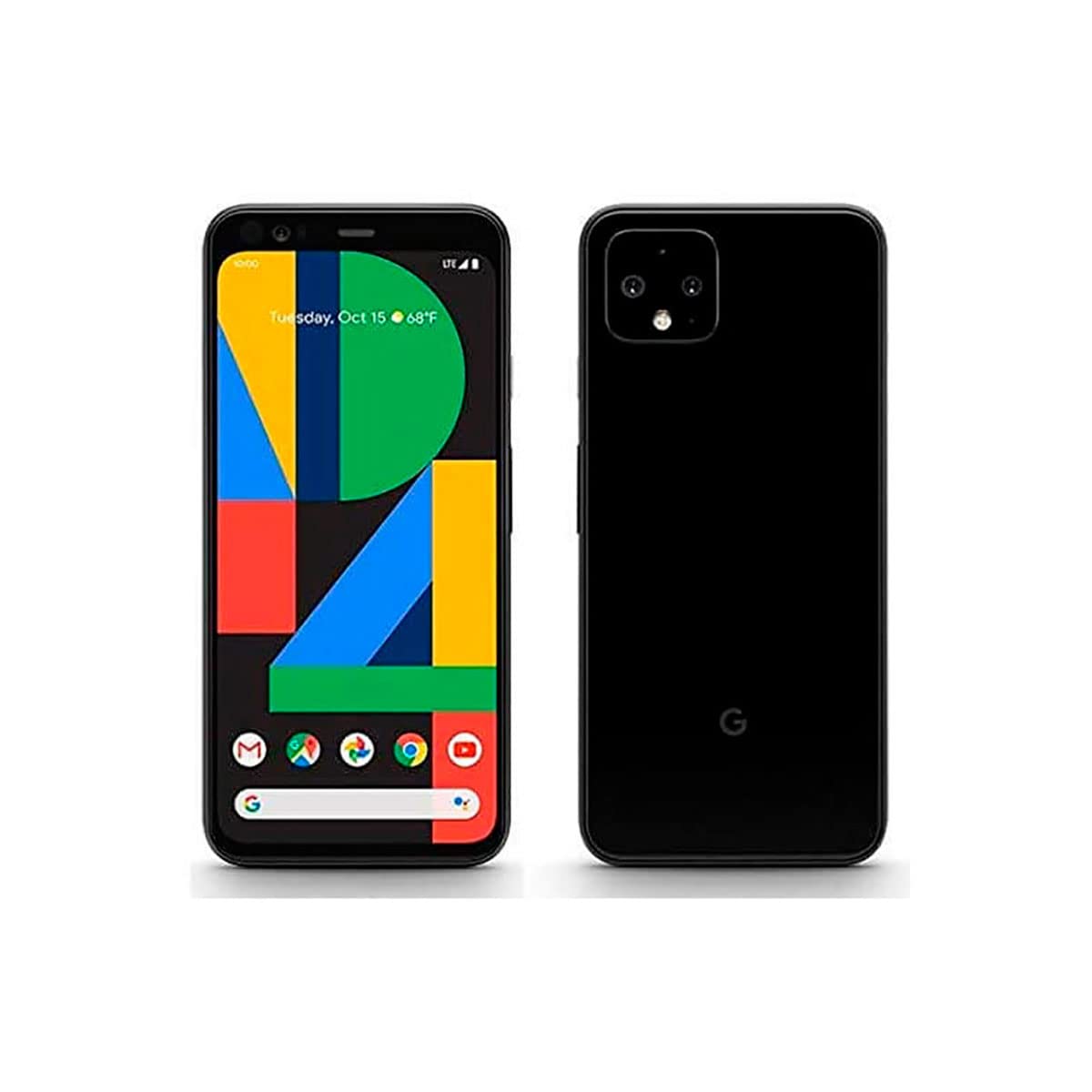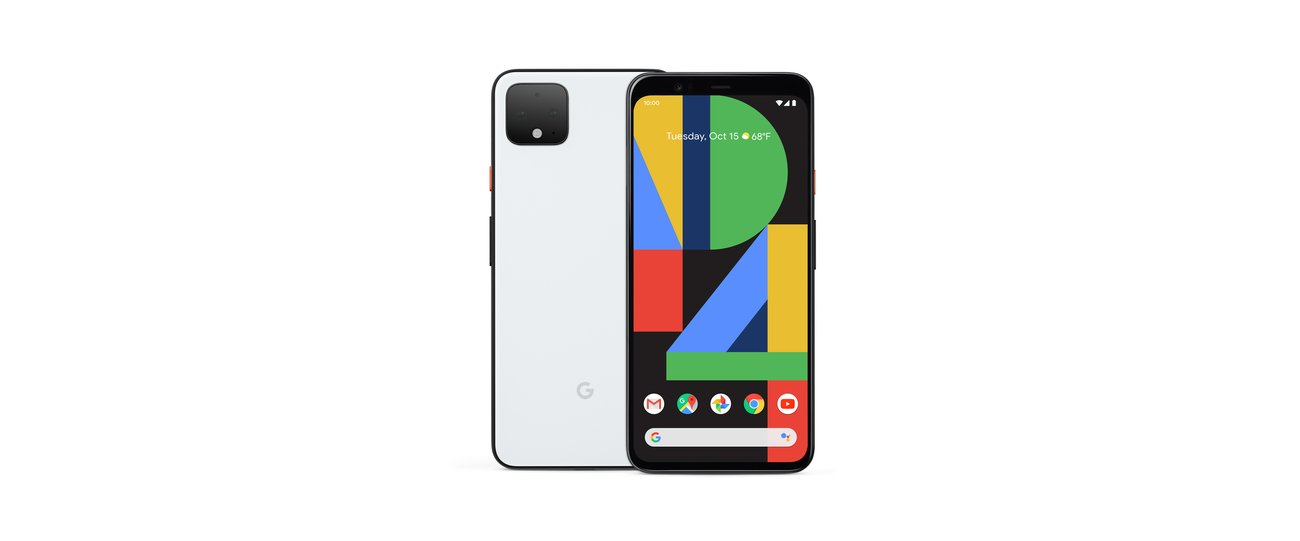
The Google Pixel 4 was launched in October 2019 as Google’s next-generation flagship, showcasing a leap forward in both hardware and software innovation. Building upon the Pixel legacy, it introduced features such as a 90Hz Smooth Display, advanced motion-sensing radar technology, and dual rear cameras — a first for Google’s smartphone lineup. The Pixel 4 refined the Android experience by integrating artificial intelligence, computational photography, and gesture control in one sleek package. Moreover, it marked Google’s deeper exploration into machine learning, offering improved Google Assistant performance and real-time AI processing directly on the device.
In addition, the Google Pixel 4 combined a stylish aluminum and glass build with IP68 water resistance, offering both durability and premium appeal. Powered by the Snapdragon 855 chipset and 6GB of RAM, it delivered smooth multitasking and responsive performance across all applications. Despite its modest battery capacity, its lightweight design, intelligent software, and innovative features made it one of the most distinctive smartphones of its generation.
Google Pixel 4 Full Phone Specifications
| Category | Specification |
|---|---|
| Launch | Announced October 15, 2019; Released October 22, 2019 |
| Status | Available |
| Network | GSM / CDMA / HSPA / EVDO / LTE |
| Body Dimensions | 147.1 x 68.8 x 8.2 mm (5.79 x 2.71 x 0.32 in) |
| Weight | 162 g (5.71 oz) |
| Build | Glass front (Gorilla Glass 5), glass back (Gorilla Glass 5), aluminum frame |
| SIM | Nano-SIM + eSIM |
| Water Resistance | IP68 dust tight and water resistant (up to 1.5m for 30 min) |
| Display Type | P-OLED, 90Hz, HDR |
| Display Size | 5.7 inches, 80.7 cm² (~79.8% screen-to-body ratio) |
| Resolution | 1080 x 2280 pixels, 19:9 ratio (~444 ppi density) |
| Protection | Corning Gorilla Glass 5 |
| OS | Android 10, upgradable to Android 13 |
| Chipset | Qualcomm Snapdragon 855 (7 nm) |
| CPU | Octa-core (1×2.84 GHz Kryo 485 & 3×2.42 GHz Kryo 485 & 4×1.78 GHz Kryo 485) |
| GPU | Adreno 640 |
| Internal Storage | 64GB/128GB UFS 2.1, 6GB RAM |
| Card Slot | No |
| Main Camera | Dual: 12.2 MP (wide) + 16 MP (telephoto), PDAF, OIS, 2x optical zoom |
| Camera Features | Dual-LED flash, Pixel Shift, Auto-HDR, panorama |
| Video | 4K@30fps, 1080p@30/60/120fps (gyro-EIS) |
| Selfie Camera | 8 MP, f/2.0, 22mm (wide) + TOF 3D sensor |
| Selfie Features | HDR, Face ID (biometric depth mapping) |
| Sound | Stereo speakers, no 3.5mm jack |
| Connectivity | Wi-Fi 802.11 a/b/g/n/ac, Bluetooth 5.0, GPS, GLONASS, BDS, GALILEO, NFC, USB Type-C 3.1 |
| Sensors | Face ID, accelerometer, gyro, proximity, compass, barometer |
| Battery | Li-Po 2800 mAh, non-removable |
| Charging | 18W wired (PD2.0), 5W wireless |
| Models | G020M, G020I, GA01188-US, GA01187-US, GA01189-US, GA01191-US |
| Colors | Clearly White, Just Black, Oh So Orange |
| Price | About 200 EUR |
Camera
The Google Pixel 4 elevated smartphone photography with its dual-lens camera system, introducing a 16 MP telephoto lens alongside the renowned 12.2 MP wide sensor. With optical image stabilization, dual pixel phase detection autofocus, and Super Res Zoom, the Pixel 4 captured remarkably sharp photos even without a dedicated telephoto lens in previous generations. Furthermore, its Night Sight mode reached new heights, enabling users to photograph star-filled skies with Astrophotography Mode. Videos were equally strong, supporting 4K at 30fps and 1080p at up to 120fps with exceptional stabilization.
The 8 MP front camera, combined with a TOF 3D depth sensor, enhanced selfies and introduced secure Face Unlock authentication. The camera delivered lifelike portraits and consistent skin tones under all conditions. Consequently, the Pixel 4 became a benchmark for smartphone photography, showcasing Google’s computational photography dominance.
Design and Display
The Google Pixel 4 featured a minimalist yet premium design, blending glass and aluminum into a refined frame. The matte finish aluminum frame provided both style and grip, while the IP68 rating ensured water and dust resistance. Its compact size made it ergonomic, appealing to users who preferred manageable dimensions without sacrificing display quality.
The 5.7-inch P-OLED HDR display was vibrant and sharp, boasting 1080 x 2280 resolution and a 90Hz refresh rate that delivered smooth scrolling and responsive gaming. Moreover, HDR support and Gorilla Glass 5 protection ensured bright visuals and long-lasting durability. The inclusion of Motion Sense radar technology allowed for touchless gestures, letting users skip songs or silence calls with a simple wave of the hand. Therefore, the Pixel 4 merged futuristic technology with user-centric design.
Performance
Equipped with the Qualcomm Snapdragon 855 chipset, the Google Pixel 4 offered flagship-grade performance. Its Octa-core CPU and Adreno 640 GPU provided exceptional speed for gaming, app multitasking, and productivity. Coupled with 6GB of RAM, it handled demanding workloads with ease. Moreover, Google’s software optimization ensured smooth animations and consistent responsiveness.
Running Android 10, upgradable to Android 13, the Pixel 4 benefited from years of Google’s feature updates and security patches. Its Pixel Neural Core enabled on-device AI processing for faster Google Assistant commands and real-time transcription. Additionally, adaptive brightness, battery learning, and gesture navigation enhanced the overall usability. As a result, the Pixel 4 delivered one of the most intelligent Android experiences available.
Battery and Charging
The 2800 mAh Li-Po battery may have appeared modest on paper, but efficient hardware and AI-driven optimization extended daily endurance. It supported 18W USB Power Delivery fast charging and 5W wireless charging, giving users flexible power options. Furthermore, the adaptive battery feature learned user habits, prioritizing energy for frequently used apps. Although its capacity was smaller than competitors, smart energy management ensured reliable all-day performance for most users.
Durability
Durability was another highlight of the Google Pixel 4. The Gorilla Glass 5 protection on both sides provided scratch resistance and structural integrity, while the aluminum frame reinforced its sturdiness. The IP68 certification further safeguarded it against spills and dust intrusion. Moreover, Google’s build precision ensured long-term reliability, withstanding daily wear without compromising aesthetics.
Ultimately, the Google Pixel 4 exemplified Google’s mastery of hardware-software harmony. It introduced pioneering technology, refined design, and top-tier photography in a compact body. Furthermore, its smart features, 90Hz display, and radar-based interactions made it one of the most innovative Android flagships of its time.