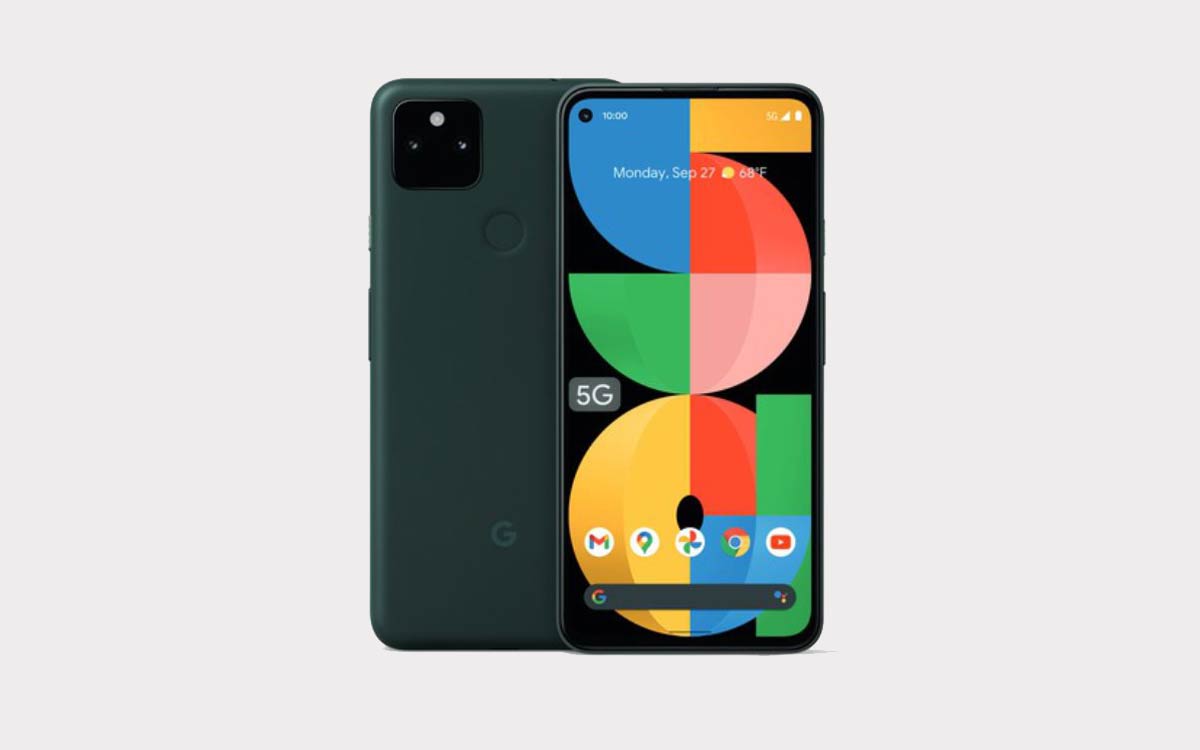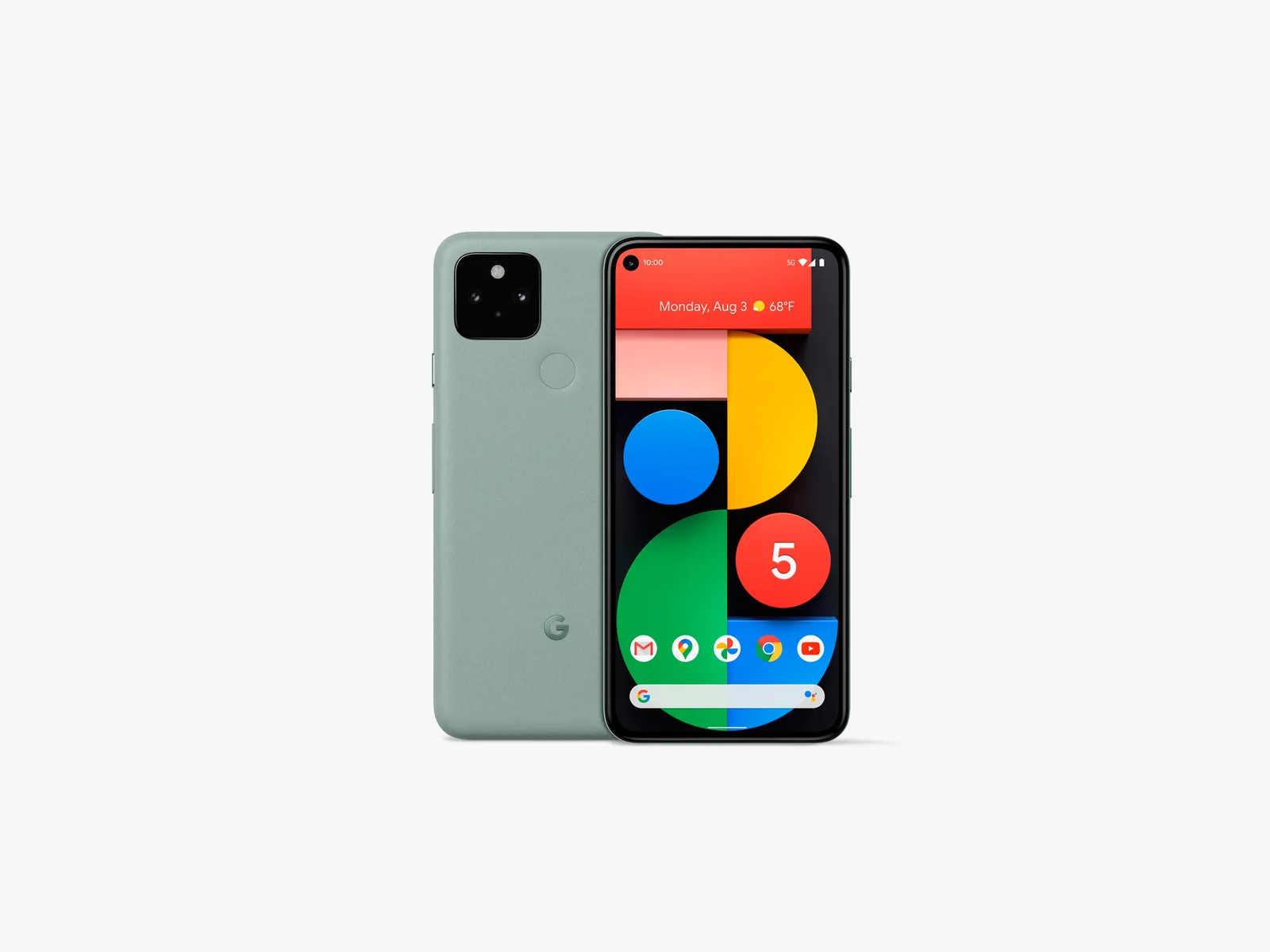
The Google Pixel 5 was officially released in October 2020, marking a turning point in Google’s smartphone strategy. Rather than competing head-to-head with ultra-premium flagships, Google focused on balance, practicality, and smart engineering. The Pixel 5 combined a sleek design, efficient performance, and the signature Pixel camera experience with 5G connectivity at an attractive price point. It was designed for users who valued consistency, photography excellence, and long-term software support over sheer specs.
Furthermore, the Google Pixel 5 distinguished itself through simplicity and refinement. It introduced an aluminum unibody with a bio-resin coating, making it both lightweight and durable. Equipped with the Snapdragon 765G processor, 8GB RAM, and a 90Hz OLED display, it delivered fluid performance and vibrant visuals. The inclusion of wireless and reverse charging elevated its convenience, while its IP68 water resistance confirmed its flagship quality.
Google Pixel 5 Full Phone Specifications
| Category | Specification |
|---|---|
| Launch | Announced September 30, 2020; Released October 15, 2020 |
| Status | Available |
| Network | GSM / CDMA / HSPA / EVDO / LTE / 5G |
| Body Dimensions | 144.7 x 70.4 x 8 mm (5.70 x 2.77 x 0.31 in) |
| Weight | 151 g (5.33 oz) |
| Build | Glass front (Gorilla Glass 6), aluminum back, aluminum frame |
| SIM | Nano-SIM + eSIM |
| Water Resistance | IP68 dust tight and water resistant (up to 1.5m for 30 min) |
| Display Type | OLED, 90Hz, HDR10+ |
| Display Size | 6.0 inches, 87.6 cm² (~85.9% screen-to-body ratio) |
| Resolution | 1080 x 2340 pixels, 19.5:9 ratio (~432 ppi density) |
| Protection | Corning Gorilla Glass 6 |
| OS | Android 11, upgradable to Android 14 |
| Chipset | Qualcomm Snapdragon 765G 5G (7 nm) |
| CPU | Octa-core (1×2.4 GHz Kryo 475 Prime & 1×2.2 GHz Kryo 475 Gold & 6×1.8 GHz Kryo 475 Silver) |
| GPU | Adreno 620 |
| Internal Storage | 128GB UFS 2.1, 8GB RAM |
| Card Slot | No |
| Main Camera | Dual: 12.2 MP (wide) + 16 MP (ultrawide) |
| Camera Features | LED flash, Pixel Shift, Auto-HDR, panorama |
| Video | 4K@30/60fps, 1080p@30/60/120/240fps; gyro-EIS |
| Selfie Camera | 8 MP, f/2.0, 24mm (wide) |
| Selfie Features | HDR |
| Video | 1080p@30fps |
| Sound | Stereo speakers, no 3.5mm headphone jack |
| Connectivity | Wi-Fi 802.11 a/b/g/n/ac, Bluetooth 5.0, GPS, GLONASS, GALILEO, QZSS, BDS, NFC, USB Type-C 3.1 |
| Sensors | Fingerprint (rear-mounted), accelerometer, gyro, proximity, compass, barometer |
| Battery | Li-Po 4080 mAh, non-removable |
| Charging | 18W wired (PD2.0), 12W wireless, 5W reverse wired |
| Colors | Just Black, Sorta Sage |
| Models | GD1YQ, GTT9Q, G5NZ6 |
| Price | $159 / €235 / £129 |
Camera
The Google Pixel 5 maintained Google’s dominance in smartphone photography through its dual rear camera system, consisting of a 12.2 MP main sensor with Optical Image Stabilization (OIS) and a 16 MP ultrawide lens. The combination delivered consistent, detailed, and color-accurate shots across lighting conditions. Moreover, features like Night Sight, Portrait Light, and Astrophotography Mode allowed for exceptional creativity, even in low light or star-filled skies. Thanks to Google’s HDR+ and AI image processing, every capture displayed professional-level balance and tone.
The 8 MP front camera also produced natural-looking selfies with sharp focus and excellent exposure management. In addition, video performance was enhanced with 4K recording at up to 60fps and electronic image stabilization, ensuring smooth and cinematic footage. Overall, the Pixel 5 camera remained one of the most versatile and dependable in its category.
Design and Display
Design-wise, the Google Pixel 5 embraced sustainability and practicality. Its aluminum body with a bio-resin finish was lightweight yet premium, and the IP68 rating offered dependable protection against dust and water. The minimalist aesthetics, combined with two color options — Just Black and Sorta Sage — gave it a clean, timeless look. Furthermore, its matte finish improved grip while resisting fingerprints.
The 6.0-inch OLED display with 90Hz refresh rate and HDR10+ support delivered excellent clarity and responsiveness. The 1080 x 2340 resolution ensured vibrant visuals, deep blacks, and smooth scrolling. Whether gaming, streaming, or browsing, the display offered a delightful experience enhanced by strong color accuracy. Consequently, the Pixel 5 struck a perfect balance between compact usability and flagship-level display quality.
Performance
Powered by the Snapdragon 765G 5G chipset, the Google Pixel 5 handled multitasking and gaming efficiently while consuming less power than traditional flagship processors. The 8GB of RAM ensured snappy performance, while the Adreno 620 GPU provided smooth rendering for games and videos. Despite not featuring a top-tier chipset, the optimization between Google’s software and hardware made performance seamless and reliable.
Running on Android 11 and upgradable to Android 14, the Pixel 5 offered one of the cleanest and fastest user experiences on Android. Features like Call Screen, Recorder with live transcription, and Google Assistant voice actions integrated AI to simplify daily tasks. Moreover, Google’s Pixel Neural Core optimized photography, speech processing, and on-device machine learning, ensuring the phone stayed efficient and responsive throughout its lifespan.
Battery and Charging
The 4080 mAh battery was a significant improvement over previous Pixel generations, providing all-day endurance under moderate to heavy use. It supported 18W fast charging, 12W wireless charging, and even 5W reverse wired charging, allowing users to share power with accessories. Additionally, adaptive battery and adaptive charging used AI to learn habits and extend battery health over time. This combination made the Pixel 5 both powerful and energy-efficient, meeting modern users’ demands effortlessly.
Durability
Durability and sustainability defined the Google Pixel 5. Its recycled aluminum frame provided rigidity, while the Gorilla Glass 6 front shielded against scratches and drops. The IP68 certification ensured reliability even in harsh conditions. Despite its lightweight build, it maintained the solid feel of a premium flagship. Its long-term software support and material quality made it a smartphone designed to last.
Ultimately, the Google Pixel 5 embodied Google’s refined approach to smartphone design — smart, practical, and user-focused. It combined efficiency, elegance, and superior photography within a thoughtfully crafted body. Moreover, its lasting software support and 5G capability made it a future-ready device that balanced innovation with everyday reliability.