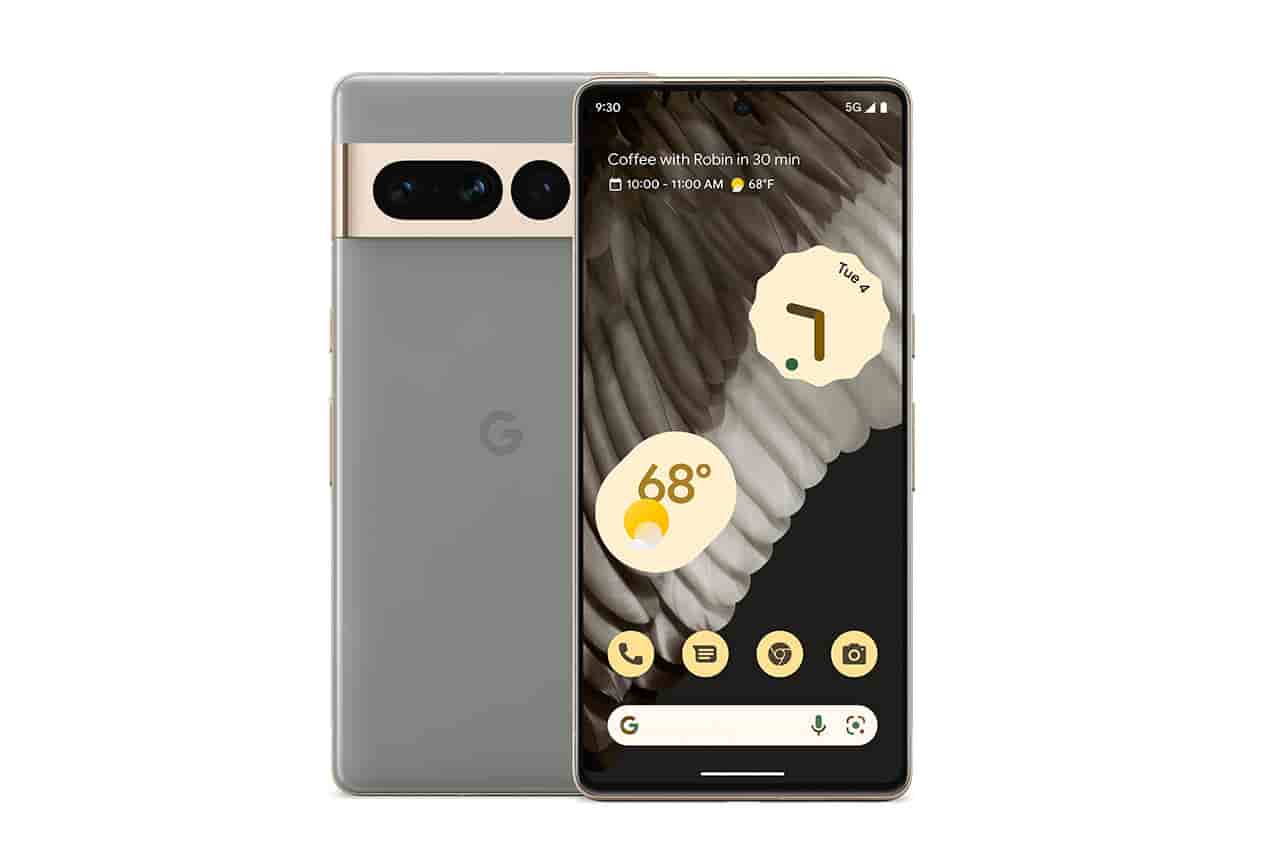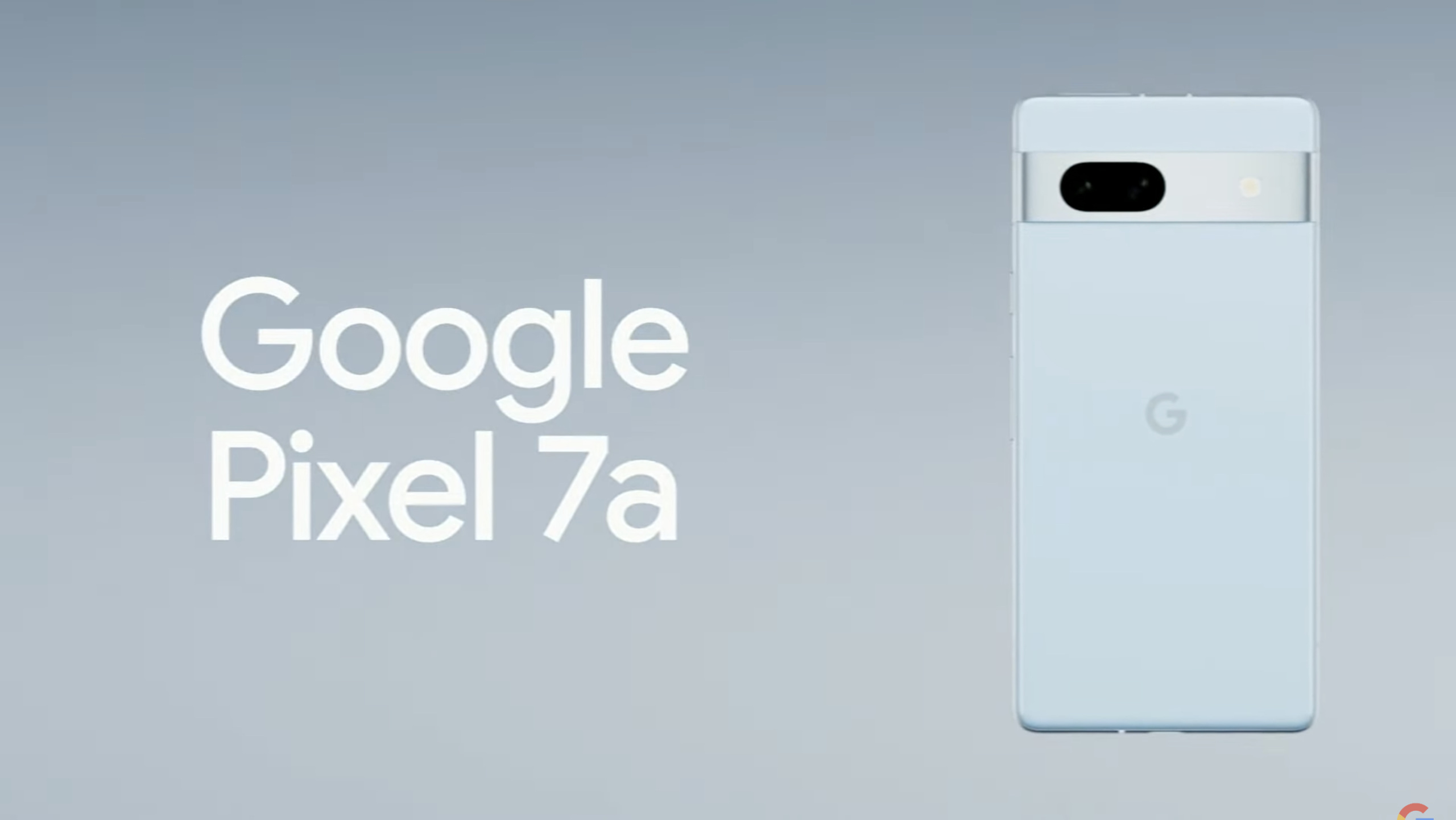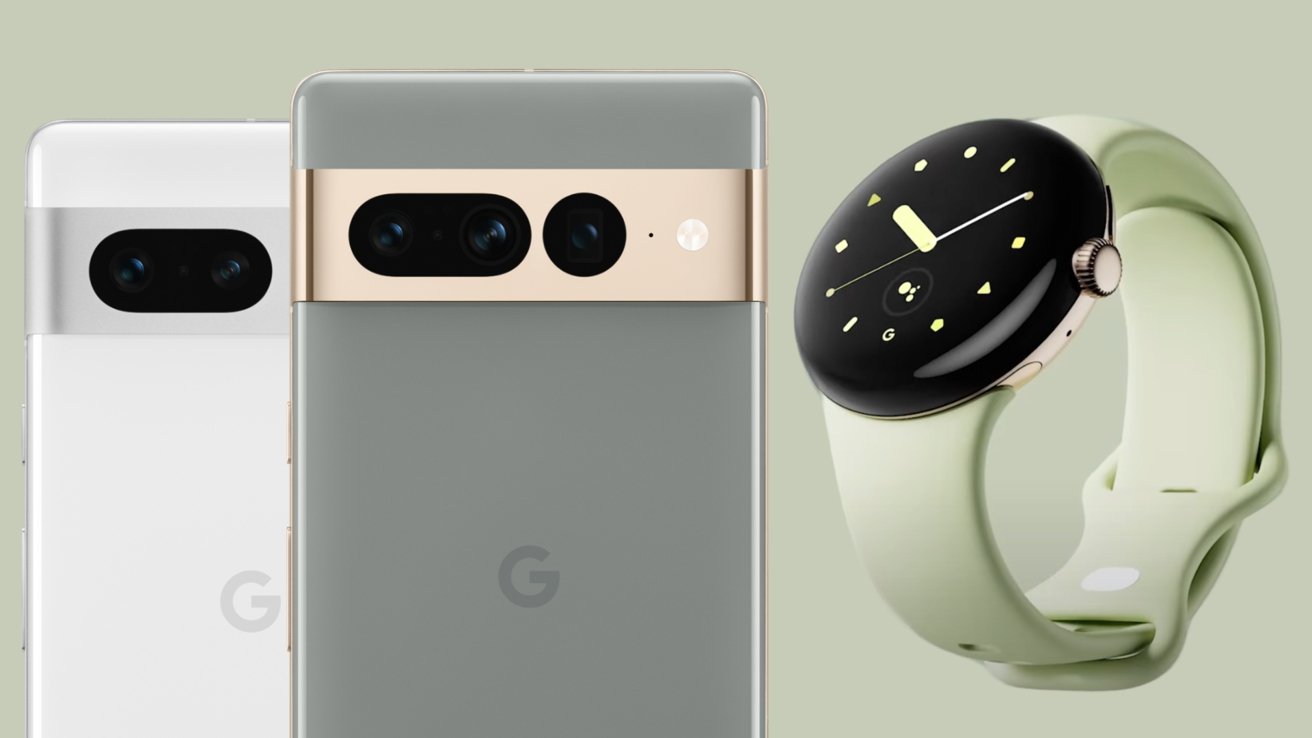
The Google Pixel 7 was officially released in October 2022, continuing Google’s tradition of refining its flagship smartphones through intelligent design and AI-driven performance. It debuted alongside the Pixel 7 Pro, bringing the same Tensor G2 chipset and advanced camera system at a more compact and affordable scale. Crafted with Gorilla Glass Victus on both the front and back, an aluminum frame, and IP68 dust and water resistance, it embodied a premium yet minimalist design that defined Google’s maturing hardware vision.
The Google Pixel 7 offered the perfect blend of power, photography, and practicality. Running Android 13 and upgradable to Android 15, it promised up to five years of major software updates and security patches. With its 6.3-inch AMOLED display featuring HDR10+, 90Hz refresh rate, and a peak brightness of 1400 nits, the phone provided a visually rich and fluid experience. Backed by 8GB RAM, UFS 3.1 storage, and Tensor G2’s AI processing, the Pixel 7 handled demanding tasks, multitasking, and imaging effortlessly.
Google Pixel 7 Full Phone Specifications
| Category | Specification |
|---|---|
| Launch | Announced October 6, 2022; Released October 13, 2022 |
| Status | Available |
| Network | GSM / CDMA / HSPA / EVDO / LTE / 5G |
| Body Dimensions | 155.6 x 73.2 x 8.7 mm (6.13 x 2.88 x 0.34 in) |
| Weight | 197 g (6.95 oz) |
| Build | Glass front (Gorilla Glass Victus), glass back (Gorilla Glass Victus), aluminum frame |
| SIM | Nano-SIM + eSIM |
| Water Resistance | IP68 dust/water resistant (up to 1.5m for 30 min) |
| Display Type | AMOLED, 90Hz, HDR10+, 1000 nits (HBM), 1400 nits (peak) |
| Display Size | 6.3 inches, 96.7 cm² (~84.9% screen-to-body ratio) |
| Resolution | 1080 x 2400 pixels, 20:9 ratio (~416 ppi density) |
| Protection | Corning Gorilla Glass Victus |
| OS | Android 13, upgradable to Android 15 (5 years of major updates) |
| Chipset | Google Tensor G2 (5 nm) |
| CPU | Octa-core (2×2.85 GHz Cortex-X1 & 2×2.35 GHz Cortex-A78 & 4×1.80 GHz Cortex-A55) |
| GPU | Mali-G710 MP7 |
| Internal Storage | 128GB / 256GB UFS 3.1, 8GB RAM |
| Card Slot | No |
| Main Camera | Dual: 50 MP (wide) + 12 MP (ultrawide) |
| Camera Features | Laser AF, Dual-LED flash, Pixel Shift, Auto-HDR, panorama |
| Video | 4K@30/60fps, 1080p@30/60/120/240fps; gyro-EIS, OIS, 10-bit HDR |
| Selfie Camera | 10.8 MP, f/2.2, 21mm (ultrawide), 1/3.1″, 1.22µm |
| Selfie Features | HDR, panorama |
| Video | 4K@30/60fps, 1080p@30/60fps |
| Sound | Stereo speakers, no 3.5mm headphone jack |
| Connectivity | Wi-Fi 802.11 a/b/g/n/ac/6e, Bluetooth 5.2, GPS, GLONASS, BDS, GALILEO, QZSS, NFC, USB Type-C 3.2 |
| Sensors | Fingerprint (under display, optical), accelerometer, gyro, proximity, compass, barometer |
| Battery | Li-Ion 4355 mAh, non-removable |
| Charging | 20W wired (PD3.0, 50% in 30 min), 20W wireless, reverse wireless |
| Colors | Obsidian, Lemongrass, Snow |
| Models | GVU6C, GQML3, GO3Z5 |
| Price | $189.98 / €205 / £194 / ₹27,999 |
| Performance Tests | AnTuTu: 813114 (v9), GeekBench: 3288 (v5.1), GFXBench: 59fps (ES 3.1 onscreen) |
| Display Brightness | 974 nits max brightness (measured) |
| Battery Life | Endurance rating: 96h |
Camera
The Google Pixel 7 continued Google’s dominance in smartphone photography, offering a refined dual-camera system powered by Tensor G2’s AI processing. Its 50MP wide sensor captured intricate details and vibrant colors, while the 12MP ultrawide lens provided versatility for landscape and creative shots. Enhanced by OIS, laser autofocus, and 10-bit HDR video recording, the Pixel 7 delivered cinematic video stability and true-to-life color reproduction.
The 10.8MP front-facing camera offered an expanded ultrawide perspective, perfect for selfies and group shots. It supported 4K recording and HDR, making it ideal for vloggers and video calls. Features like Real Tone, Photo Unblur, Magic Eraser, and Cinematic Blur leveraged machine learning to produce realistic, professional-grade images straight from the camera app. In both daylight and low light, the Pixel 7 remained one of the most consistent performers in its class.
Design and Display
Visually, the Google Pixel 7 refined the design language introduced with the Pixel 6 series. Its polished aluminum frame elegantly merged with the signature camera bar, providing a more cohesive and durable structure. The device’s ergonomic curvature and moderate size made it comfortable for single-hand use while maintaining a premium aesthetic. The color options — Obsidian, Lemongrass, and Snow — added personality without sacrificing elegance.
Its 6.3-inch AMOLED HDR10+ display struck an ideal balance between sharpness and responsiveness. The 90Hz refresh rate ensured smooth scrolling and animation transitions, while the peak brightness of 1400 nits improved outdoor visibility. Combined with deep contrast, vivid color accuracy, and a 20:9 aspect ratio, the Pixel 7’s display provided an immersive visual experience suitable for both work and entertainment.
Performance
At the core of the Pixel 7 was the Google Tensor G2 processor, built on a 5nm process. This chipset improved upon its predecessor with enhanced machine learning efficiency, faster AI inference, and improved thermal control. The Mali-G710 GPU boosted gaming and graphics performance, while 8GB of RAM ensured seamless multitasking.
The Pixel 7 excelled in real-world performance, delivering lightning-fast app launches and fluid system navigation. Tensor G2’s TPU (Tensor Processing Unit) optimized speech recognition, live translation, and photo processing. Paired with Android 13, it provided a clean, fluid, and secure interface with Material You customization and Smart Battery Optimization. The integration between hardware and software made the Pixel 7 one of the smoothest Android devices available.
Battery and Charging
The 4355mAh battery in the Pixel 7 balanced endurance with power efficiency, providing up to 96 hours of mixed-use performance. The 20W fast charging reached 50% capacity in just 30 minutes, while wireless and reverse charging added versatility. The adaptive battery feature learned user habits, extending battery life intelligently over time. With Tensor G2’s energy-efficient design and AMOLED display optimization, the Pixel 7 offered excellent all-day reliability.
Durability
Built to withstand everyday challenges, the Google Pixel 7 featured Gorilla Glass Victus on both sides for scratch resistance and drop protection. Its aluminum frame added rigidity, while IP68 certification ensured protection against water and dust. The under-display fingerprint sensor provided quick and secure authentication. Over time, its robust construction and reliable software updates reinforced its longevity and sustainability.
Overall, the Google Pixel 7 perfectly balanced performance, design, and intelligence. It brought flagship-level photography, AI capabilities, and durability at an attractive price point. For users seeking a powerful, smart, and dependable Android phone, the Pixel 7 remained one of the most complete packages in Google’s smartphone lineup.