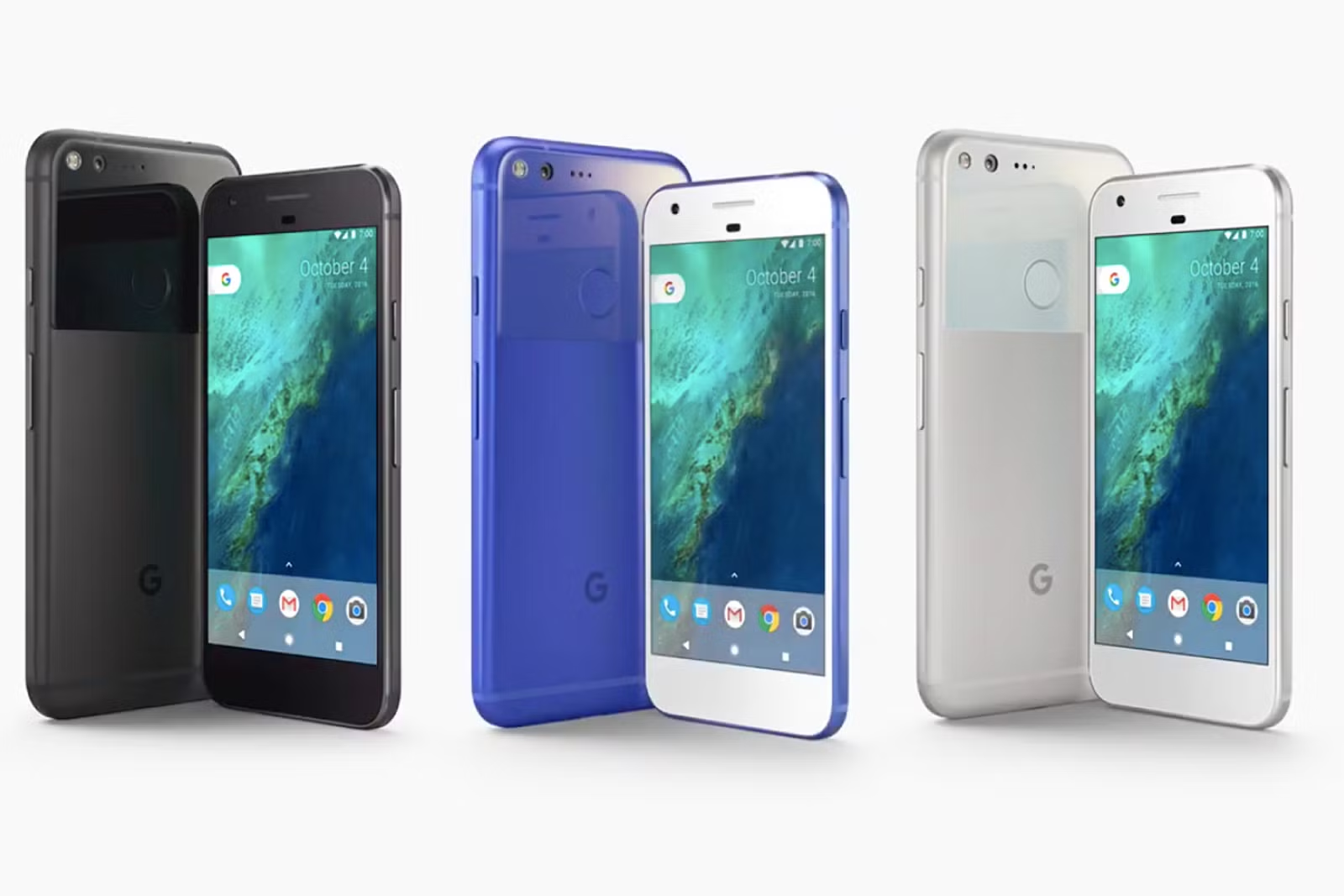
The Google Pixel XL was Google’s first large-screen flagship smartphone, unveiled in October 2016 alongside the smaller Pixel. It marked Google’s bold move into premium smartphone manufacturing, offering a seamless blend of hardware and software designed entirely in-house. Unlike the earlier Nexus devices, this phone fully represented Google’s design philosophy — pure Android performance, fast updates, and intelligent AI integration through the Google Assistant. Moreover, the Pixel XL stood out for its top-tier camera, vivid AMOLED display, and reliable battery life.
In addition, the Google Pixel XL provided a refined experience that appealed to power users who valued stability and efficiency. Its metal and glass construction, vibrant Quad HD display, and Snapdragon 821 processor placed it among the best Android flagships of its time. Even years after its release, the Pixel XL remains respected for its durability, fluid performance, and photographic excellence that set a high standard for future Pixel generations.
Google Pixel XL Full Phone Specifications
| Category | Specification |
|---|---|
| Launch | Announced October 04, 2016; Released October 20, 2016 |
| Status | Discontinued |
| Network | GSM / HSPA / LTE |
| Body Dimensions | 154.7 x 75.7 x 8.5 mm (6.09 x 2.98 x 0.33 in) |
| Weight | 168 g (5.93 oz) |
| Build | Glass front (Gorilla Glass 4), aluminum/glass back, aluminum frame |
| SIM | Nano-SIM |
| Water Resistance | Water-repellent coating |
| Display Type | AMOLED |
| Display Size | 5.5 inches, 83.4 cm² (~71.2% screen-to-body ratio) |
| Resolution | 1440 x 2560 pixels, 16:9 ratio (~534 ppi density) |
| Protection | Corning Gorilla Glass 4 |
| OS | Android 7.1 (Nougat), upgradable to Android 10 |
| Chipset | Qualcomm Snapdragon 821 (14 nm) |
| CPU | Quad-core (2×2.15 GHz Kryo & 2×1.6 GHz Kryo) |
| GPU | Adreno 530 |
| Internal Storage | 32GB/128GB UFS 2.0, 4GB RAM |
| Card Slot | No |
| Main Camera | 12.3 MP, f/2.0, 1/2.3″, 1.55µm, PDAF |
| Camera Features | Laser AF, Dual-LED flash, HDR, panorama |
| Video | 4K@30fps, 1080p@60/120fps, 720p@240fps |
| Selfie Camera | 8 MP, f/2.4, 1/3.2″, 1.4µm, 1080p@30fps |
| Sound | Loudspeaker, 3.5mm jack |
| Connectivity | Wi-Fi 802.11 a/b/g/n/ac, Bluetooth 4.2, GPS, GLONASS, NFC, USB Type-C 3.0 |
| Sensors | Fingerprint (rear-mounted), accelerometer, gyro, proximity, compass, barometer |
| Battery | Li-Ion 3450 mAh, non-removable |
| Charging | 18W wired, PD |
| Stand-by | Up to 552 h (3G) |
| Talk time | Up to 32 h (3G) |
| Music play | Up to 130 h |
| Colors | Quite Black, Very Silver, Really Blue |
| Price | About 400 EUR |
Camera
The Google Pixel XL quickly earned acclaim for its exceptional camera capabilities. Its 12.3 MP main camera with an f/2.0 aperture and 1.55µm pixel size captured sharp, detailed images across all lighting conditions. Furthermore, the addition of laser autofocus, dual-LED flash, and HDR+ technology enhanced color depth and clarity, producing natural-looking photos that rivaled professional cameras. Video recording reached up to 4K at 30fps, and Google’s gyro-EIS stabilization ensured smooth, steady footage for creators and casual users alike.
The 8 MP front-facing camera delivered vivid selfies and supported 1080p video recording, which made it ideal for both photography and video calls. Moreover, Google’s image processing software worked hand in hand with the hardware, allowing for outstanding color reproduction and contrast without post-editing. As a result, the Pixel XL set a new benchmark for mobile photography, maintaining its reputation for years.
Design and Display
The Google Pixel XL exemplified minimalist design. Its aluminum body with a glass accent panel gave it a sleek, modern look that felt solid in hand. Meanwhile, the rear-mounted fingerprint sensor offered quick and intuitive access while enabling gesture support, improving navigation efficiency. Its slightly curved edges added comfort, making it easy to grip during long use.
Additionally, the 5.5-inch AMOLED display provided stunning visuals with 1440 x 2560 resolution and a 534 ppi pixel density. The screen produced deep blacks, accurate colors, and excellent brightness levels, ensuring great readability even outdoors. With Gorilla Glass 4 protection, users could enjoy long-term durability. Therefore, the Pixel XL became one of the best devices for media consumption, offering an immersive and vibrant viewing experience that complemented its powerful hardware.
Performance
Powered by the Qualcomm Snapdragon 821 processor, the Google Pixel XL delivered exceptional performance and responsiveness. Its Quad-core CPU and Adreno 530 GPU allowed for smooth multitasking, fast gaming, and efficient power use. Furthermore, with 4GB of RAM and UFS 2.0 storage, the phone managed data seamlessly and ensured quick app loading times.
Running Android 7.1 Nougat, the Pixel XL introduced users to the Google Assistant, which revolutionized voice interaction on mobile devices. Additionally, the operating system was later upgraded to Android 10, offering long-term support, better security, and improved UI features. The tight integration between Google’s hardware and software ensured the device operated smoothly, setting a precedent for future Pixels. Consequently, the Pixel XL offered one of the most optimized and stable Android experiences of its time.
Battery and Charging
Battery life was one of the Google Pixel XL’s most notable strengths. Equipped with a 3450 mAh non-removable Li-Ion battery, it easily powered through an entire day of moderate to heavy usage. The phone delivered up to 32 hours of talk time and 130 hours of music playback, which was impressive for a flagship of its generation. Moreover, 18W fast charging with Power Delivery (PD) allowed users to recharge the battery quickly — reaching around 50% in just 30 minutes. Although it lacked wireless charging, its fast wired charging and efficient software management ensured excellent endurance and reliability.
Durability
The Google Pixel XL was designed with longevity in mind. Its metal frame and Gorilla Glass protection provided resilience against scratches and minor drops. Moreover, the water-repellent coating safeguarded the device from light splashes and moisture. Thanks to these features, the Pixel XL remained durable despite daily wear and tear. Its solid construction, combined with Google’s long-term software support, made it a dependable device that continued to perform well even years after launch.
Ultimately, the Google Pixel XL became an icon of Android engineering. It showcased Google’s commitment to building high-quality hardware with perfectly optimized software. Furthermore, its balanced mix of design, performance, and reliability made it a favorite among Android enthusiasts. Even today, the Pixel XL remains a testament to Google’s ability to create smartphones that stand the test of time.