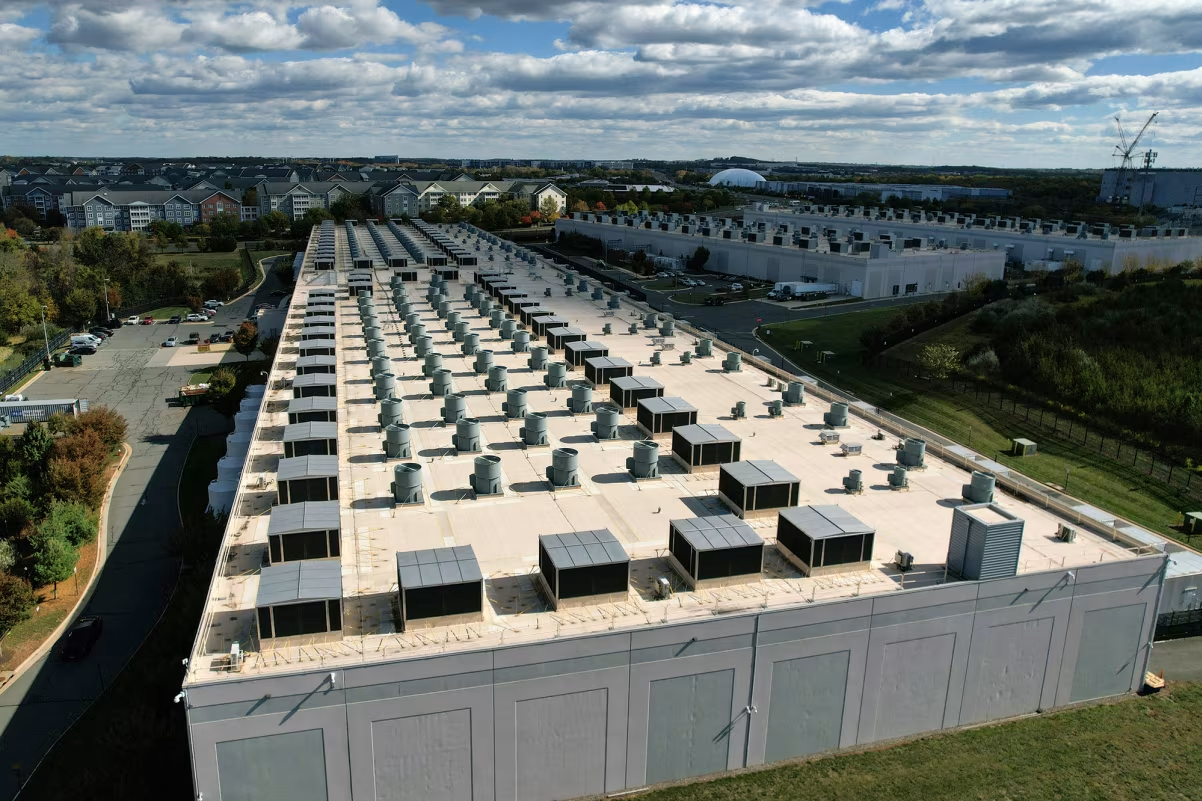
In recent years, the rapid expansion of AI data centers has become one of the most defining trends in the tech industry. The giants of the digital world—Amazon, Meta, Microsoft—are racing to build sprawling facilities to power artificial intelligence (AI) applications, cloud computing services, and data storage systems. While these advancements promise incredible technological progress, they are putting significant pressure on the United States’ electrical grid and water resources. As these data centers continue to proliferate, the broader implications on the country’s infrastructure, environmental sustainability, and costs are becoming increasingly evident.
The rapid growth of AI and cloud services has led to an explosive demand for data centers, and this surge has resulted in both positive and negative consequences for communities across the country. From soaring electricity prices to increased water usage for cooling systems, the expansion of data centers is reshaping not only the tech landscape but also the fundamental workings of the nation’s infrastructure. As the demand for computational power grows, questions arise about how sustainable these developments are and whether they can coexist harmoniously with the needs of local residents and the environment.
The Rise of Data Centers: Where Are They Being Built?
Data centers are the backbone of the modern digital economy, housing the servers and infrastructure required to store and process vast amounts of data. While there are data centers across the country, certain regions have become particularly attractive to tech companies due to factors like access to cheap energy and ample space. Virginia, for instance, is home to the world’s largest data center cluster, with 561 data centers spread across 23 markets, according to Data Center Map. The state’s proximity to the nation’s capital and its well-established energy infrastructure has made it a prime location for data center development.
But the expansion of data centers isn’t just concentrated in traditional tech hubs. According to a McKinsey & Company report, data centers are now moving into more remote areas where energy is more abundant and local grids are less strained. Cities like Denver, Los Angeles, and areas in Pennsylvania are emerging as hotspots for new data center developments. These shifts reflect the growing need for energy-efficient locations and a desire to decentralize operations from overburdened infrastructure in urban areas.
Several states are offering financial incentives to attract data center investments. Ohio, for example, has introduced partial or full sales tax exemptions for companies making significant investments in the construction of data centers. While such incentives provide economic benefits, they also raise concerns about the long-term impact on local energy resources and the community’s infrastructure.
The Tech Giants Leading the Charge: Who’s Behind the Boom?
The companies driving the data center boom are some of the largest and most influential players in the global tech industry. Meta, Microsoft, and Amazon are among the top investors, pouring billions of dollars into data center infrastructure to meet the skyrocketing demand for AI services.
In the second quarter of 2025, Meta reported $17 billion in capital expenditures—primarily spent on building new data centers and expanding infrastructure. Microsoft followed suit, spending $24.2 billion during the same period. Amazon also committed $15 billion to constructing new data center campuses in Northern Indiana, in addition to an $11 billion expansion plan announced in 2024. Collectively, these investments are part of a broader $40 billion annual spending on data center construction, according to Bank of America.
While these investments are fueling innovation and creating jobs, they also come at a significant cost—both in terms of energy and environmental impact. The expansion of data centers, while crucial to the tech industry’s growth, has raised concerns about sustainability and the long-term effects on local communities and resources.
How Data Centers Are Driving Up Energy Costs
One of the most immediate impacts of the data center boom is the strain it is placing on the US electrical grid. Data centers consume enormous amounts of electricity to power their servers, keep them running 24/7, and cool them down. The rapid expansion of data centers in various regions is contributing to an increase in demand for electricity, and this is driving up costs for residents in certain areas.
According to the Energy Information Administration, residential electricity rates in the US rose by 5.2% in October 2025 compared to the same month in 2024. Areas near data centers have seen even sharper increases, with electricity prices rising by as much as 267% in the last five years, as reported by Bloomberg News. The surging energy demand from data centers, combined with the aging US electrical grid, is causing a strain on local resources, resulting in higher electricity bills for consumers.
Ryan Hledik, a principal at the Brattle Group, explained that data centers are one of the primary drivers of these rising electricity prices. “We’re seeing a fundamental shift in how energy is distributed and consumed, and data centers are a significant part of that dynamic,” he said. As the demand for electricity increases, utilities must invest in upgrading infrastructure, which only adds to the financial burden on consumers.
The Impact on Water Resources: Cooling the Machines
In addition to consuming vast amounts of electricity, data centers also require significant amounts of water for cooling purposes. To prevent overheating, data centers rely on complex cooling systems that use water to regulate temperatures. According to McKinsey’s report, water usage for cooling data centers is expected to increase by 170% by 2030, as the number of facilities continues to grow.
The need for water in the data center industry is raising environmental concerns, particularly in regions already experiencing water scarcity. Many data centers use local water supplies for cooling, and the increasing demand for water raises questions about how much strain these facilities are placing on local resources. With the industry projected to consume even more water in the coming years, communities must grapple with how to balance the needs of data centers with those of residents and local ecosystems.
Struggling to Keep Up: The Aging Electrical Grid
While the data center boom is driving significant economic growth, it is also exposing the vulnerabilities of America’s aging electrical grid. The country’s grid infrastructure was not built to handle the current surge in energy demand, and many areas are struggling to meet the needs of growing data center operations. As data centers continue to expand, local grids are becoming increasingly strained, leading to higher costs for consumers and the need for costly infrastructure upgrades.
The government and utilities are beginning to take notice. Some states, like Oregon, have already introduced measures to ensure that data centers pay for the strain they place on local grids. For example, Oregon has passed legislation requiring data centers to cover the costs of upgrading the electrical grid to accommodate their energy needs. Additionally, some tech companies, like Microsoft, have agreed to pay higher electricity bills in areas where they build new data centers to help offset the impact on the local grid.
Can Data Centers and Local Communities Coexist?
As the demand for data centers continues to rise, the question of how to balance the needs of the tech industry with the demands of local communities and the environment becomes more urgent. While data centers provide significant economic benefits, including job creation and technological innovation, they also place considerable strain on the electrical grid and water resources.
Ryan Hledik poses an important question: “How do we create the conditions so that everyone is a winner in this situation, and not a case where you have some winners and then the local community left behind?” Finding solutions to these challenges will require collaboration between tech companies, government officials, and local communities to ensure that the growth of the data center industry is sustainable and does not come at the expense of essential resources.
Managing Growth and Sustainability
The growth of data centers is reshaping the US economy, but it also presents significant challenges for energy infrastructure and environmental sustainability. As AI, cloud computing, and big data services continue to surge in popularity, the demand for data centers will only increase. The key to managing this growth will be to find ways to ensure that these technological advancements do not overwhelm local resources or lead to unsustainable costs for consumers.
The future of data centers in the US will depend on the ability of the tech industry, energy providers, and lawmakers to collaborate on solutions that balance innovation with sustainability. By addressing the challenges of energy consumption, water use, and grid capacity, it is possible to ensure that the benefits of the data center boom can be realized without compromising the needs of local communities and the environment.