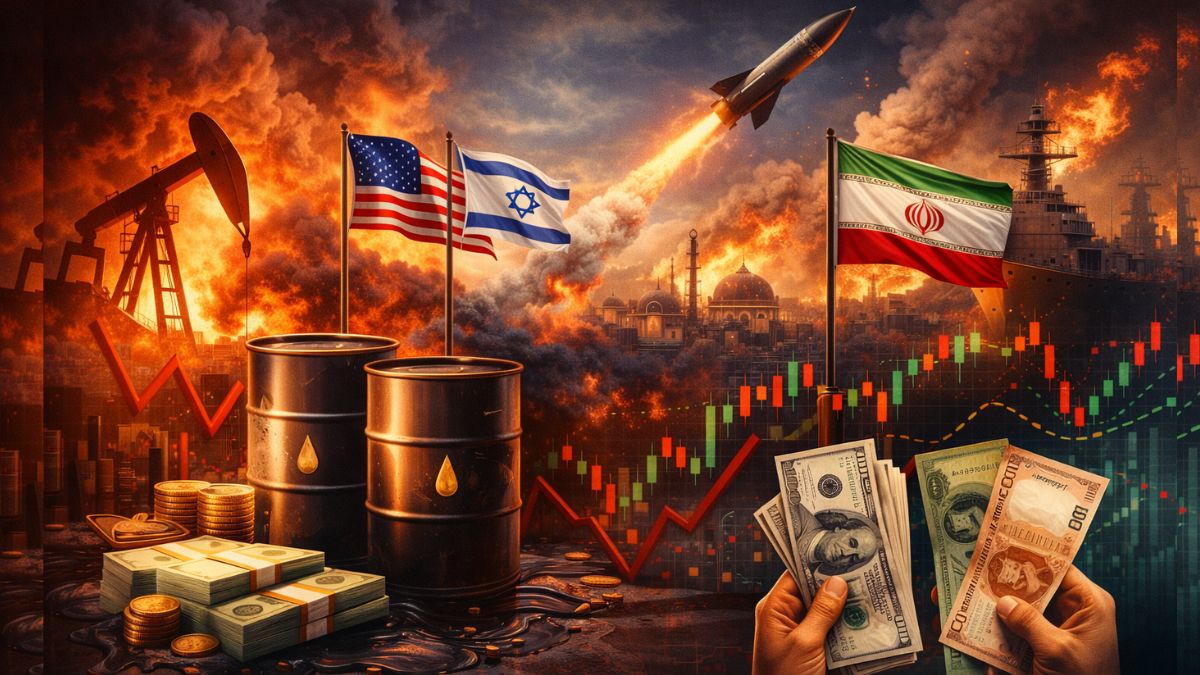
Middle East conflict markets swung sharply on Monday as escalating tensions between Israel, Lebanon, and Iran unsettled investors worldwide. The prospect of a prolonged confrontation pushed energy prices higher while travel stocks and regional assets dropped steeply.
The latest escalation began after Israel struck Lebanon in response to Hezbollah attacks. Meanwhile, Tehran launched missiles and drones toward Israel, Gulf states, and a British air base in Cyprus. Consequently, traders reacted swiftly to rising geopolitical risk across key energy corridors.
Oil markets recorded some of the most dramatic moves. Crude prices surged more than 8% as the fighting disrupted oil and gas facilities across the region. In addition, shipping routes through the Strait of Hormuz faced renewed uncertainty. Since roughly 20% of global oil supply passes through that narrow waterway, any disruption quickly fuels supply concerns. As a result, Middle East conflict markets reflected immediate upward pressure on energy prices.
Natural gas prices also spiked after Qatar halted liquefied natural gas production. Qatari LNG accounts for about one-fifth of global supply. Therefore, supply interruptions amplified volatility in both energy commodities and related equities. Shares of major energy companies such as Exxon Mobil and Shell climbed sharply, tracking higher crude benchmarks.
Analysts suggested that prolonged military escalation could sustain elevated energy prices. According to market commentary, upward pressure on oil and gas may persist if physical supply disruptions continue. Consequently, energy equities outperformed broader indexes.
In contrast, airline and travel stocks faced immediate selling pressure. Airlines often suffer when oil prices rise because jet fuel represents one of their largest operating costs. Shares of Ryanair, American Airlines, United Airlines, and IAG declined as investors priced in higher fuel expenses and weaker passenger demand.
The S&P 1500 Passenger Airlines index fell nearly 3% during early trading. Moreover, analysts noted that past conflicts typically reduce travel demand in affected regions. Beyond direct route disruptions, travelers often delay bookings due to uncertainty. As a result, Middle East conflict markets showed broad weakness across the aviation sector.
Travel-related firms experienced similar declines. Booking Holdings and Expedia Group fell alongside hotel chains such as Hyatt and cruise operators including Carnival. Norwegian Cruise Line also warned that geopolitical tensions could raise fuel costs this year. Therefore, the broader leisure and hospitality sector absorbed spillover effects from energy volatility.
While airlines struggled, defense stocks rallied. Shares of major U.S. defense contractors including Northrop Grumman, General Dynamics, RTX, and Lockheed Martin advanced between 1% and nearly 4%. Investors anticipate higher defense spending amid rising regional tensions.
European defense firms also gained ground. Companies such as BAE Systems, Rheinmetall, and Leonardo recorded solid advances. Analysts argued that sustained military escalation could reinforce missile restocking and defense procurement programs. Consequently, Middle East conflict markets rewarded companies positioned within defense supply chains.
Shipping and tanker firms also benefited from the disruption. As the conflict threatened key routes through Hormuz and the Suez Canal, freight rate expectations climbed. Shares of Maersk and Hapag-Lloyd jumped sharply, while Nordic American Tankers and Teekay Tankers also advanced. Tightened shipping capacity typically supports higher freight rates, which boosts tanker company earnings.
Safe-haven assets attracted renewed demand as risk appetite weakened. Gold prices climbed as investors sought protection from volatility. At the same time, the U.S. dollar strengthened against major currencies including the Japanese yen, Swiss franc, and euro. Analysts suggested that sustained energy price increases could reinforce dollar strength, particularly against currencies of energy-importing nations.
Middle Eastern sovereign bonds and equities, however, faced notable pressure. Long-dated dollar-denominated bonds from Qatar, Oman, and Saudi Arabia declined sharply amid fears of broader regional spillover. Equity markets in Qatar and Kuwait also posted steep losses. Furthermore, the broader risk-off sentiment spilled into other emerging markets, weighing on dollar bonds from Egypt and Turkey.
The cumulative effect illustrates how quickly geopolitical shocks ripple across asset classes. Energy commodities surged, airlines declined, defense shares climbed, and safe havens strengthened. Therefore, Middle East conflict markets remain highly sensitive to developments in the region.
Looking ahead, investors will closely monitor diplomatic signals and military developments. If tensions ease, commodity prices may stabilize and risk assets could recover. However, if hostilities persist or expand, energy supply risks and market volatility may intensify further. For now, global markets remain on alert as the situation unfolds.