Saudi Arabia’s venture capital ecosystem is rapidly evolving from a fast-growing domestic market into one with clear global ambitions. After several years of heavy capital deployment and ecosystem building, the Kingdom is now entering a phase defined by maturity, international relevance, and an increasing focus on exits. Industry observers expect 2026 to mark a turning point, with more liquidity events, greater foreign participation, and a stronger emphasis on artificial intelligence and scale.
According to Philip Bahoshy, chief executive of MAGNiTT, Saudi Arabia’s venture capital market in 2025 can be distilled into three defining traits: attractiveness, focus, and maturity. His assessment captures how the ecosystem has moved beyond its early experimentation phase into one that increasingly mirrors established global venture markets.
From Capital Deployment to Liquidity
For much of the past decade, Saudi Arabia’s venture story has centred on funding momentum. Large rounds, government-backed initiatives, and a steady rise in startup formation defined the narrative. Looking ahead to 2026, that focus is expected to shift decisively toward exits.
Bahoshy forecasts a record year for liquidity events, driven by a combination of initial public offerings and mergers and acquisitions. He expects at least one, and potentially two, IPOs to take place within the Kingdom, reflecting growing confidence in Saudi public markets as viable exit routes for venture-backed companies. Alongside IPOs, M&A activity is expected to accelerate, offering founders and investors alternative paths to realise returns.
While cautious about overusing labels such as unicorns, Bahoshy still anticipates the emergence of several billion-dollar companies. This reflects not just valuation growth, but the increasing scale and regional reach of Saudi-founded businesses.
A More Balanced and Resilient Ecosystem
One of the clearest signs of maturity in Saudi Arabia’s venture market is the growing balance across funding stages. In earlier cycles, activity was often concentrated in a small number of mega-deals, leaving gaps at the seed and early-growth levels. By 2025, investment was spread more evenly across early, mid, and late stages.
This balance has been supported by deliberate policy and infrastructure choices. Government-backed incubators and accelerators have expanded early-stage support, while seed funds and series A vehicles have benefited from fund-of-funds structures and institutional backing. At the other end of the spectrum, later-stage capital has become more available, enabling companies to scale locally and regionally without immediately seeking overseas funding.
The result is a more resilient funding funnel, where startups can progress through multiple growth phases within the Kingdom’s ecosystem.
Focus on Real-World Solutions
Another defining feature of Saudi Arabia’s evolving venture scene is a stronger emphasis on problem–solution fit. Rather than chasing hype-driven sectors or headline valuations, investors and policymakers are increasingly focused on startups that address tangible economic and social challenges.
This focus aligns closely with national development priorities and has helped improve capital efficiency across the ecosystem. It has also strengthened Saudi Arabia’s appeal to international investors, who are increasingly engaging with the market not for political symbolism, but because of the quality, scale, and commercial viability of the companies being built.
International Capital and Global Integration
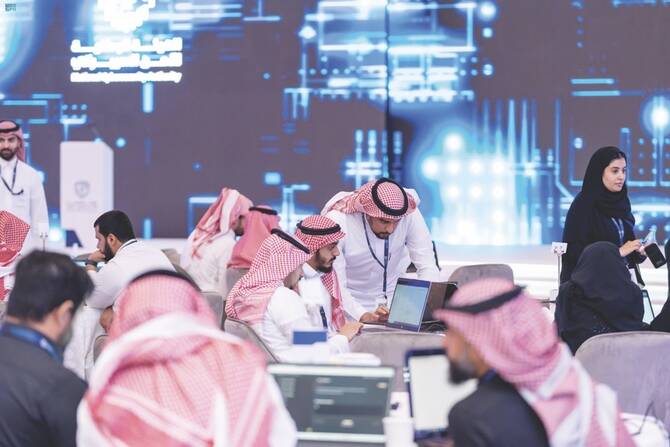
Saudi Arabia’s venture capital market has become markedly more international. In 2025, global investors played a growing role alongside an expanding base of local institutional capital. High-profile conferences, global tech gatherings, and targeted reforms helped draw international attention to the Kingdom and the wider Gulf region.
As the ecosystem matures, the strategy is shifting. Bahoshy argues that Saudi Arabia has largely succeeded in attracting global investors to visit and explore opportunities on the ground. The next step is telling the Kingdom’s venture story more proactively abroad.
Delegation visits to global innovation hubs such as London, Silicon Valley, East Asia, and other major financial centres are expected to intensify. This outward-facing approach aims to embed Saudi startups more deeply into global networks, opening doors to partnerships, customers, and eventual acquirers beyond the region.
Artificial Intelligence as a Growth Engine
Artificial intelligence is expected to play a central role in the next phase of Saudi Arabia’s venture evolution. Bahoshy estimates that AI-related investments could account for 20% to 30% of all venture capital deployed in the Kingdom.
AI is increasingly cutting across sectors, from fintech and health technology to logistics, energy, and enterprise software. Saudi Arabia’s investments in digital infrastructure, cloud computing, and data capacity are creating favourable conditions for AI-native companies to scale.
This trend also reflects broader global patterns, as investors prioritise technologies with the potential to drive productivity gains and long-term economic transformation.
A Pivotal Moment for the Kingdom
Taken together, these developments suggest that Saudi Arabia’s venture ecosystem is moving into a new chapter. The focus is shifting from building volume to delivering outcomes, from attracting capital to generating exits, and from domestic momentum to global integration.
As 2026 approaches, the Kingdom’s venture scene appears increasingly confident, internationally connected, and strategically focused. If expectations around exits, AI adoption, and global engagement materialise, Saudi Arabia could cement its position as one of the most influential venture capital markets not only in the Middle East, but across emerging economies worldwide.