


Across the world, exceptional architecture has transformed certain hotels into cultural landmarks. These properties stand out not only for their luxury but also for their ability to express identity, place and imagination through design. Their forms, materials and spatial compositions demonstrate how architecture can shape emotion, guide movement and redefine the guest experience. Each of these hotels interprets landscape and culture differently, turning hospitality into an artistic encounter. They reveal how visionary designers blend engineering with creativity to produce structures that are both functional and symbolic.
Atlantis The Royal, Dubai
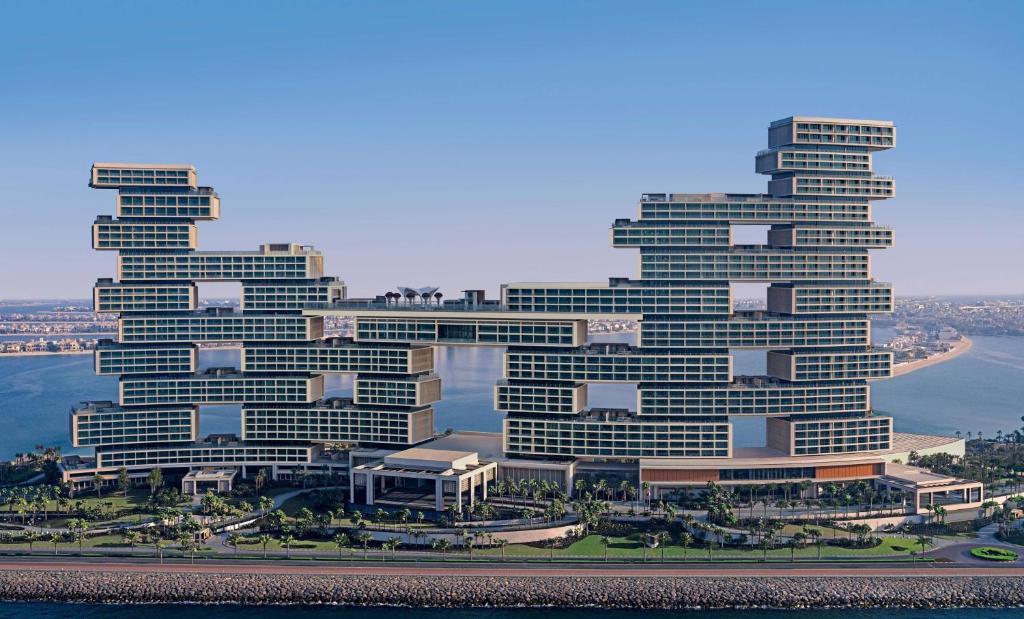
Atlantis The Royal is one of Dubai’s most ambitious architectural creations. The structure resembles a series of stacked cubes arranged with precision to create sky bridges, open-air voids and suspended terraces. Because each block is intentionally offset, the building offers a dramatic silhouette that changes under shifting sunlight. Its form provides natural ventilation while maximizing skyline perspectives.
The upper levels feature infinity pools and landscaped terraces that appear to float above the city. These elevated outdoor environments allow guests to experience Dubai from new vantage points while maintaining a feeling of privacy. Inside, designers used reflective surfaces, sculpted lighting and textured materials to echo the surrounding sea. Circulation paths weave through water-inspired elements, creating an immersive atmosphere from arrival to rooftop.
Moreover, the building incorporates advanced engineering systems to support the weight of sky gardens, elevated pools and multi-volume atriums. These elements give the hotel a sense of vertical connectivity that merges structural ambition with experiential design.
Villa Nai 3.3, Croatia
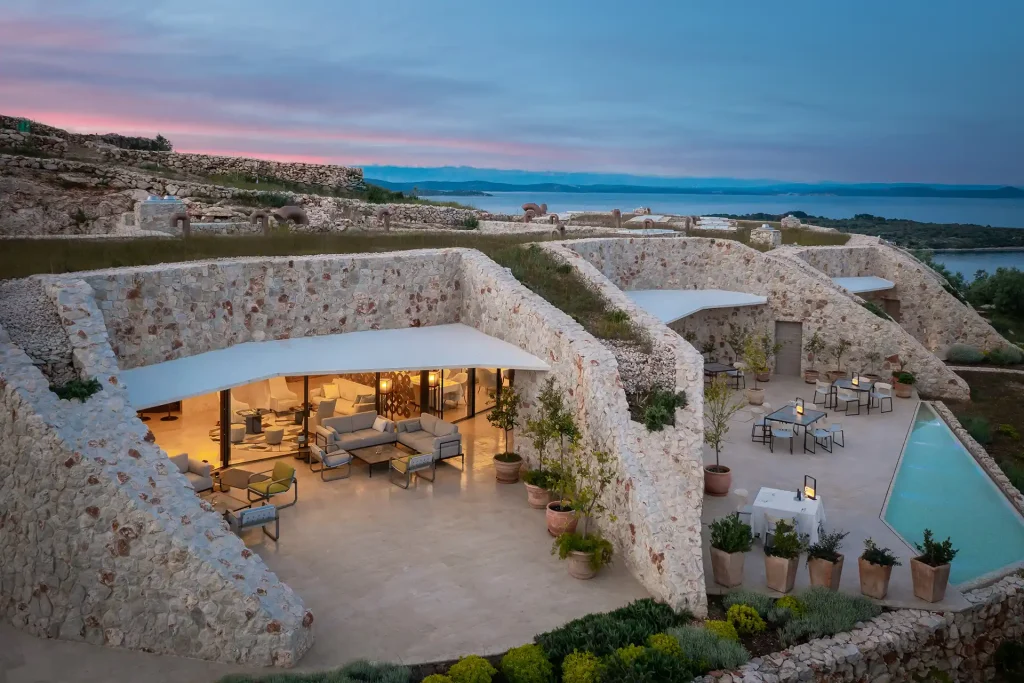
Villa Nai 3.3 stands at the intersection of architecture, landscape and traditional craftsmanship. It is carved into the natural slopes of Dugi Otok, using the same limestone found on the island. This stone was excavated during construction and reused to form walls, floors and passageways. The result is an organic structure that mirrors the rhythm of centuries-old olive groves surrounding it.
The curved configuration responds to topographic lines, allowing the building to sit gently on the land. Guests follow winding paths and low corridors that reveal framed views of the Adriatic Sea. Because the design avoids unnecessary ornamentation, the focus remains on texture, geometry and natural light.
Interior spaces reflect a minimalist philosophy that celebrates material honesty. Wood, stone and glass appear in balanced proportions. Lighting remains soft, guiding attention toward the landscape instead of overpowering it. This subtle approach creates tranquility while reinforcing the hotel’s connection to its environment.
Shebara Resort, Saudi Arabia
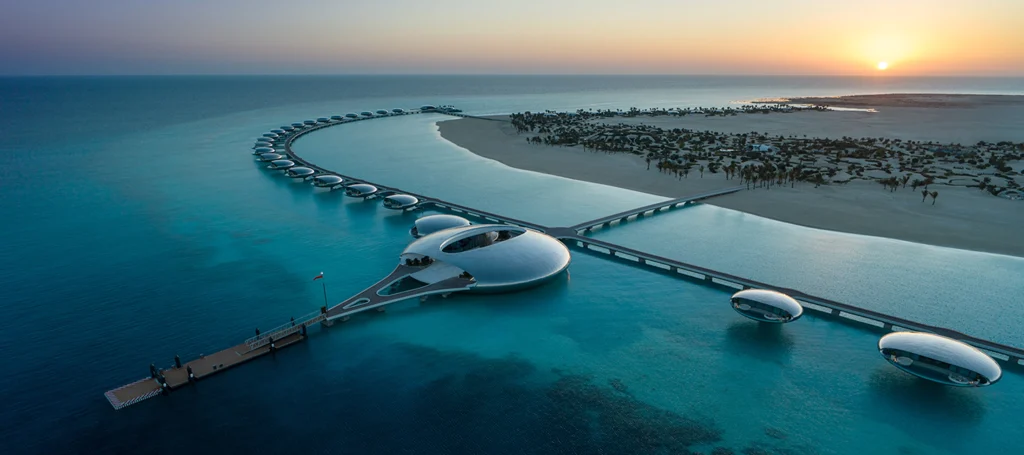
Shebara Resort in the Red Sea region explores futuristic design shaped by environmental responsibility. Villas hover above clear waters, supported by columns that minimize seabed disturbance. Their layout ensures gentle airflow, uninterrupted views and minimal shadowing on sensitive marine zones.
Architects selected reflective and durable materials that respond to coastal conditions while capturing the natural colors of the sky and sea. As the sun shifts, the structures appear to change hues, giving them a dynamic presence. Elevated pathways link the villas, allowing guests to move without impacting the shoreline.
The interiors emphasize calmness through curved surfaces, natural finishes and wide openings. Designers prioritized ventilation and daylight to reduce energy use. Because sustainability remains central to the project, the resort adopts low-impact lighting, efficient cooling systems and careful orientation to reduce heat exposure. Overall, the architecture blends futuristic aesthetics with ecological stewardship.
Rosewood São Paulo, Brazil
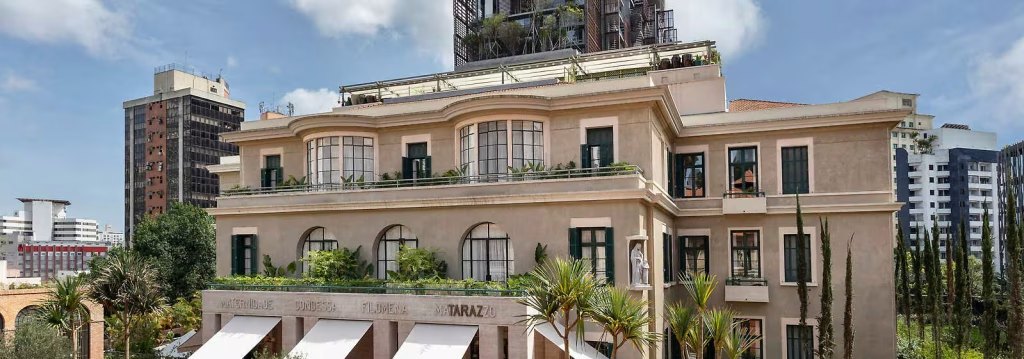
Rosewood São Paulo stands within a restored early-20th-century complex, merging history and innovation. The project includes a modern tower that functions as a vertical garden, covered in thousands of plants. Its green façade softens the structure’s profile and creates a living ecosystem in the center of the city.
Heritage buildings were preserved with meticulous attention to detail. Restored brickwork, original windows and decorative elements were incorporated into new courtyards and public spaces. This approach honors the city’s architectural memory while welcoming contemporary forms and materials.
Inside, Brazilian craftsmanship plays a central role. Art installations, handmade furniture and local textiles create a layered cultural narrative. Circulation spaces lead guests through a sequence of contrasting environments, shifting from historic warmth to modern elegance. The combination of nature, art and restoration makes the hotel a multidimensional design experience.
Benesse House, Japan
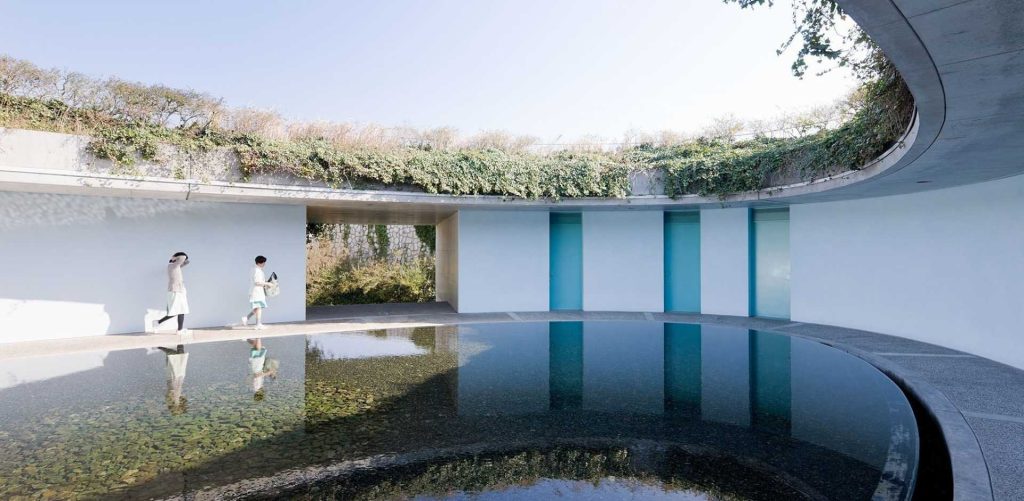
Benesse House on Naoshima Island integrates museum and hotel functions in a setting devoted to art and nature. Its architecture relies on clean lines, exposed concrete and geometric purity. Instead of overwhelming the island, the design interacts gently with its contours.
Buildings are arranged in clusters across hillsides, each positioned to frame specific views of the Seto Inland Sea. Walkways and terraces create transitions between galleries, guest rooms and outdoor installations. The architecture encourages reflection by using silence, shadows and minimal decoration.
Because the hotel is part of a larger art initiative, sculptures and artworks appear both indoors and outdoors. Guests experience the architecture differently depending on time of day, weather and light. This constant transformation gives Benesse House a meditative quality that resonates with Japanese design traditions.
Together, these hotels demonstrate how architecture can elevate hospitality into an art form. They reveal the power of design to interpret location, respect nature and create emotional resonance. Their influence reaches far beyond tourism, offering lessons on sustainability, cultural identity and architectural innovation.