Israel has carried out several airstrikes in southern Lebanon, targeting Hezbollah infrastructure as the deadline for disarming the group approaches. This move comes as Israel pressures Lebanon to meet a key requirement of a US-backed plan: the complete disarmament of Hezbollah south of the Litani River. As tensions rise in the region, Israel’s actions and rhetoric have intensified, signaling that the situation could escalate further in the coming weeks.
Israel’s Airstrikes on Hezbollah Targets
On Wednesday morning, Israeli warplanes launched multiple airstrikes on Hezbollah positions in southern Lebanon, particularly in the valleys of Houmin, Wadi Azza, and Nimeiriya, located in the southern Nabatieh area. According to the Israeli military, these sites housed military infrastructure used by Hezbollah, including launch sites and weapon storage facilities. The strikes are part of Israel’s ongoing campaign to weaken Hezbollah’s presence along its border.
These airstrikes mark the latest violation of a ceasefire agreement that has been in place for over a year, following a 13-month war between Hezbollah and Israel. Despite the ceasefire, Israel has carried out regular airstrikes on southern Lebanon, and Hezbollah has shelled Israeli territories in response. Tensions have continued to simmer, with Israel accusing Hezbollah of attempting to rebuild its military capabilities in the region, while Hezbollah maintains that it is a legitimate force of defense for Lebanon.
Escalating Israeli Rhetoric as Deadline Approaches
As the deadline for disarming Hezbollah nears, Israel has stepped up its rhetoric. Israeli Defense Minister Israel Katz warned in November that there would be “no calm” in Lebanon until Hezbollah’s arms were removed from the southern region. Katz’s comments highlight Israel’s growing frustration with the Lebanese government’s handling of Hezbollah, which Israel views as a direct threat to its security.
Under the US-backed disarmament plan, the Lebanese army is expected to clear Hezbollah’s military infrastructure, weapons, and personnel from areas south of the Litani River by the end of 2025. The plan was approved by both Lebanon and the US but has faced significant challenges. Israel, however, remains adamant that the Lebanese army must take swift action to dismantle Hezbollah’s presence in the south.
Lebanon’s Position on the Disarmament
Lebanese officials, including Deputy Prime Minister Tarek Mitri, have repeatedly stated that Lebanon has made significant progress in disarming Hezbollah in the southern regions. Mitri has asserted that Lebanon is “strictly observing” the ceasefire and has destroyed numerous Hezbollah weapon caches. However, Israel remains skeptical, arguing that Hezbollah continues to operate in the region and rebuild its military strength.
The Lebanese government has also condemned Israel’s continued violations of the ceasefire, claiming that Israel has carried out near-daily airstrikes on Lebanese territory. Lebanese officials have appealed to the international community for support in halting these attacks, which they argue violate Lebanon’s sovereignty. However, Israel dismisses these claims, insisting that Hezbollah’s presence along the border presents a direct threat to Israeli security.
The Role of Hezbollah in Lebanon’s Security
Hezbollah, a Shiite militant group based in Lebanon, has been a major player in the country’s political and military landscape for decades. Formed in the 1980s with support from Iran, Hezbollah has grown into a formidable military force, especially along Lebanon’s southern border with Israel. The group’s primary mission, according to its leaders, is to resist Israeli occupation and defend Lebanon’s sovereignty.
While Hezbollah maintains a powerful military presence, it also holds significant political influence in Lebanon, with members serving in the Lebanese parliament and government. This dual role complicates efforts to disarm the group. Many Lebanese view Hezbollah as a legitimate defender of the country, especially in the face of Israeli aggression. However, Israel sees Hezbollah as a destabilizing force, accusing it of acting as a proxy for Iran and of threatening regional security.
Tensions Rise as Israel Expands Military Operations
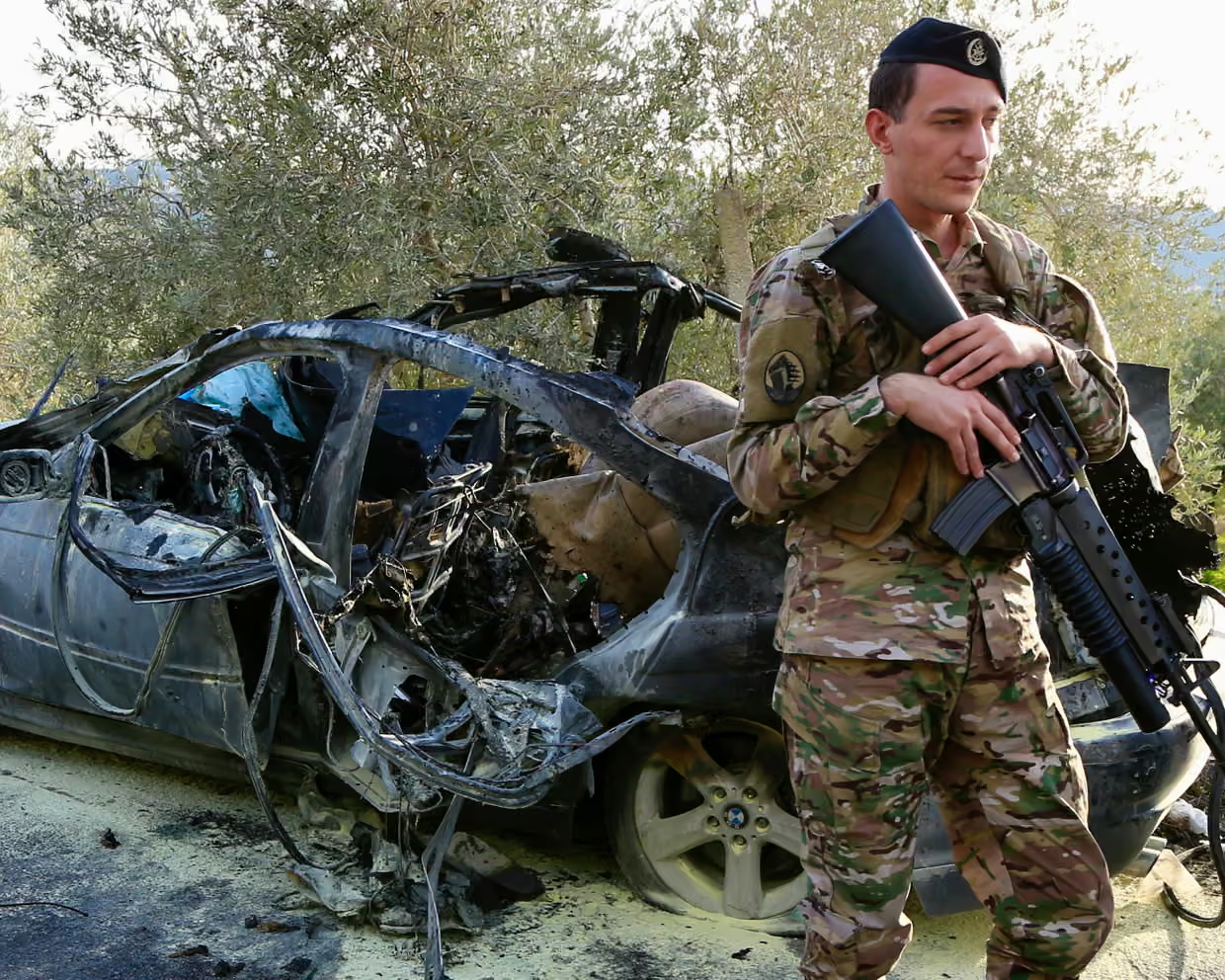
Israel’s airstrikes and military operations in southern Lebanon have escalated in recent weeks. On December 22, an Israeli drone strike killed three individuals in a vehicle near the Lebanese city of Saida, about 10 miles south of the Litani River. Israel claimed that one of the victims, a Lebanese army officer, was also a Hezbollah member involved in planning attacks on Israel. Lebanon has rejected this claim, calling it a “malicious attack” on its army.
The continued Israeli attacks have heightened tensions in the region. Israel has indicated that its military operations will continue until Hezbollah is fully disarmed. At the same time, diplomatic efforts have been underway, with Israeli and Lebanese officials meeting in the southern town of Naqoura to discuss the status of the ceasefire. While the inclusion of civilian representatives in these talks has sparked controversy in Lebanon, it signals that both sides are working to maintain some level of communication.
The International Dimension and US Involvement
The US has played a central role in pushing the disarmament plan forward, as part of its broader efforts to stabilize the Middle East. Under the plan, the Lebanese army is expected to remove all Hezbollah personnel and weapons from the area south of the Litani River. In return, Israel is supposed to withdraw from key areas in southern Lebanon. However, Israel’s continued military actions and its refusal to fully withdraw from the region have created significant challenges for the implementation of the plan.
The US has supported Israel’s position, urging Lebanon to meet its commitments under the disarmament plan. At the same time, Lebanon has appealed to the international community for assistance in stopping Israel’s airstrikes and violations of Lebanese sovereignty. As the deadline for Hezbollah’s disarmament approaches, the involvement of international actors may become even more critical in managing tensions and preventing further escalation.
A Fragile Peace
The future of peace in southern Lebanon remains uncertain. Israel’s ongoing military operations and its pressure on Lebanon to disarm Hezbollah have created a volatile situation. While Lebanon has made some progress in meeting the disarmament goals, Hezbollah’s entrenched position in the region complicates the process. The next few weeks will be crucial in determining whether the disarmament plan can be fully implemented or whether the region will see further violence.
As tensions rise, the role of the international community will be essential in managing the situation and preventing a full-scale conflict. The fragile ceasefire between Israel and Hezbollah has held for over a year, but the pressure to disarm Hezbollah could break the peace if both sides fail to find a lasting solution.