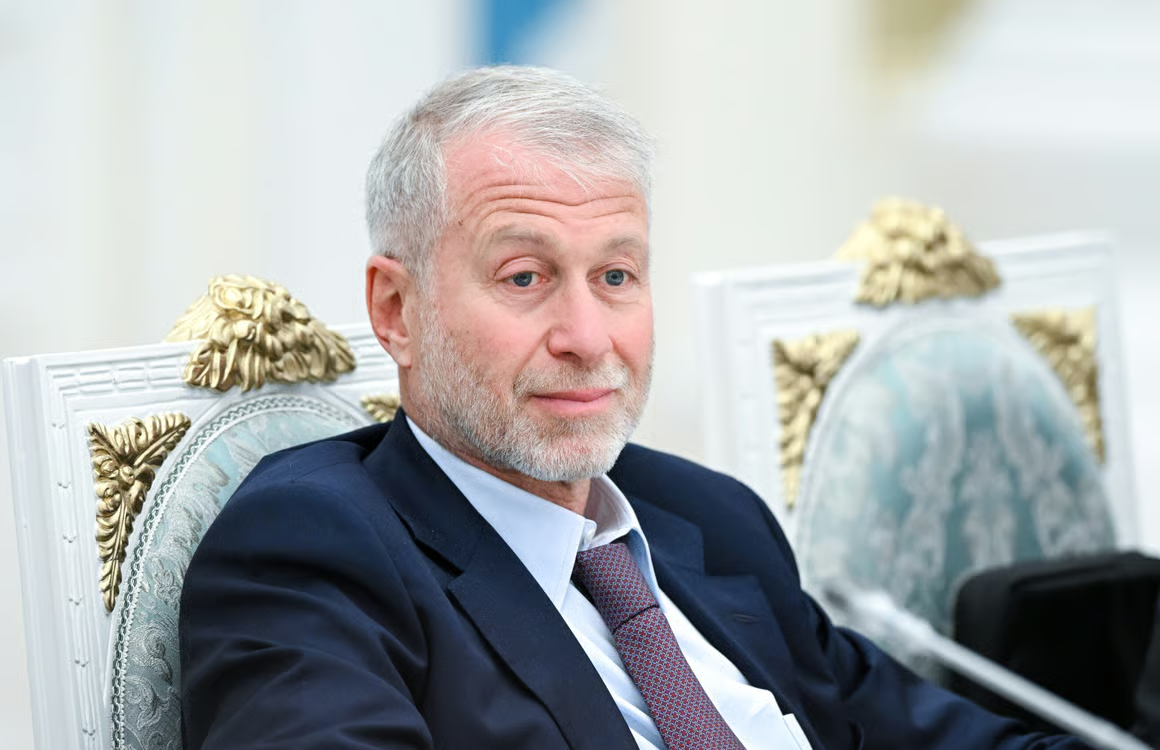
Roman Abramovich is a name that carries significant weight in the global business, sports, and philanthropic arenas. While his profile has been somewhat obscured by controversies, his legacy is undeniable. From his meteoric rise as one of Russia’s richest and most influential oligarchs to his transformation of Chelsea Football Club into an international powerhouse, Abramovich’s journey has been as dynamic as it has been complex. Born into adversity, Abramovich’s story embodies resilience, strategic investments, and a nuanced approach to power—attributes that have shaped his formidable presence on the world stage.
Humble Beginnings: From Orphan to Oligarch
Born on October 24, 1966, in Saratov, Russia, Roman Abramovich faced hardships early in life. Orphaned at the age of four after the death of his parents, he was raised by relatives, living a modest and challenging childhood. Despite the lack of parental guidance, Abramovich displayed an early entrepreneurial spirit. His path to becoming one of the world’s wealthiest individuals began during the chaotic years following the dissolution of the Soviet Union.
Like many others in Russia, Abramovich capitalized on the privatization of state assets in the 1990s, a period marked by rapid economic changes and vast opportunities for savvy businessmen. His initial fortune was made in the oil industry, specifically through his acquisition of the Sibneft oil company, which he purchased at a fraction of its true value during Russia’s transition to a market economy. He later sold Sibneft to Gazprom in 2005 for an astounding $13 billion, cementing his status as one of the wealthiest men in Russia.
A Football Mogul: Transforming Chelsea FC
Although his wealth was largely generated through the oil and mining sectors, Abramovich became an internationally recognized name after purchasing English Premier League football club Chelsea FC in 2003. At the time of the acquisition, Chelsea was a mid-tier club with a storied history but struggling financially. Abramovich’s acquisition marked the beginning of an era of unprecedented success for the club.
Under his ownership, Abramovich invested heavily in top-tier players, coaches, and state-of-the-art facilities. His financial backing transformed Chelsea into one of the most successful and marketable football clubs in Europe. With multiple Premier League titles, UEFA Champions League victories, and a reputation for excellence, Chelsea became a symbol of Abramovich’s business acumen and his commitment to achieving success through strategic investments.
As an owner, Abramovich was known for his hands-on approach, though he avoided the public limelight. His passion for football was clear, as he regularly attended matches and worked behind the scenes to ensure the club’s success. Abramovich’s deep involvement in Chelsea, particularly his focus on improving the financial and operational aspects of the club, helped redefine the role of billionaire investors in sports and football in particular.
A Business Tycoon: Expanding His Empire
While football brought Abramovich international fame, his business interests span several industries. He has been involved in a diverse array of investments ranging from steel, aluminum, and real estate to media and technology. His holdings include major stakes in Russia’s largest mining companies, such as the giant Evraz Group, which focuses on steel and mining, and Norilsk Nickel, a world-leading producer of nickel and palladium.
Despite his high-profile ventures, Abramovich’s business practices have often been shrouded in secrecy, with his corporate structure designed to minimize public scrutiny. His empire is built on a web of interconnected companies, many of which are registered in offshore jurisdictions, making it difficult to fully understand the extent of his wealth. Nonetheless, his ability to navigate the complexities of international business, particularly in emerging markets, is a testament to his strategic prowess.
Philanthropy: Giving Back in Russia and Beyond
Roman Abramovich’s philanthropy is another important aspect of his legacy. While his public persona is often associated with wealth and power, he has made substantial contributions to both Russia and Israel. Throughout his career, he has been a major donor to cultural, healthcare, and educational initiatives. His contributions to the Chukotka region of Russia, where he served as governor from 2000 to 2008, are particularly noteworthy. Abramovich funded infrastructure projects, including the construction of schools, hospitals, and housing, in an area previously neglected by the Russian government.
In addition to his work in Russia, Abramovich has been a vocal supporter of Jewish cultural causes, especially in Israel. His significant donations to Jewish charities and institutions reflect his personal connection to his heritage. He is also involved in promoting education, and his donations to various educational institutions have helped foster talent and support research in multiple disciplines.
Controversy and Geopolitical Tensions
No figure with such wealth and influence can escape scrutiny, and Abramovich has faced his share of controversies. His close ties to the Russian government, particularly during the presidency of Boris Yeltsin and Vladimir Putin, have raised questions about the origins of his wealth. He has been the subject of numerous investigations, both in Russia and abroad, particularly surrounding his role in the privatization of state assets during the chaotic 1990s.
In recent years, geopolitical tensions have complicated Abramovich’s business dealings. As Russia’s political landscape has become increasingly polarized, Abramovich has found himself in the crosshairs of international sanctions. These sanctions, primarily imposed by Western governments, targeted his assets, limiting his ability to operate freely in the global marketplace. The challenges surrounding his wealth and political affiliations have led to a complex and ever-evolving public narrative.
Despite these difficulties, Abramovich has continued to expand his influence. He has leveraged his assets to navigate legal and diplomatic challenges, including acquiring Israeli citizenship to ensure his ability to travel freely. While his involvement in global politics has remained largely behind the scenes, his ability to adapt to shifting political and economic landscapes speaks to his resilience and strategic thinking.
Family Life: Privacy Amid Public Scrutiny
Roman Abramovich’s family life, much like his business dealings, remains largely private. He has been married several times and has seven children, yet his family remains out of the public eye as much as possible. Abramovich has made it clear that he values privacy and has taken steps to shield his loved ones from the intense media attention that surrounds him. Despite his wealth and fame, Abramovich’s focus remains on ensuring the safety and well-being of his family while allowing them to live as normal lives as possible.
This separation of public and private spheres has helped preserve a degree of normalcy for his children, who are reportedly receiving top-tier education and being shielded from the pressures that often come with being part of a high-profile family.
A Complex Legacy
Roman Abramovich’s story is one of ambition, resilience, and transformation. He rose from the challenges of his early life to become one of the most influential figures in both the business and sports worlds. While his methods have often been controversial, his impact cannot be denied. Through strategic investments, his ownership of Chelsea FC, and his philanthropic contributions, Abramovich has left an indelible mark on industries and communities around the world.
As the geopolitical landscape continues to shift, and as new generations of business leaders and philanthropists emerge, Roman Abramovich’s legacy remains a potent reminder of the power of vision, strategy, and adaptability. His story is not just that of a businessman but of a figure who navigated the complexities of post-Soviet capitalism, international relations, and philanthropy to build an empire that will influence generations to come.