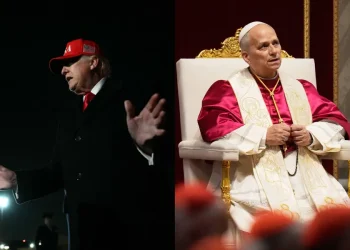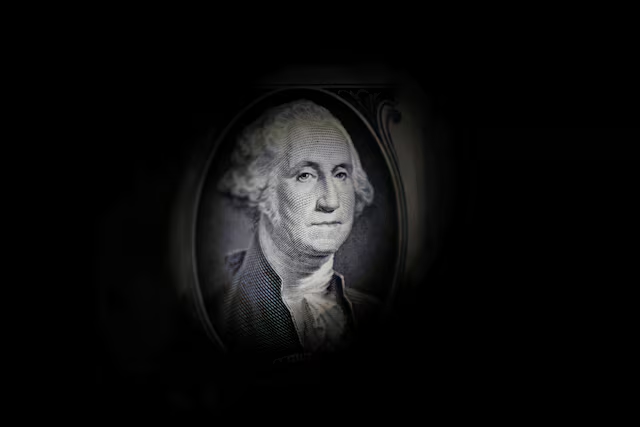
The dollar under pressure has become a key issue in early 2026. A variety of factors, including Washington’s preference for a weaker dollar, have shaken investor confidence. On Monday, the dollar was on track for its largest three-day decline against a basket of major currencies since April. Back then, Trump’s “Liberation Day” tariffs caused an unprecedented sell-off in U.S. assets.
Trump’s erratic trade policies, his attacks on the Federal Reserve, and massive increases in public spending led to a 10% drop in the dollar during his first year in office. Today, the dollar is again underperforming against major currencies like the euro, sterling, and Swiss franc.
Seema Shah, Chief Global Strategist at Principal Asset Management, explains that a mix of factors is driving the dollar lower. She believes the shift is happening faster than expected. Trump’s recent actions, including threats to control Greenland, impose tariffs on European allies, and pursue military operations in Venezuela, have contributed to uncertainty. Although he backed down on some of these threats, the situation remains tense, weighing on the dollar under pressure.
Volatility remains high, and bond market sentiment is fragile. The sell-off in Japanese government debt has added to the risk, with potential spillover into U.S. Treasuries. Investors are also turning to gold, signaling their desire for safer assets. These developments contribute to the dollar under pressure.
At home, Trump’s policies, including his stance on illegal immigration, have sparked protests and created more uncertainty. There’s also the looming threat of a government shutdown. The Federal Reserve is expected to cut interest rates at least twice in 2026, making the dollar less attractive to investors. In contrast, other central banks are either pausing rate cuts or considering hikes.
Jerome Powell, the current Fed Chair, has resisted Trump’s calls for faster rate cuts. But Powell will step down in May 2026. Online betting markets now see a 50% chance that BlackRock’s Rick Rieder, who favors lower rates, will replace Powell. This speculation is adding to the dollar under pressure.
Meanwhile, global equities surged last year, partly due to excitement over artificial intelligence. However, U.S. markets have lagged behind. Chris Scicluna of Daiwa Capital Markets notes that asset managers are shifting away from U.S. markets, further putting the dollar under pressure.
Trump’s focus on tariffs, particularly on trade with Asian countries, has fueled more geopolitical tensions. The latest sign of this is the joint effort by the Bank of Japan and the New York Fed, suspected of conducting rate checks on the yen. This move could signal the first joint U.S.-Japan intervention in 15 years. Despite the yen’s surge, it remains down 13% against the dollar over the last year.
On a trade-weighted basis, the dollar has lost about 5.3% in the past 12 months, according to the Bank for International Settlements. This suggests the dollar under pressure is more pronounced against certain currencies. Investors are increasingly concerned about their exposure to the dollar, with last year’s decline attributed to cyclical factors like slower growth. Dominic Bunning from Nomura notes that U.S. policies now appear more geopolitical, especially with tariffs. This adds to the uncertainty surrounding the dollar under pressure.
In conclusion, the dollar under pressure is driven by political actions, Federal Reserve policies, and global market shifts. The dollar remains a dominant global currency, but its recent performance signals vulnerability. With ongoing geopolitical risks and economic uncertainty, the dollar’s outlook for 2026 remains unclear.
READ: SD/JPY Faces Pressure as FX Intervention Threats Persist