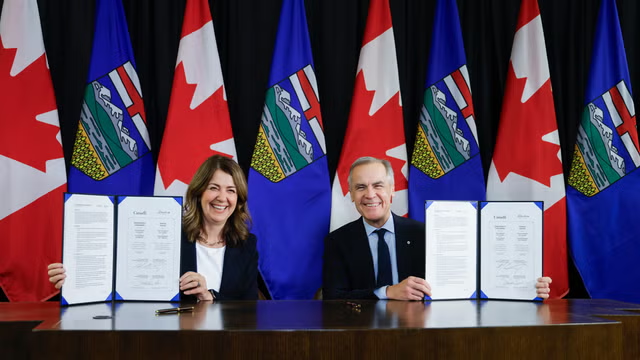
The Assembly of First Nations (AFN) has asked the federal government to withdraw its pipeline deal with Alberta, saying the agreement threatens treaty rights and weakens Indigenous authority over land and resources. AFN leaders also argue that the federal government rushed the deal forward without proper consultation, which has created new tension between Ottawa and First Nations.
AFN National Chief Cindy Woodhouse Nepinak said the agreement raises serious concerns for communities across the Prairies. She added that First Nations must be part of major decisions, especially when projects affect traditional territories. According to the AFN, the deal ignores Canada’s obligation to work with Indigenous nations as equal partners.
Concerns About Consultation
First Nations leaders say that Ottawa held discussions with Alberta but failed to consult Indigenous communities in a meaningful way. As a result, many chiefs believe the process did not respect treaty commitments or Canada’s promise to follow the United Nations Declaration on the Rights of Indigenous Peoples. They also warn that future conflicts may increase if governments do not change their approach.
Many Indigenous leaders want the government to involve First Nations at the earliest stages of planning. They argue that true consultation must happen before decisions are made, not after agreements are drafted. This approach, they say, helps prevent disputes and leads to stronger relationships over time.
Federal–Provincial Tension Growing
The pipeline deal was promoted as a way to speed up major energy projects. Ottawa and Alberta said it would modernize the approval process and support economic growth. Even so, many First Nations leaders disagree. They fear the agreement shifts too much authority to provincial regulators, who may not prioritize Indigenous rights or strong environmental protections.
Some chiefs also argue that the deal creates confusion about Canada’s obligations under existing treaties. They believe the agreement allows Alberta to influence decisions that should involve First Nations and the federal government directly. Consequently, they say it weakens long-established frameworks meant to protect land, culture, and community safety.
First Nations Push for a Rights-Based Approach
The AFN’s request to withdraw the deal reflects wider frustration with how governments handle Indigenous rights. Chiefs across Canada say consultation often feels like a formality rather than a genuine partnership. They want governments to take treaty responsibilities seriously and to recognize Indigenous leadership in decisions about land and resources.
Because of this, the AFN is urging Ottawa to rebuild trust through open dialogue. Leaders want the government to show respect for Indigenous laws, governance structures, and environmental stewardship. They believe a rights-based approach will lead to better long-term outcomes and fewer legal disputes.
Ottawa’s Response and Possible Next Steps
Federal officials have not confirmed whether they will revisit the agreement. They continue to defend the deal as a necessary step for modern energy development. However, the AFN’s strong position increases pressure on the government. Several First Nations leaders plan to request direct meetings with federal ministers. They want a clear explanation of how the agreement was approved and why Indigenous participation was so limited.
Some chiefs say legal action remains an option if Ottawa refuses to act. They argue that court challenges might be required to protect treaty rights and ensure proper consultation in the future.
Growing National Attention
The AFN’s concerns have received national attention. Environmental organizations, legal scholars, and civil society groups have echoed the call for change. They argue that Canada cannot move forward with major energy projects while overlooking Indigenous voices. Many believe that transparent decision-making and shared leadership are essential for sustainable development.
For now, the AFN has made its position clear. It wants the Canada–Alberta pipeline deal withdrawn. It also wants new discussions built on transparency, respect, and meaningful partnership. First Nations leaders say the future of the relationship between Indigenous peoples and the federal government depends on Ottawa’s response. They hope the next steps will show a stronger commitment to reconciliation and responsible decision-making.