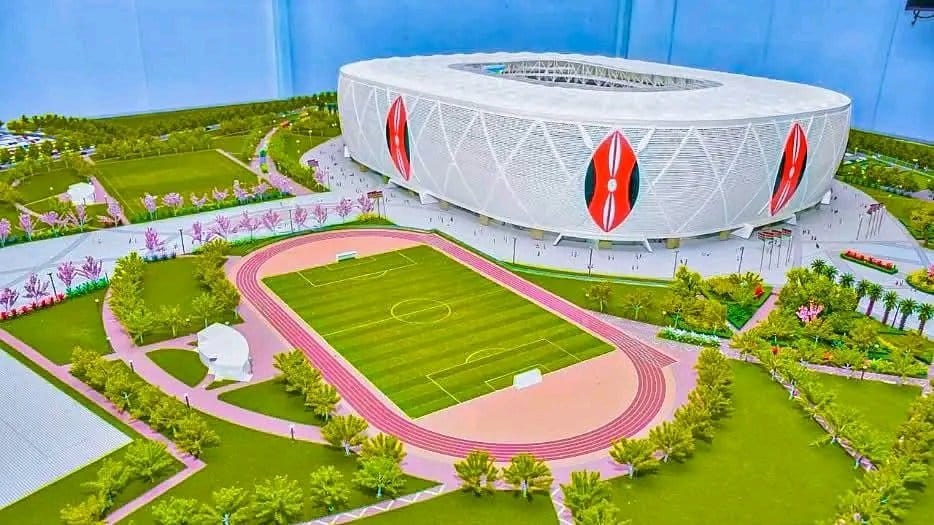
Kenya is making great progress in building the 60,000-seat Talanta Stadium in Nairobi. The stadium is a key venue for the 2027 Africa Cup of Nations (AFCON), which Kenya will co-host with Uganda and Tanzania. President William Ruto has visited the site and confirmed the project will finish by December 2025. The development will provide thousands of jobs and help boost the economy, although critics have raised concerns about the high cost of over $800 million and future maintenance challenges.
Construction Progress and Features
Construction of Talanta Stadium is moving swiftly with around 3,300 workers on-site. The stadium will hold 60,000 spectators and will feature modern facilities, including sustainable energy solutions like solar panels. These eco-friendly features align with Kenya’s goal to minimize the stadium’s environmental impact.
The stadium’s design includes multipurpose spaces, athlete accommodations, and VIP areas. It will not only host AFCON matches but also concerts, cultural events, and other sports. The integration of solar power will reduce energy costs and make the stadium more self-sufficient.
President Ruto’s Commitment to Timely Completion
President William Ruto recently visited the Talanta Stadium construction site and reassured the public that the project remains on schedule. He emphasized that the stadium will be ready for the 2027 AFCON co-hosting, and the government is committed to completing it by December 2025. His visit reflects the government’s confidence in the progress made so far and its dedication to ensuring the venue meets international standards.
This project represents a historic moment for Kenya, as the country will share the spotlight with Uganda and Tanzania in co-hosting one of Africa’s biggest football events. Talanta Stadium will play a crucial role in making the 2027 tournament a success.
Economic Impact and Job Creation
The stadium project is not just a sports venue—it is an economic boost for Kenya. Currently, 3,300 workers are employed, many of whom come from local communities. This job creation extends beyond construction, with future opportunities in stadium management, security, hospitality, and event hosting.
The stadium’s location in Nairobi will bring economic benefits to nearby businesses, especially hotels, restaurants, and transport services. As the city hosts more international events, Talanta Stadium will contribute to the growth of Kenya’s tourism and hospitality sectors.
Sustainability in Construction
Talanta Stadium is designed with sustainability in mind. The inclusion of solar panels will help the stadium reduce its carbon footprint and minimize operating costs. Additionally, the construction team has incorporated rainwater harvesting systems and waste management strategies to reduce environmental impact.
This focus on sustainability is a step toward making large-scale infrastructure projects more eco-friendly in Kenya. The stadium will not only serve as a world-class sports venue but also set a precedent for future infrastructure developments in the region.
Concerns Over Costs and Maintenance
Despite the excitement surrounding the Talanta Stadium, concerns about the cost of the project have surfaced. The estimated cost exceeds $800 million, and some critics question whether the investment is justified. While the stadium will bring short-term economic benefits, long-term maintenance costs are a concern.
There are worries about how Kenya will manage the stadium’s upkeep, particularly if it doesn’t generate sufficient revenue after AFCON 2027. Critics suggest that the government must plan for the stadium’s future financial sustainability, ensuring that it remains a profitable asset in the long term.