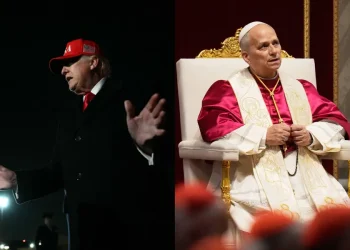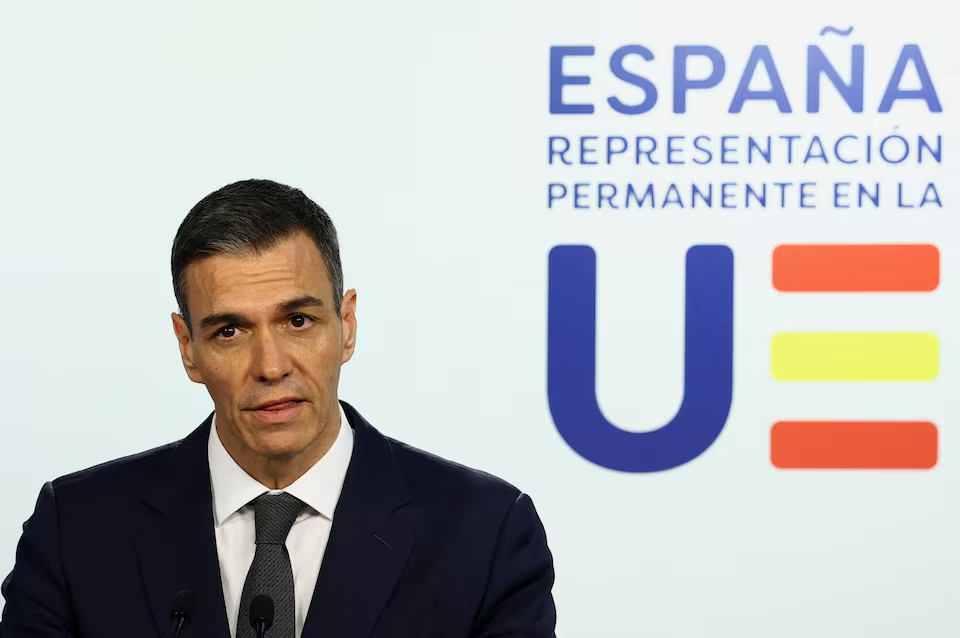
Spain rejects Board of Peace, the new initiative launched by U.S. President Donald Trump to tackle global conflicts. Spanish Prime Minister Pedro Sanchez announced the decision late Thursday after an EU summit in Brussels. The rejection aligns with Spain’s commitment to multilateralism and the United Nations system. Spain rejects Board of Peace despite receiving an official invitation from Washington to participate in the new international body.
“We appreciate the invitation, but we decline,” Sanchez told reporters. The statement came as other major European nations also notably absented themselves from the initiative’s launch ceremony. Spain rejects Board of Peace on grounds of consistency with established international frameworks and diplomatic principles that Madrid has long championed.
Washington describes the body as a mechanism to help broker and monitor ceasefires around the world. The Board of Peace will also organize security arrangements and coordinate rebuilding efforts in places emerging from war. The concept stems from Trump’s Gaza peace plan, which has generated mixed international responses. Spain rejects Board of Peace despite these stated humanitarian objectives.
The Board of Peace launch ceremony took place at the World Economic Forum in Switzerland’s Davos on Thursday. Traditional U.S. allies were conspicuously absent from the event. Canada and Britain did not participate. All European Union members except Hungary and Bulgaria declined involvement. The limited European participation underscores skepticism about the initiative among America’s closest partners. Spain rejects Board of Peace as part of this broader European reluctance.
Sanchez cited several specific reasons for Spain’s decision. Consistency with Madrid’s commitment to international law topped the list of concerns. Spain maintains strong support for the United Nations system. The country views multilateralism as essential for resolving global conflicts. Spain rejects Board of Peace because the initiative operates outside established international institutions that Spain considers legitimate.
The absence of the Palestinian Authority from the Board of Peace particularly troubled Spanish officials. Sanchez specifically mentioned this exclusion when explaining Spain’s position. The Palestinian Authority represents Palestinian interests in international forums. Its absence from peace discussions raises questions about the initiative’s inclusivity and effectiveness. Spain rejects Board of Peace partly due to this significant representational gap.
Israel has joined the board despite the Palestinian Authority’s exclusion. Several Middle Eastern countries also signed on to participate. Qatar, Saudi Arabia, and the United Arab Emirates all joined the initiative. These nations play significant roles in regional diplomacy and conflict mediation. However, their participation did not persuade Spain rejects Board of Peace or convince other European nations to join.
The divergence between European and Middle Eastern responses highlights different diplomatic calculations. Arab states may see the Board of Peace as an opportunity to influence American policy in the region. European nations appear more concerned about maintaining multilateral frameworks. Spain rejects Board of Peace reflects broader European skepticism about American unilateral initiatives.
Hungary and Bulgaria stand as the only EU members participating in the Board of Peace. Hungary under Prime Minister Viktor Orban has frequently broken with EU consensus on foreign policy matters. The country maintains closer ties to Trump than most European nations. Bulgaria’s participation also deviates from the general European stance. Spain rejects Board of Peace along with the vast majority of EU partners.
The limited European participation raises questions about the Board of Peace’s legitimacy and effectiveness. International peace initiatives traditionally gain credibility through broad multinational support. The absence of major European powers and traditional American allies weakens the body’s international standing. Spain rejects Board of Peace alongside countries that collectively represent significant global economic and diplomatic weight.
Spain’s decision reflects longstanding foreign policy principles rather than simply anti-Trump sentiment. Madrid has consistently advocated for strengthening the United Nations and multilateral institutions. The country played active roles in various UN peacekeeping and diplomatic missions. Spain rejects Board of Peace to maintain consistency with these established positions and values.
The rejection also signals Spanish priorities in Middle Eastern diplomacy. Spain has advocated for Palestinian statehood and a two-state solution. The country maintains that lasting peace requires including all relevant parties in negotiations. Excluding the Palestinian Authority from peace discussions contradicts this principle. Spain rejects Board of Peace to avoid legitimizing an initiative that marginalizes Palestinian representation.
Other European nations likely share Spain’s concerns even if they haven’t issued public statements. The collective European absence from Davos suggests coordinated diplomatic positioning. EU foreign policy coordination mechanisms may have facilitated discussions about appropriate responses. Spain rejects Board of Peace as part of this broader European diplomatic alignment.
The Trump administration launched the Board of Peace amid various international conflicts requiring resolution. The Gaza war continues despite periodic ceasefire discussions. Ukraine faces ongoing Russian aggression. Syria, Yemen, and other regions experience persistent violence and humanitarian crises. Washington positions the board as a practical mechanism for addressing these challenges. However, Spain rejects Board of Peace based on concerns about methods rather than objectives.
Critics argue that establishing new international bodies undermines existing institutions like the United Nations. The UN Security Council, General Assembly, and various specialized agencies already address conflict resolution. Creating parallel structures could fragment international efforts rather than strengthen them. Spain rejects Board of Peace to avoid contributing to this institutional fragmentation.
Supporters of the initiative argue that existing institutions have failed to resolve many conflicts. The UN Security Council faces frequent deadlock due to veto power dynamics. New approaches may offer fresh opportunities for breakthrough diplomacy. However, this argument has not persuaded Spain or most European nations. Spain rejects Board of Peace despite acknowledged shortcomings in current international systems.
The Board of Peace’s future effectiveness remains uncertain given limited Western participation. Middle Eastern members provide regional expertise and influence. However, implementing peace agreements often requires Western financial resources and diplomatic support. The absence of major European nations and other traditional allies may limit the board’s practical capabilities. Spain rejects Board of Peace partly due to doubts about its potential effectiveness.
Trump’s Gaza peace plan provides the conceptual foundation for the Board of Peace. That plan generated controversy over its approach to Palestinian issues and Israeli security concerns. Using it as a template for broader conflict resolution raises questions about applicability to different contexts. Spain rejects Board of Peace in part because of concerns about the underlying framework’s suitability for global application.
The Spanish decision may influence other countries still considering participation. Smaller nations often look to major European powers for diplomatic guidance. Spain’s clear rejection based on principled grounds provides a model for others. Additional countries may announce similar positions in coming days. Spain rejects Board of Peace potentially starting a broader trend among U.S. allies.
READ: Trump Sues JPMorgan Chase for $5 Billion Over Debanking