Tanzania is once again under international scrutiny following the post-election crackdown that has left more than 100 Kenyans detained and hundreds of Tanzanians dead or missing. The unrest began shortly after President Samia Suluhu Hassan claimed a sweeping victory with more than 97% of the vote in the October 29 general election—a result heavily contested by opposition groups and civil society observers.
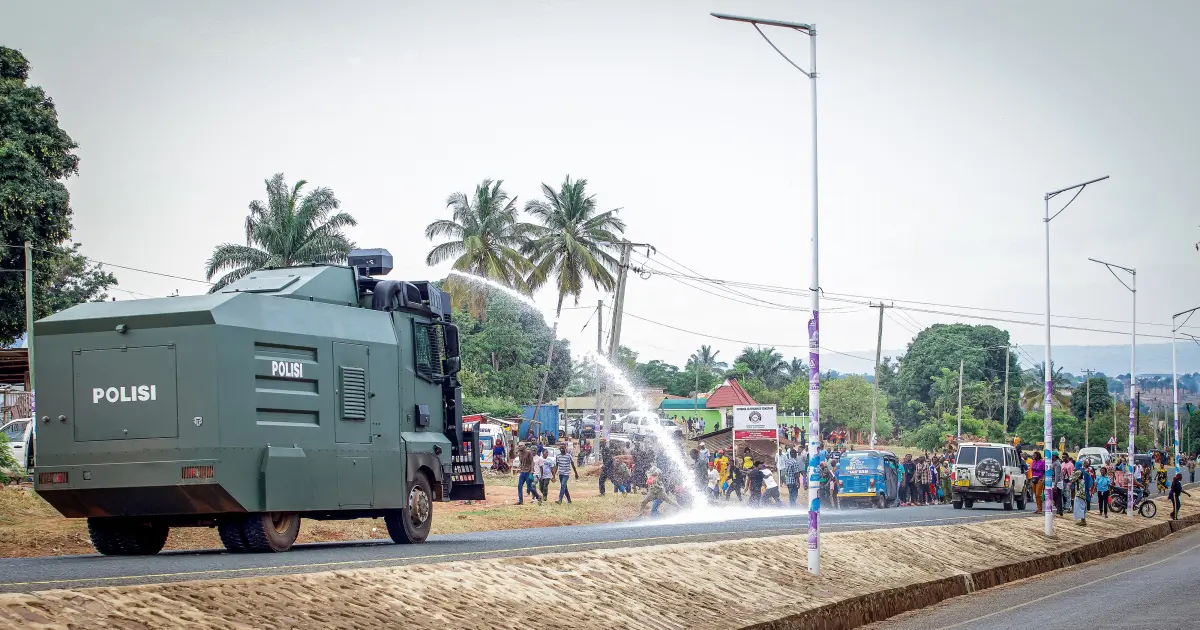
For days after the announcement, protests erupted across Dar es Salaam, Arusha, Mwanza, and Dodoma as demonstrators accused the ruling Chama Cha Mapinduzi (CCM) party of manipulating the electoral process. Security forces responded with overwhelming force, deploying military units, enforcing strict curfews, and cutting off internet access nationwide. Rights organizations say this has become one of Tanzania’s most aggressive political clampdowns in recent years.
Raids Target Foreign Nationals
In the aftermath of the unrest, reports emerged that Tanzanian police and intelligence units launched coordinated raids on foreign nationals, particularly Kenyans, accusing them of aiding protest movements. Over 100 Kenyans, many of whom were traders, drivers, and cross-border workers, have been detained in cities such as Morogoro, Moshi, and Tanga.
Witnesses say several were arrested without warrants, and most remain in undisclosed locations. Families in Kenya’s border towns like Namanga and Taveta have expressed anguish over missing relatives, with some claiming they last spoke to them before the internet blackout. Authorities have remained silent on the specific charges, insisting that the arrests were part of a national security operation.
Growing Humanitarian and Diplomatic Tensions
The arrests have strained diplomatic ties between Kenya and Tanzania, two of East Africa’s key trading partners. Kenyan lawyer Fredrick Lorent Obuya, who was detained in Dar es Salaam on October 31 while traveling for business, has become a symbol of the crisis after his disappearance sparked outrage among human rights advocates.
Kenya’s Foreign Ministry has faced criticism for its muted response, with opposition leaders in Nairobi accusing the government of abandoning its citizens abroad. Civil society groups in both countries have called for immediate intervention to ensure due process and humane treatment of detainees.
Internet Shutdowns and Media Censorship
The internet blackout imposed since election day has crippled communication and media access across Tanzania. Local journalists report that government censors have ordered the suspension of critical outlets, including independent newspapers and online platforms. Human rights organizations warn that such measures aim to suppress evidence of state violence and prevent citizens from sharing protest footage.
International observers, including Amnesty International and Human Rights Watch, have urged Tanzania to restore digital freedoms and lift curfews that have restricted movement and trade. They argue that these tactics violate the country’s constitutional protections for freedom of speech and assembly.
A Regional Crisis in the Making
Tanzania’s situation has broader regional implications. The East African Community (EAC) faces growing pressure to mediate as tensions spill across borders. Trade between Kenya and Tanzania, valued at over $900 million annually, risks disruption if relations deteriorate further. Analysts also warn that ongoing arrests could spark retaliatory actions or mass deportations, complicating East African integration efforts.
Observers compare the crackdown to similar episodes in 2020, when protests over election results led to mass arrests and disappearances. With hundreds dead and thousands displaced, the humanitarian situation continues to worsen as the government tightens its grip.
Despite President Samia’s calls for unity, the post-election violence and detentions have cast a shadow over her leadership, raising questions about Tanzania’s democratic trajectory and regional stability. Many Tanzanians now face uncertainty, caught between fear, silence, and the hope for justice.