A New Phase in Gaza’s Political Struggle
As talks for a future peace plan for Gaza progress, several armed groups opposed to Hamas have begun demanding a role in shaping the region’s future. These factions, long marginalized by Hamas’s dominance, see an opportunity to influence any political settlement. Their push for inclusion comes as the international community calls for a long-term ceasefire and resolution to the ongoing conflict. The growing demand for a seat at the table from anti-Hamas factions adds new complexity to an already complicated peace process in Gaza.
These groups argue that any peace deal must consider their role and include their voices in future governance and security arrangements. They claim that their experience in resistance and security gives them unique insights into Gaza’s needs. Their involvement could challenge Hamas’s power and reshape Gaza’s political landscape.
The Rise of Anti-Hamas Armed Groups in Gaza
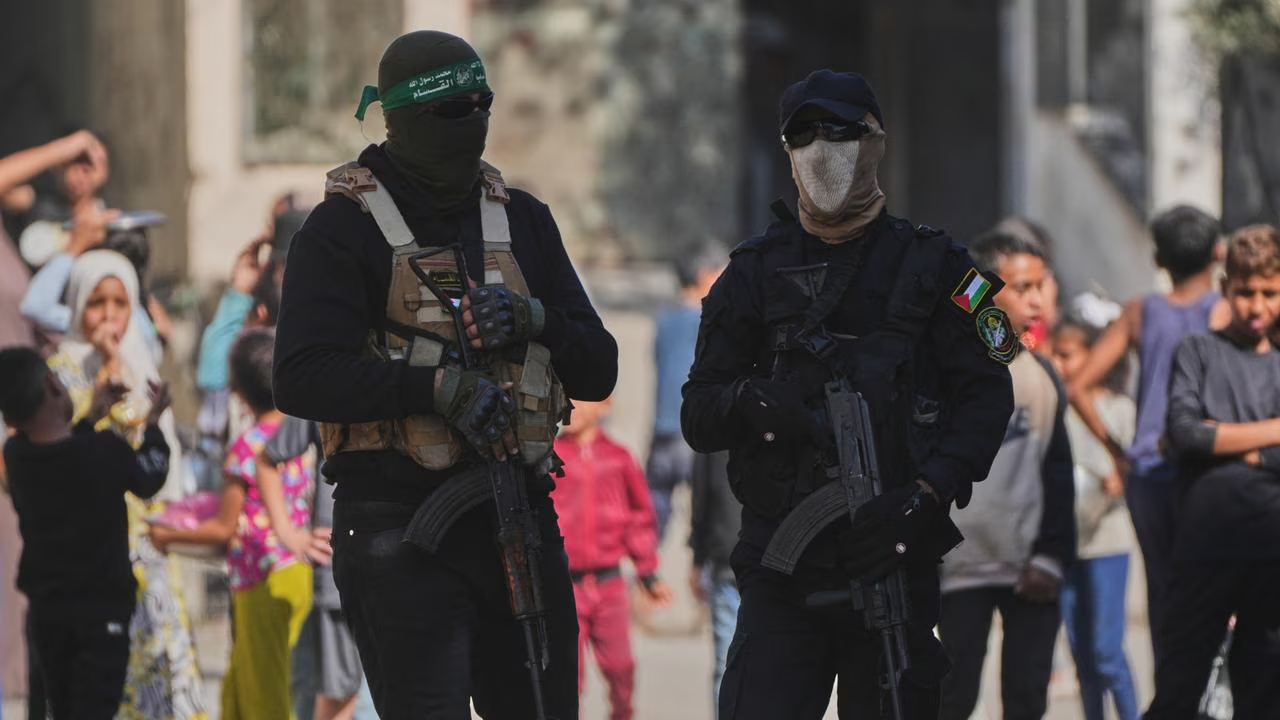
Hamas has controlled Gaza since 2007, but smaller armed factions continue to operate in its shadow. These groups, often composed of former members of Hamas and Fatah, have grown increasingly disillusioned with Hamas’s authoritarian rule. Some factions disagree with Hamas’s willingness to negotiate with Israel. Others criticize its failure to address the economic and social needs of ordinary Palestinians. Over time, these factions have conducted smaller resistance operations, attempting to challenge Hamas’s dominance.
Many of these anti-Hamas groups argue that the people of Gaza deserve more political representation and diversity. They believe that Hamas’s single-party rule stifles political discourse and suppresses the true aspirations of Palestinians. Now, as peace talks intensify, these factions are calling for inclusion in the peace process to ensure their voices are heard and their concerns addressed.
The Push for Inclusion in Gaza’s Peace Process
The demand for inclusion by anti-Hamas groups comes as peace negotiations begin to take shape. These groups argue that a lasting peace agreement cannot be reached unless all factions, including those opposed to Hamas, are part of the conversation. They believe that without their participation, any settlement will fail to address Gaza’s diverse political landscape. They insist on having a say in the future governance and security arrangements for Gaza.
These armed factions are particularly focused on the security situation. They fear that Hamas will continue to dominate Gaza without accountability. The groups argue that a new security framework must be developed, one that includes all factions. They see their inclusion as necessary for a balanced, comprehensive peace agreement that reflects the political and military realities of Gaza.
The Challenges of Including Armed Groups in Peace Talks
While the inclusion of anti-Hamas armed groups is seen as necessary by some, it presents several challenges. Many of these factions have a history of militant opposition to Israel and Hamas, which complicates their potential role in peace talks. Some of these factions maintain a hardline stance against Israel and have carried out attacks in the past. This raises concerns among international stakeholders who view these groups as obstacles to peace.
The ideological differences between these factions also pose a significant hurdle. Some of them may not agree on key issues, such as engagement with Israel or power-sharing in Gaza. The groups will need to find common ground if they are to effectively contribute to the peace process. Their inclusion could provide a more representative solution, but it will require significant negotiation and compromise.
The Role of the International Community in Facilitating Dialogue
The international community plays a vital role in ensuring that the peace process remains inclusive. The United Nations, the United States, and key European powers have urged the inclusion of all relevant factions, even those opposed to Hamas, in the peace talks. However, many of these factions are still seen as threats by some international actors. The challenge is to facilitate dialogue between these factions while ensuring the security of all parties involved.
International actors must also support the peace process with practical measures. This could include funding for reconstruction, facilitating humanitarian aid, and supporting the reintegration of former militants into society. The international community’s role is crucial in helping to mediate discussions, build trust, and provide the resources needed to implement a lasting peace agreement.
The Impact of Anti-Hamas Groups on Gaza’s Political Future
The demand for inclusion by anti-Hamas armed groups signals a significant shift in Gaza’s political future. If these factions are included in peace talks, Gaza’s political landscape could become more diversified. This inclusion could lead to a more representative form of governance that reflects the various views of Gaza’s people. However, this shift also poses risks. Hamas has built a powerful political and military structure in Gaza, and any attempt to change its control may lead to internal conflict.
A divided Gaza, with multiple competing factions, could lead to further instability. The success of any peace agreement will depend on the ability of these factions to cooperate and compromise. A political solution must balance the interests of all parties, ensuring long-term peace and stability for the people of Gaza.
Conclusion: A Complex Path to Peace
The involvement of anti-Hamas armed groups in Gaza’s peace process adds another layer of complexity to an already challenging situation. Their participation is essential for ensuring that Gaza’s diverse political landscape is represented, but it presents significant challenges. The international community must play a key role in facilitating dialogue and ensuring that all factions can find common ground. Ultimately, the future of Gaza depends on the willingness of all parties to put aside their differences and work together for peace.