
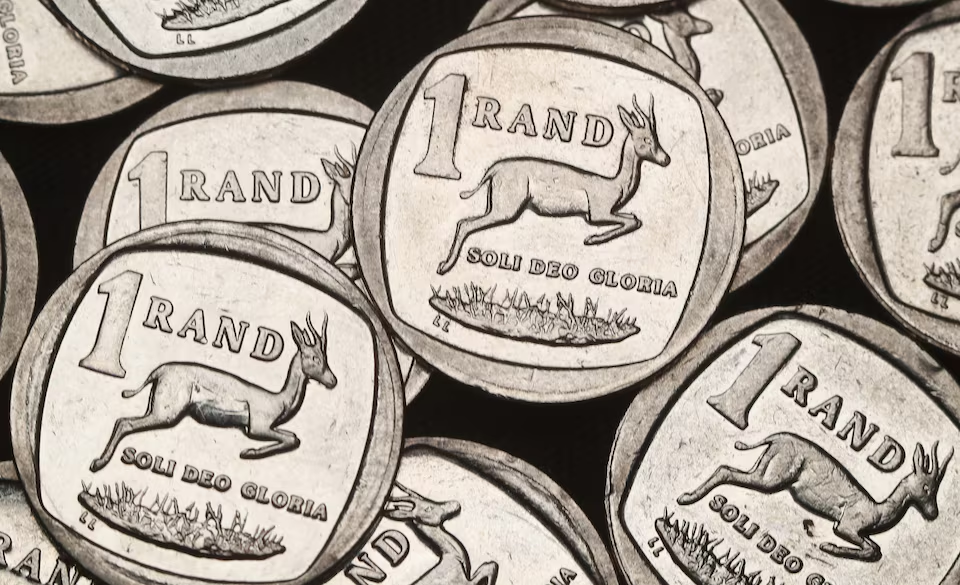
The South African rand weakens in early Tuesday trading, pressured by a sharp pullback in precious metal prices. Investors are also awaiting crucial U.S. economic data later this week. This data could clarify the Federal Reserve’s interest rate outlook, impacting global currency markets. Consequently, the rand traded at 15.95 against the dollar, marking a 0.3% decline from Monday’s close. The currency’s movement highlights its sensitivity to commodity exports and international monetary policy. Therefore, the current rand weakens trend reflects both local and global financial currents.
Gold and platinum are key South African exports, and their prices fell significantly. Gold dropped 0.8% after two sessions of gains, though it held above $5,000 per ounce. Spot platinum shed 2.3%, falling to $2,075.18 per ounce. This retreat in metal values directly undermines the country’s export earnings and trade balance. Such developments often prompt the rand weakens against major currencies like the dollar. Market participants now focus on upcoming U.S. jobs and inflation figures for further direction.
Global Data and Domestic Events in Focus
Investors globally await key U.S. economic releases this week. The data will offer clues about the Federal Reserve’s next policy moves. Higher U.S. interest rates typically strengthen the dollar, putting pressure on emerging market currencies like the rand. Domestically, South Africa’s statistics agency will publish December mining and manufacturing figures on Thursday. These reports will provide a fresh snapshot of the local industrial sector’s health. Analysts will scrutinize the data for signs of economic resilience or contraction.
Simultaneously, the annual African Mining Indaba conference continues in Cape Town. The event runs from February 9-12, gathering top mining investors and government officials. Discussions will center on the industry’s future challenges and opportunities. Market watchers often view this conference as a sentiment gauge for the resource sector. Positive commentary could potentially offset some negative pressure, limiting how much the rand weakens. However, the immediate price action remains tied to commodity markets and global risk appetite.
Local Market Reaction and Bond Performance
Johannesburg Stock Exchange equities mirrored the cautious currency mood. The Top-40 index fell 0.3% in early trade, aligning with the weaker rand. South Africa’s benchmark 2035 government bond showed little movement. Its yield rose just half a basis point to 8.03%. This relative stability in the bond market suggests local debt investors are looking beyond the day’s currency fluctuation. They might focus more on long-term fiscal policy and inflation trends. Nevertheless, a sustained period where the rand weakens could eventually raise imported inflation concerns.
The South African Reserve Bank monitors such currency developments closely. A weaker rand increases the cost of imported goods and fuels domestic price pressures. This could complicate the central bank’s efforts to manage inflation within its target band. For now, the move appears driven by external factors like commodity prices and dollar strength. The coming days will test whether this is a short-term adjustment or the start of a deeper trend where the rand weakens further.
Commodity Dependence and Currency Volatility
South Africa’s economy remains heavily reliant on mineral exports. This creates inherent volatility for the rand, as global commodity prices fluctuate. Gold and platinum are particularly significant for foreign exchange earnings. When their prices fall, it directly impacts the nation’s trade surplus and investor sentiment. This relationship explains why the rand weakens on days when precious metals retreat. The currency often acts as a proxy for commodity market performance.
Diversifying the export base could reduce this vulnerability over time. However, mining still dominates the trade landscape. Therefore, currency traders will keep watching precious metal charts closely. They will also monitor production reports from major local mining firms. Any supply disruptions or operational updates can influence prices and, by extension, the rand’s value. This creates a complex trading environment where the rand weakens or strengthens on a mix of local mining news and global macroeconomic signals.
Outlook for the Rand This Week
The rand’s near-term trajectory hinges on two main factors. First, the upcoming U.S. jobs and inflation data will drive the dollar’s strength. Strong data could bolster the dollar, causing the rand weakens further. Second, the domestic mining and manufacturing statistics will provide insight into economic momentum. Poor figures could compound the currency’s losses. The Mining Indaba conference may also produce headlines that affect market sentiment toward South African assets.
In conclusion, the South African rand faces a challenging week. It contends with falling export commodity prices and a potentially stronger U.S. dollar. The currency’s performance will likely remain volatile as traders process new information. The current trend where the rand weakens may continue if metal prices keep falling or if U.S. data surprises on the upside. However, positive domestic economic news or a commodity price rebound could quickly reverse the losses. Markets will watch all these elements closely to determine the rand’s next sustained move.


