
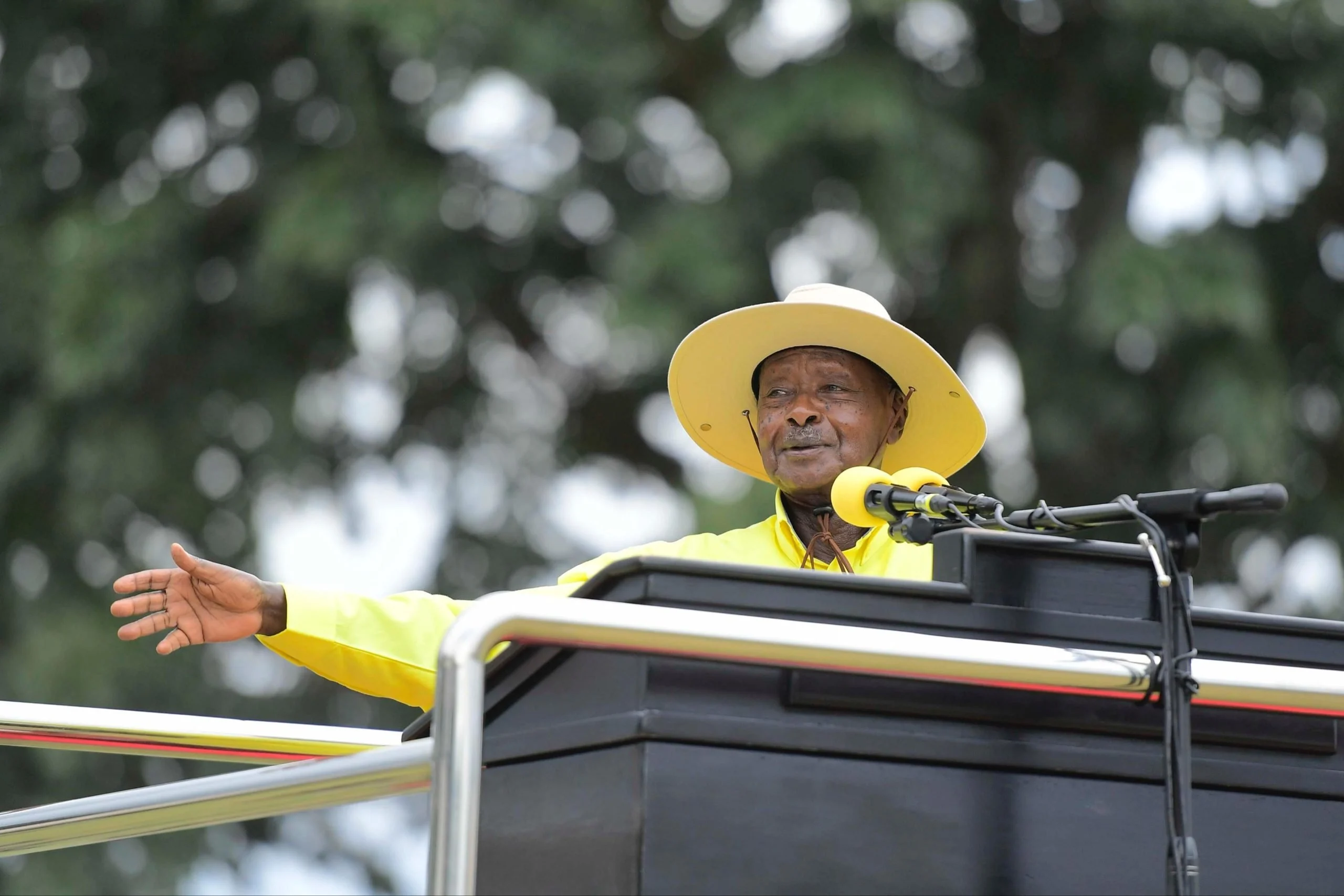
For nearly four decades, Yoweri Museveni has remained Uganda’s dominant political force, surviving demographic transformation, social change, regional realignments, and the rise of new opposition movements. Since taking power in 1986 and entering competitive electoral politics in 1996, Museveni has repeatedly adapted his political strategy, reshaping his electoral coalition to stay ahead in a country that looks very different from the one he first ruled.
Uganda today is younger, more urbanised, and more politically aware than ever before. Yet Museveni continues to secure decisive electoral victories, raising persistent questions about how power is maintained—and why challengers struggle to translate popular momentum into electoral success.
From Guerrilla Commander to Electoral Strategist
Museveni’s legitimacy initially rested on his role as a liberation leader who ended years of political chaos. When the National Resistance Movement captured power in 1986, many Ugandans associated Museveni with peace, stability, and reconstruction.
By the time Uganda returned to elections in the mid-1990s, Museveni had successfully converted revolutionary credibility into electoral dominance. Early campaigns focused on unity, security, and development, allowing him to consolidate support across regions still wary of political instability.
Demographic Transformation and the Youth Challenge
Uganda’s population has more than doubled under Museveni’s rule, producing one of the youngest populations in the world. Today, the majority of Ugandans are under 30—many with no living memory of the conflicts that brought Museveni to power.
This shift has fuelled the rise of opposition figures like Bobi Wine, whose appeal is strongest among urban youth frustrated by unemployment, corruption, and limited political space. Rather than directly conceding this demographic ground, Museveni has responded by fragmenting youth mobilisation through patronage programmes, youth leagues, and targeted economic initiatives—while relying on security institutions to prevent opposition movements from converting popularity into mass electoral turnout.
Rural Dominance and Electoral Geography
Despite urban opposition strength, Museveni’s core electoral advantage remains rural Uganda. Rural voters make up the largest share of the electorate, and the ruling party maintains deep organisational networks at village and parish levels.
Museveni’s strategy prioritises visible development projects—roads, electricity, health centres, and cash transfer programmes—framed as personal interventions by the president. This personalised development narrative reinforces loyalty, particularly in areas where the state is experienced primarily through the ruling party.
Urban centres may vote opposition, but rural margins consistently offset those losses.
Regional Balancing and Political Inclusion
Museveni has also mastered the art of regional coalition-building. Cabinet appointments, military promotions, district creation, and infrastructure spending are carefully distributed to maintain regional buy-in.
As Uganda’s administrative map has expanded through decentralisation, Museveni has used new districts to reward political loyalty and weaken opposition strongholds. Each election cycle involves recalibrating alliances, neutralising dissenting regions, and consolidating support where margins matter most.
Institutional Power and the Incumbency Advantage
Control of state institutions remains central to Museveni’s longevity. The security forces, electoral machinery, and regulatory bodies play prominent roles during election periods, shaping campaign conditions and limiting opposition manoeuvre.
International observers and rights organisations have repeatedly flagged concerns over intimidation, uneven access to media, and restrictions on opposition activity. Museveni has consistently defended these measures as necessary for national security and stability, a message that resonates with voters who fear a return to unrest.
Managing Opposition Without Surrendering Control
Rather than banning opposition outright, Museveni has adopted a strategy of controlled pluralism. Opposition parties are allowed to exist and campaign, but within legal and security constraints that limit their ability to mobilise nationally.
This approach diffuses international criticism while preserving domestic dominance. Legal reforms, public order regulations, and selective enforcement have all been used to manage political competition without dismantling the appearance of multiparty democracy.
Stability as a Winning Narrative
Museveni’s most enduring electoral message is stability. He consistently frames elections as a choice between continuity and chaos, invoking regional conflicts and past Ugandan turmoil as cautionary examples.
For older voters and rural communities, this message remains powerful. Even among critics, there is an acknowledgment that fear of instability plays a significant role in voter behaviour—especially where state services and livelihoods are fragile.
Constitutional Engineering and Longevity
Museveni’s ability to keep winning elections has also depended on constitutional changes that removed presidential term limits and age limits. These reforms, passed through parliament amid controversy, have ensured he remains eligible to contest indefinitely.
While critics see this as institutional erosion, supporters argue it provides continuity. Either way, these changes are central to understanding why Museveni continues to dominate electoral politics long after many expected his exit.
Why Museveni Still Wins
Museveni’s victories are not the result of a single advantage but a layered system: rural mobilisation, regional balancing, institutional dominance, stability messaging, and adaptive coalition-building. Each election brings new challenges, yet the ruling establishment consistently adjusts faster than the opposition.
Uganda has changed—but Museveni has changed with it, recalibrating alliances and strategies to remain politically indispensable.
The Road Ahead
As Uganda grows younger, more urban, and more digitally connected, the gap between political power and popular aspiration continues to widen. Whether Museveni’s model can indefinitely absorb these pressures remains uncertain.
What is clear is that his continued electoral success is not accidental. It is the product of long-term strategy, institutional control, and a deep understanding of Uganda’s political geography—making Museveni not just a survivor of change, but its most skilled manager.


