
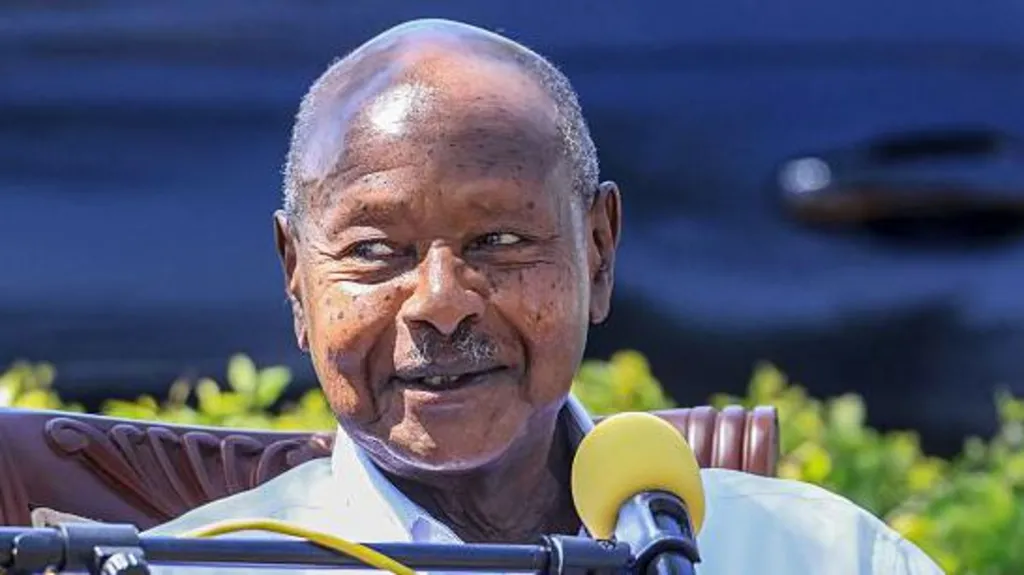
Uganda’s already tense presidential election descended further into crisis overnight after opposition supporters were killed in violent clashes with security forces, even as early official results showed President Yoweri Museveni taking a decisive lead in the vote count. The unfolding situation has intensified domestic and international concern over the credibility of the election and the future of democratic space in the country.
With partial results placing Museveni firmly ahead and opposition leader Bobi Wine effectively confined to his home, Uganda finds itself at a critical political moment marked by violence, repression claims, and deep societal divisions.
Museveni Dominates Early Election Results
Figures released by the Electoral Commission on Friday afternoon showed Museveni leading with around 75 percent of the vote, based on results from 60 percent of polling stations nationwide. Bobi Wine followed with approximately 21 percent, while the remaining votes were split among six other candidates.
At 81, Museveni is seeking a seventh consecutive term, a victory that would extend his rule beyond four decades. He has repeatedly argued that his leadership guarantees stability, security, and continuity, positioning himself as the anchor of national progress in a region prone to political upheaval.
Analysts say the scale of Museveni’s early lead suggests a familiar outcome in Ugandan elections, where the incumbent has won every presidential race since taking power in 1986.
Opposition Supporters Killed in Overnight Clashes
As vote counting continued, violence erupted overnight in Butambala, a town roughly 55 kilometres southwest of Kampala. At least seven opposition supporters were killed, according to police, though accounts of what happened vary sharply.
Opposition lawmaker Muwanga Kivumbi told reporters that hundreds of supporters had gathered at his home to follow early parliamentary results when soldiers and police fired tear gas and later live bullets. He claimed that up to ten people were killed inside his house, describing the incident as a targeted assault.
Human rights activist Agather Atuhaire confirmed Kivumbi’s account to international media, adding to mounting pressure for an independent investigation.
Police spokesperson Lydia Tumushabe disputed those claims, saying officers acted in self-defence after a group of opposition supporters armed with machetes, axes, and incendiary materials attacked a police station and planned to overrun a vote-tallying centre. She acknowledged fatalities and injuries but rejected accusations of an unprovoked attack.
Independent verification has been hampered by restricted access and the ongoing internet blackout.
Bobi Wine Surrounded by Security Forces
In Kampala, Bobi Wine’s residence in the Magere area was surrounded by heavy security, prompting his party, the National Unity Platform, to say he and his wife were “effectively under house arrest.”
The party alleged that security officers jumped over the perimeter fence and erected tents inside the compound, while journalists reported being blocked from accessing the area. Wine was similarly confined following the disputed 2021 election.
Police spokesperson Kituuma Rusoke said Wine was “a person of interest” due to his status as a presidential candidate, adding that the deployment was for his own security. He denied knowledge of any formal house arrest order.
Internet Blackout Obscures Information Flow
An internet blackout imposed earlier in the week has delayed the flow of information, meaning details of the overnight violence only began emerging on Friday. The shutdown was ordered by the Uganda Communications Commission, which said it was necessary to prevent misinformation, fraud, and incitement to violence.
The move has been widely condemned by rights groups and the United Nations Human Rights Office, which described the blackout as “deeply worrying” and warned it undermined transparency and accountability.
Election Conduct and Fraud Allegations
Ugandans voted on Thursday after a campaign period marked by repeated clashes, arrests, and disruptions of opposition activities. On election day, voting was delayed by up to four hours in some areas due to late delivery of ballot boxes and malfunctioning biometric voter verification machines.
Bobi Wine, a 43-year-old pop star-turned-politician whose real name is Robert Kyagulanyi, has alleged “massive” electoral fraud, though he has not presented documentary evidence. Authorities have not formally responded to the claims.
Electoral Commission chair Simon Byabakama said the internet blackout had not affected the tallying process, noting that results were transmitted through a private system. He said final presidential results are expected within 48 hours, likely by Saturday afternoon.
A Nation Divided Over Its Future
The Museveni–Wine contest reflects a deeper generational and political divide. Museveni presents himself as the guarantor of stability, while Wine says he represents a youthful population eager for reform, accountability, and expanded freedoms in a country where most citizens are under 30.
Wine had urged supporters to protest if results were manipulated, but as of Friday morning, no demonstrations had been reported, likely due to the heavy security presence across urban centres.
What Comes Next for Uganda
If confirmed, Museveni’s victory would entrench one of the longest-running presidencies in Africa and extend his grip on power to more than 40 years. Speculation continues over succession, with attention often focused on his son, army chief Muhoozi Kainerugaba, though Museveni denies grooming him for leadership.
As Uganda awaits the final announcement, the combination of deadly violence, restricted political space, and unresolved allegations of repression raises serious questions about the country’s democratic future—and whether this election will bring stability or deepen long-standing divisions.
ALSO READ:Uganda at a Crossroads as Museveni Claims Commanding Lead Amid Violence and Crackdown


