
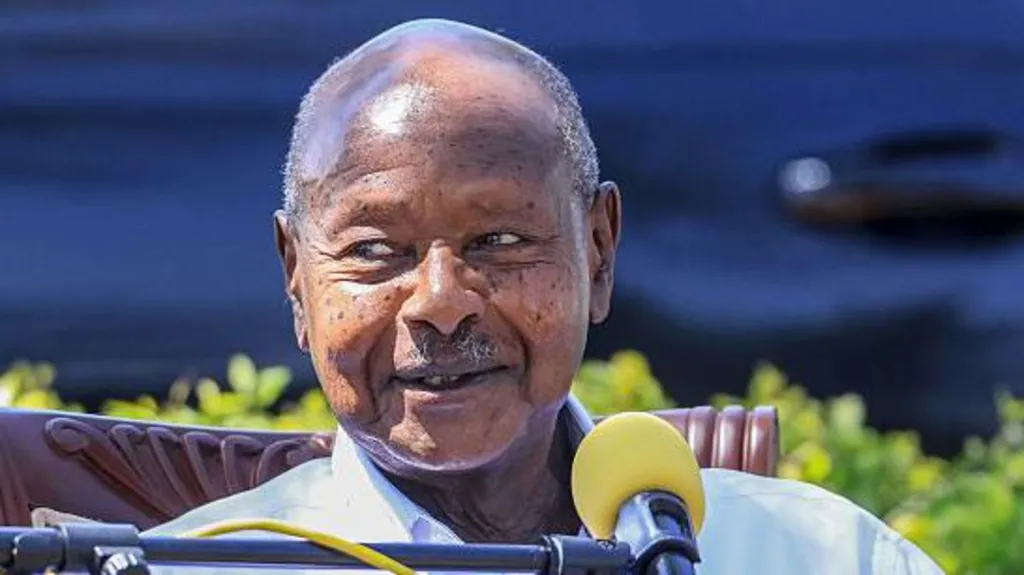
Uganda’s presidential election has entered a decisive phase as early official results place President Yoweri Museveni far ahead of his closest challenger, opposition leader Bobi Wine. The partial tally, released by the Electoral Commission on Friday morning, suggests that the country’s long-serving leader is on course to extend his nearly four-decade rule, even as the vote unfolds under intense domestic and international scrutiny.
The election has been widely regarded as one of the most consequential in Uganda’s recent history. It pits Museveni, an 81-year-old former rebel leader who has dominated the political landscape since 1986, against Wine, a 43-year-old pop star-turned-politician who has galvanized young voters with promises of reform, accountability, and generational change.
Early Results and Electoral Commission Update
According to figures announced by the Electoral Commission, Museveni has secured approximately 76 percent of the vote, based on results from about 45 percent of polling stations nationwide. Bobi Wine follows with roughly 20 percent, while the remaining votes are split among six other candidates.
Electoral Commission chair Simon Byabakama said the tallying process was proceeding as planned and dismissed concerns that the nationwide internet blackout had interfered with results transmission. He explained that the commission was relying on a secure, private system to relay figures from district tally centers to the national headquarters in Kampala.
Byabakama added that the commission expects to announce the final presidential results within 48 hours, in line with electoral law, projecting a formal declaration by Saturday afternoon.
Heightened Security Around Bobi Wine
As vote counting continued, political tensions escalated sharply in the العاصمة. Security forces surrounded Bobi Wine’s residence in Magere, a suburb of Kampala, prompting accusations from his party that he and his wife were being unlawfully detained.
The National Unity Platform said security officers entered the compound and erected tents inside the property, effectively placing the opposition leader under house arrest. Journalists attempting to access the area reported being blocked by armed personnel, raising further concerns about press freedom during the post-election period.
Police spokesperson Kituuma Rusoke defended the deployment, stating that Wine was “a person of interest” whose security needed to be guaranteed due to his status as a presidential candidate. Similar measures were taken after the 2021 election, when Wine was confined to his home for several days following disputed results.
Internet Shutdown and International Criticism
The election took place under a nationwide internet shutdown imposed earlier in the week. Authorities, through the Uganda Communications Commission, said the blackout was necessary to curb misinformation, prevent electoral fraud, and avert potential violence.
The move, however, drew sharp criticism from civil society organizations and international bodies. The United Nations Human Rights Office described the shutdown as “deeply worrying,” arguing that it restricted access to information, hindered independent reporting, and undermined transparency in the electoral process.
Despite the blackout, the Electoral Commission insisted that voting and tallying were not compromised, maintaining that internal systems remained fully operational.
Voting Delays and Technical Challenges
Election day was marked by logistical difficulties across several parts of the country. In many polling stations, voting started hours late due to delayed delivery of ballot materials and malfunctioning biometric voter verification machines.
Some voters reported waiting for up to four hours before casting their ballots, while others left polling stations altogether due to the delays. Opposition figures and election observers have suggested that the technical challenges may have disproportionately affected urban and opposition-leaning areas, although authorities have denied any deliberate manipulation.
Allegations of Fraud and Campaign Repression
Bobi Wine has accused the authorities of orchestrating “massive” electoral fraud, citing intimidation, arrests of supporters, and interference with opposition activities throughout the campaign period. While he has not yet presented documentary evidence to support the claims, his allegations echo concerns raised by rights groups ahead of the vote.
Prior to election day, the UN Human Rights Office warned that the polls were likely to be conducted in an environment characterized by “widespread repression and intimidation.” The campaign period saw repeated clashes between opposition supporters and security forces, as well as disruptions of rallies organized by the National Unity Platform.
Police officials have consistently rejected these accusations, arguing that security forces acted lawfully to maintain public order and accusing opposition supporters of provocation and disorderly conduct.
A Generational and Political Divide
The contest between Museveni and Wine has come to symbolize a broader struggle over Uganda’s future. Museveni portrays himself as the guarantor of stability, security, and economic progress, crediting his long tenure with bringing relative peace after years of post-independence turmoil.
Wine, whose real name is Robert Kyagulanyi, has built his political identity around youth empowerment and democratic reform. In a country where the majority of the population is under 30, his message has resonated strongly with young voters frustrated by unemployment, corruption, and limited political space.
What a Museveni Victory Would Mean
If the early results are confirmed, Museveni would secure a seventh consecutive term, further entrenching his status as one of Africa’s longest-serving leaders. His continued rule would extend a political era that began in 1986, following a guerrilla war that brought him to power.
Museveni is widely believed to be positioning his son, army chief Muhoozi Kainerugaba, as a potential successor, although he has repeatedly denied grooming him for the presidency. The prospect of dynastic succession remains a sensitive and polarizing topic within Ugandan politics.
Awaiting Final Results
While Bobi Wine had earlier called on supporters to protest if election results were manipulated, there were no immediate signs of demonstrations as of Friday morning. The heavy security presence in Kampala and other urban centers has contributed to a tense but relatively calm atmosphere.
As Uganda awaits the final declaration from the Electoral Commission, the election has once again highlighted deep divisions over governance, democracy, and political succession. Whether the outcome reinforces the status quo or fuels renewed demands for reform, the vote is likely to shape Uganda’s political trajectory for years to come.


