
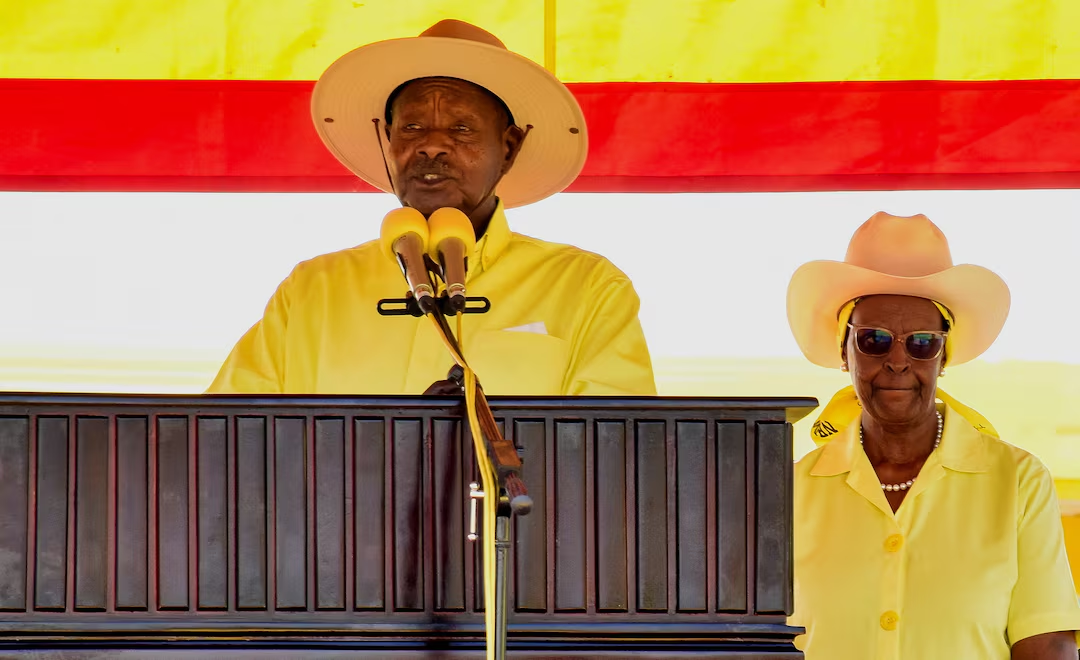
Uganda’s presidential election has taken a grim turn after at least seven people were killed in overnight violence in central Uganda, even as early official results show President Yoweri Museveni securing a commanding lead that appears set to extend his rule into a fifth decade. The deadly incidents have intensified scrutiny of an election already criticized for repression, security force conduct, and restrictions on political freedoms.
The violence erupted less than 24 hours after voting concluded, underscoring how fragile Uganda’s political environment remains whenever national elections are held.
Museveni Builds an Overwhelming Early Lead
According to results released by the Electoral Commission, Museveni has secured more than 75 percent of the vote, based on tallies from 59 percent of polling stations nationwide. His closest challenger, opposition leader Bobi Wine, stands at approximately 21 percent, with the remaining votes divided among six other candidates.
While final results had not yet been declared, the margin strongly suggests another victory for Museveni, who has already won six consecutive elections since taking power in 1986. Analysts say the scale of the lead mirrors previous polls, despite the unusually high level of domestic and international attention surrounding this vote.
Deadly Overnight Violence in Butambala
The most serious incident occurred overnight in Butambala, a town about 55 kilometers southwest of Kampala. Police confirmed that at least seven people were killed, but sharply conflicting accounts have emerged regarding how the violence unfolded.
Police spokesperson Lydia Tumushabe said opposition supporters armed with machetes attacked a police station and a vote-tallying center. According to police, officers responded in self-defense, firing their weapons after being overwhelmed by large crowds. Tumushabe added that 25 people were arrested in connection with the incident.
However, opposition lawmaker Muwanga Kivumbi, who represents the area, strongly disputed the police version. He told journalists that the victims were killed inside his home around 3 a.m., where supporters had gathered while awaiting results from his parliamentary race. Kivumbi described the incident as a deliberate assault by security forces, claiming officers broke into the compound and opened fire.
Independent verification of either account has not yet been possible, leaving major questions unanswered about responsibility and proportionality in the use of force.
A Campaign Shadowed by Repression
The election followed months of political tension, with opposition parties repeatedly accusing the state of repression. Supporters of Bobi Wine’s National Unity Platform reported arrests, beatings, and disruptions of campaign events, especially in urban areas.
Ahead of the vote, the United Nations warned that the election environment was characterized by “widespread repression and intimidation.” Human rights groups echoed these concerns, pointing to restrictions on opposition rallies, heavy police deployments, and surveillance of political activists.
Despite the tense atmosphere, election day itself passed without major incidents, with voting largely peaceful across the country.
Internet Blackout and Election Management
Ugandans voted under a nationwide internet blackout imposed days before the election. Authorities said the shutdown was necessary to prevent misinformation, fraud, and incitement to violence. Critics, however, argued that the move limited transparency, obstructed independent reporting, and prevented real-time verification of results.
The Electoral Commission maintained that vote tallying was not affected, stating that results were transmitted through secure internal systems. Still, the blackout fueled suspicion among opposition supporters, particularly given past elections in which similar restrictions were imposed.
Museveni’s Long Grip on Power
At 81 years old, Museveni remains one of Africa’s longest-serving leaders. He came to power after a guerrilla war in 1986 and has since reshaped Uganda’s political system, removing term and age limits that once constrained presidential tenure.
Museveni argues that his leadership guarantees stability, security, and gradual economic progress in a country that endured years of turmoil before his rise. His supporters credit him with maintaining national cohesion and avoiding large-scale conflict in a volatile region.
Critics, however, say Uganda has paid a high democratic price for prolonged rule, citing weakened institutions, entrenched patronage networks, and shrinking space for dissent.
Bobi Wine and the Youth Vote
Bobi Wine, whose real name is Robert Kyagulanyi, has emerged as the most formidable opposition figure Museveni has faced in years. A former pop star, Wine has built a strong following among young Ugandans frustrated by unemployment, corruption, and political stagnation.
In a country where the majority of citizens are under 30, Wine’s message of reform and generational change has resonated deeply. However, his campaign has repeatedly been constrained by arrests, rally bans, and security crackdowns.
Fears of Further Unrest
The killings in Butambala have heightened fears of additional violence as the country awaits final results. While authorities say the situation is under control, the heavy deployment of security forces in several districts reflects official concern about potential unrest.
Wine had previously urged supporters to protest if results were manipulated, but as of Friday afternoon there were no reports of large-scale demonstrations.
What Comes Next for Uganda
If confirmed, Museveni’s victory will further cement his dominance over Ugandan politics and extend one of the longest-running presidencies on the continent. Speculation continues over succession, with attention often focused on his son, army chief Muhoozi Kainerugaba, though Museveni denies grooming him for power.
As Uganda moves toward the final announcement of results, the combination of electoral dominance, disputed violence, and unresolved allegations of repression suggests the country faces a tense and uncertain post-election period—one that will test its stability, institutions, and democratic future.
ALSO READ:Museveni Takes Strong Lead in Early Results of Uganda Presidential Race


