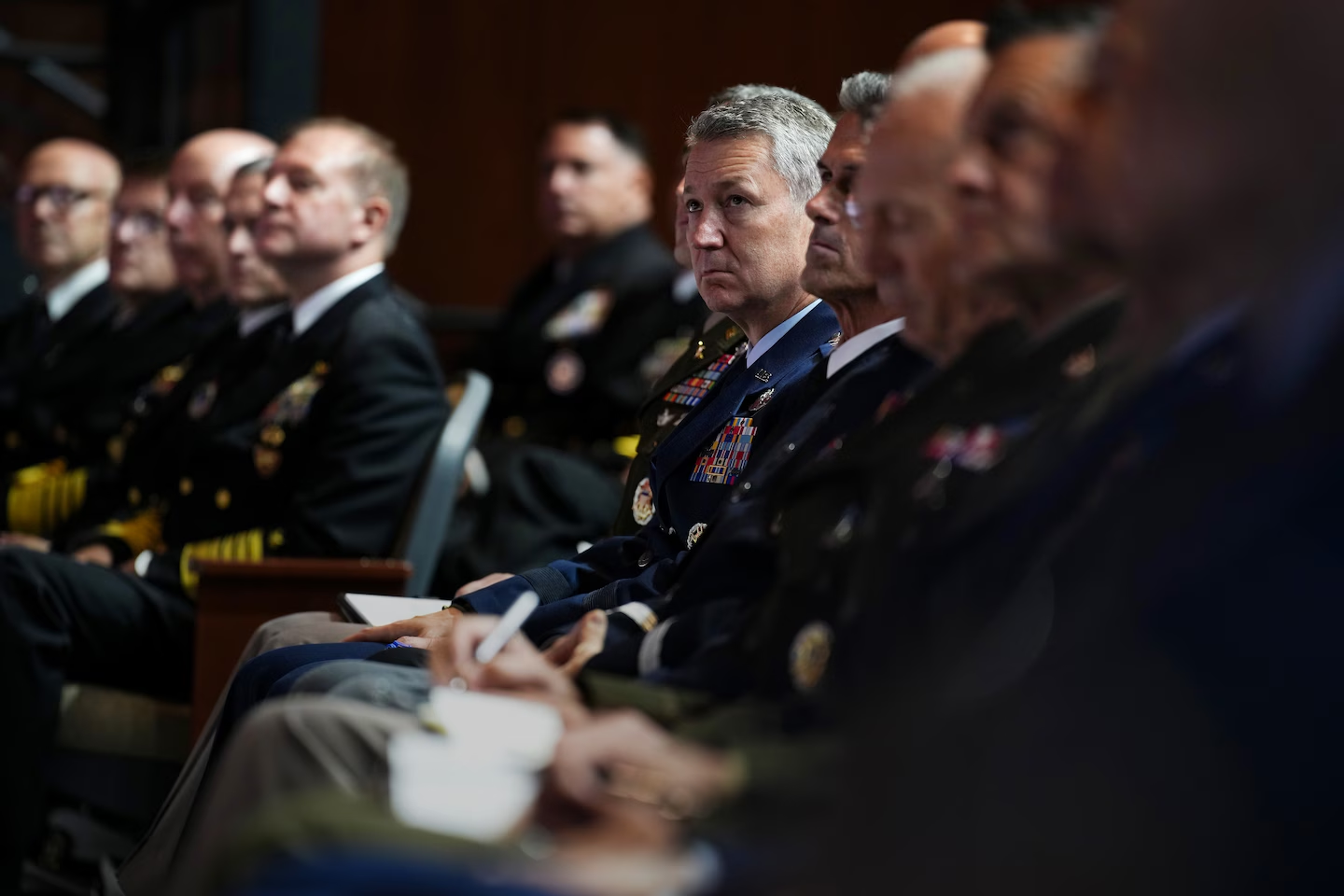
The Pentagon is poised to implement one of the most significant military reorganizations in recent history, with a new proposal that seeks to streamline the U.S. military’s command structure and shift the balance of power among its top generals. This bold plan, spearheaded by Defense Secretary Pete Hegseth, aims to reduce the number of high-ranking military headquarters and commanders, while also consolidating operations across various regions of the world. The overhaul promises to reshape the U.S. military’s ability to respond to global challenges by focusing more strategically on the Western Hemisphere and enhancing decision-making efficiency.
The Vision for Military Restructuring
The Pentagon’s proposed reorganization would create fewer, larger combatant commands, cutting down the current number from 11 to 8. Among the most significant proposed changes is the realignment of U.S. Central Command (CENTCOM), U.S. European Command (EUCOM), and U.S. Africa Command (AFRICOM) under a newly created U.S. International Command. This shift is part of a broader effort to decrease the prominence of the U.S. military presence in the Middle East and Europe, directing resources away from these regions and toward more urgent security concerns in the Western Hemisphere.
The proposed changes also include the creation of U.S. Americas Command (Americom), which would combine U.S. Southern Command and U.S. Northern Command under one umbrella. This reorganization is designed to make the U.S. military more adaptable and responsive, aligning resources with strategic priorities that reflect the evolving geopolitical landscape.
Efficiency and Speed: The Key Objectives
The main objective behind this ambitious reshaping is to increase decision-making speed and flexibility within the military. Senior officials have noted that, in recent years, the U.S. military’s command and control systems have shown signs of inefficiency and stagnation. By streamlining the command structure, officials aim to reduce bureaucratic delays and improve the military’s ability to act swiftly in response to emerging global threats.
As one senior defense official put it, “The saying here is, ‘If not us, who, and if not now, when?’” This statement underscores the urgency of the changes, as military leadership seeks to overcome what they see as “decay” in the current structure that could hinder U.S. global influence.
The Challenges and Criticisms
While many military leaders support the reorganization plan, some experts and former officials have raised concerns about the potential downsides of consolidating commands. Chuck Hagel, former U.S. Secretary of Defense, warned that consolidating too many commands could result in a loss of regional expertise, which is crucial for anticipating and addressing local threats. “The world isn’t getting any less complicated,” Hagel remarked, emphasizing the importance of retaining specialized knowledge in areas like Europe, the Middle East, and Asia.
Additionally, critics worry that removing certain regions from direct military command could weaken the U.S. military’s ability to maintain influence and strategic partnerships across the globe. A key concern is whether such a broad reorganization could leave the military less prepared to respond to localized crises, especially in regions like the South China Sea, Eastern Europe, or Africa, where U.S. interests remain vital.
Shifting Focus to the Western Hemisphere
Another central aspect of this reorganization is the U.S. military’s growing focus on the Western Hemisphere, including Latin America and the Arctic. The creation of U.S. Americas Command is seen as a response to the growing importance of the Western Hemisphere in global security. With rising challenges from China and Russia, as well as regional instability in places like Venezuela and Nicaragua, U.S. military planners are keen to enhance their presence and readiness in this area.
The plan also suggests the potential creation of a U.S. Arctic Command, which would fall under the new Americom structure. The Arctic region, rich in natural resources and increasingly important due to climate change, has become a point of geopolitical contention, particularly with Russia’s expanding military presence. A U.S. Arctic Command would allow the U.S. military to more effectively monitor and respond to developments in this strategically significant region.
The Trump Administration’s Strategic Shift
This proposed restructuring aligns closely with the broader national security strategy outlined by the Trump administration. The administration has emphasized shifting resources away from the Middle East and Europe, while placing greater emphasis on the Western Hemisphere, the Indo-Pacific, and space. President Trump has publicly stated that the U.S. can no longer afford to be the world’s policeman, and the reorganization is seen as part of his effort to refocus U.S. military priorities and reduce the financial and military burdens of maintaining an expansive presence abroad.
One of the more controversial aspects of the reorganization is the continued emphasis on a strong military presence in the Indo-Pacific, with the U.S. Indo-Pacific Command (INDOPACOM) remaining one of the most important combatant commands. The U.S. military’s strategic pivot toward countering China in the Indo-Pacific has been a defining feature of U.S. foreign policy under the Trump administration, and the military’s restructuring reflects this priority.
Congressional Oversight and Reactions
Despite the Pentagon’s internal support for the changes, the proposed reorganization faces scrutiny from Congress. Lawmakers have expressed concerns about the lack of communication and the potential costs of implementing such a sweeping restructuring. Some members of the Senate and House Armed Services Committees have pushed back, demanding more detailed briefings on the plan’s potential impact on U.S. military readiness, alliances, and foreign relations.
In response, Pentagon officials have emphasized that the plan is still in its early stages and will require extensive consultation with both Congress and allied nations before any final decisions are made. They argue that the reorganization is necessary to ensure that the U.S. military can meet the challenges of the 21st century with greater agility and efficiency.
Conclusion: A New Era for U.S. Military Command
If the Pentagon’s plan for military restructuring is approved, it will represent one of the most significant shifts in U.S. military operations in decades. The goal is to create a more streamlined, efficient, and responsive military that is better equipped to face the complex challenges of a rapidly changing world. However, the proposal’s success will depend on overcoming significant hurdles, including resistance from within the military, Congress, and allies abroad.
As the U.S. military prepares for a new era of strategic realignment, the outcome of this proposal will shape the future of American military power and its role on the global stage. Whether the changes are ultimately implemented or not, the debate over the reorganization highlights the pressing need for innovation in military command structures as the U.S. seeks to maintain its position as a global superpower.