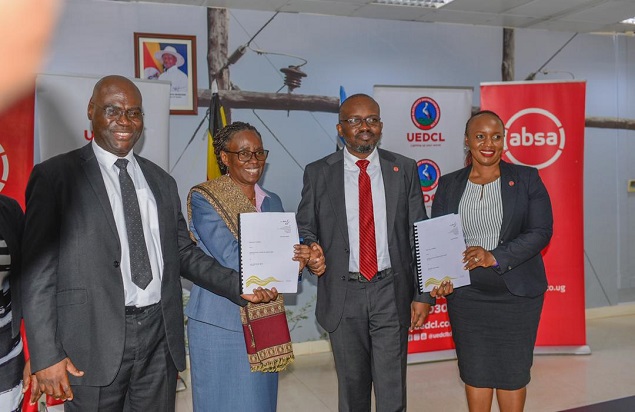
Uganda Electricity Distribution Company Limited (UEDCL) has secured a significant loan of UGX190 billion (US$50 million) from Absa Bank Uganda. This loan will play a crucial role in improving Uganda’s electricity distribution infrastructure, supporting the government’s goal of universal electricity access. The loan deal was finalized at UEDCL’s headquarters in Nakasero, Kampala. It also demonstrates the growing collaboration between Uganda’s public institutions and the private sector, as well as Absa Bank’s commitment to Africa’s long-term development.
This agreement marks a turning point for UEDCL, which manages Uganda’s power distribution network. The funds will address longstanding issues in the sector, such as poor electricity reliability, high technical losses, and limited access to electricity in rural areas.
Key Areas of Investment
The loan will focus on several key areas aimed at improving Uganda’s power infrastructure:
- Network Upgrades and Reinforcements
UEDCL will upgrade its existing infrastructure to handle growing demand. This will include reinforcing transmission lines and substations to ensure a more stable and reliable power supply. - Smart Grid Technologies
Part of the funding will go toward implementing smart grid systems. These advanced technologies will help UEDCL better monitor and control the power distribution, improving efficiency and reducing outages. - New Electricity Substations
New substations will be built in strategic locations to improve electricity access in underserved areas. These substations will support the government’s mission of providing electricity to every Ugandan by 2030. - Integration of Renewable Energy
UEDCL will also work on integrating renewable energy into the national grid. This will diversify Uganda’s energy sources and support the country’s efforts to reduce carbon emissions.
Significance of the Loan for Uganda’s Economic Growth
The loan deal holds great promise for Uganda’s economy. As UEDCL’s Board Chairperson, Lydia Ocheng-Obo, pointed out, the timing of the loan is crucial. The country’s power sector needs investment to meet the increasing demand for electricity, driven by rapid urbanization and industrialization.
Paul Mwesigwa, Managing Director of UEDCL, emphasized the loan’s role in Uganda’s industrialization. “Reliable and affordable electricity is vital for economic growth,” Mwesigwa said. “With this funding, we can significantly enhance our distribution network, which will benefit key industries and improve living standards.”
The loan aligns with Uganda’s Vision 2040 and National Development Plan IV, which aim to transform Uganda into a middle-income country by 2040. Providing reliable electricity to all citizens is a key part of these plans, and the UEDCL-Absa partnership is an essential step in achieving this goal.
Financial Terms and Benefits
A standout feature of this loan is its favorable interest rate. At 8% VAT inclusive, it is much lower than the current market rate of 28%. This lower rate will ease UEDCL’s financial burden, allowing the company to invest in critical infrastructure projects without overstretching its resources.
This deal also highlights the role of the private sector in funding public infrastructure. Absa Bank’s involvement underscores the bank’s long-term commitment to supporting Uganda’s energy sector. David Wandera, Managing Director of Absa Bank Uganda, noted, “Reliable power distribution is essential for Uganda’s industrialization, competitiveness, and inclusive growth.”
A Step Toward a Sustainable Energy Future
The UEDCL-Absa loan deal represents more than just a financial arrangement. It marks a significant step toward creating a sustainable, efficient, and resilient energy system in Uganda. By adopting smart grid technologies and integrating renewable energy, UEDCL is positioning Uganda as a leader in energy innovation in Africa.
This partnership will help UEDCL enhance both the quantity and quality of power distribution in Uganda, ensuring that energy is accessible, reliable, and affordable for all citizens. As the project progresses, its impact will be felt in key sectors such as industry, education, healthcare, and agriculture.
In conclusion, the UGX190 billion loan agreement between UEDCL and Absa Bank Uganda is a landmark achievement for Uganda’s energy sector. It will help strengthen the country’s electricity distribution network, boost industrial growth, and contribute to Uganda’s long-term economic goals. With the integration of smart grid technologies and renewable energy, this partnership is paving the way for a more sustainable energy future in Uganda. By continuing to collaborate with the private sector, UEDCL is setting a positive example for how public institutions can drive economic and social development.