
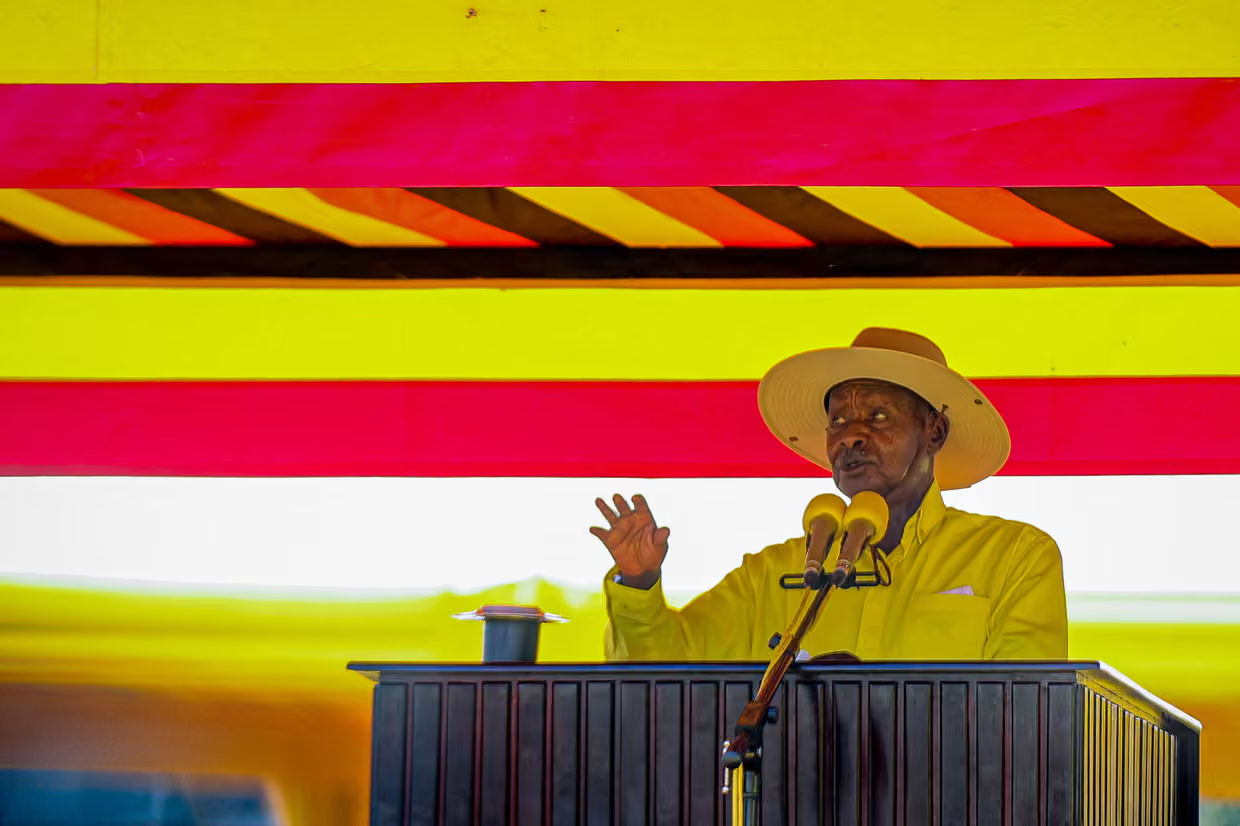
Ugandans are preparing to cast their ballots in an election that is expected to see President Yoweri Museveni extend his grip on power into a fifth decade. The election comes after months of political tension, violence, internet shutdowns, and fears of widespread repression. For the 81-year-old leader, this election represents another critical test of his political longevity, but for many of Uganda’s younger citizens, it is a chance to challenge the entrenched political system and demand change.
Political Landscape: A Country in Transition
Uganda’s political landscape has been dominated by Museveni since he came to power in 1986, after leading a rebel group to overthrow the then-government. In the nearly four decades since, Museveni has presented himself as the architect of peace, economic growth, and stability. Under his rule, Uganda has seen impressive economic gains and regional influence, but critics argue that these achievements have come at the cost of democratic freedoms, political repression, and corruption.
While Museveni has cultivated a loyal following, especially in rural areas where his government’s programs have brought tangible benefits, his prolonged presidency has also fostered widespread disillusionment, particularly among the youth. With more than 70% of Uganda’s population under the age of 30, many young Ugandans have grown frustrated with a system that they perceive as corrupt, stagnant, and resistant to change.
Bobi Wine: The Face of Opposition and Youth Activism
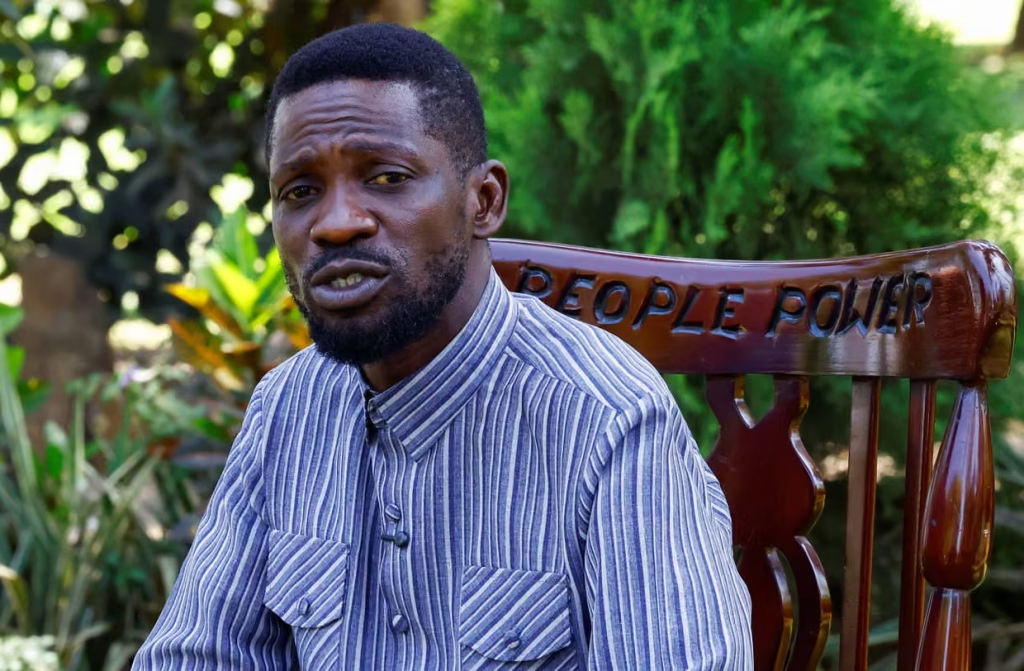
Bobi Wine, the 43-year-old pop star-turned-politician, has become the symbol of a youthful opposition movement calling for political reform. As the leader of the National Unity Platform (NUP), Bobi Wine has positioned himself as the voice of Uganda’s disillusioned youth, many of whom are frustrated by high unemployment, economic inequality, and political repression.
Bobi Wine’s candidacy in the 2021 election, where he finished as the runner-up to Museveni, marked a historic moment. He galvanized young voters, particularly in urban areas, with his message of hope, political change, and social justice. However, the election was marred by widespread violence and irregularities, including the killing of more than 50 opposition supporters and the arrest of hundreds of Bobi Wine’s supporters.
This time, as Bobi Wine campaigns again, the atmosphere is even more tense. His rallies have been disrupted by security forces using tear gas, rubber bullets, and live ammunition. Supporters have been arrested, and some campaign events have been violently broken up. In response to growing fears for his safety, Bobi Wine now appears in public only with a bulletproof vest and helmet, a stark contrast to the confident, hopeful figure who launched his campaign months ago.
Violence and Repression: A Government on the Defensive
The 2026 election campaign has been marked by increasing militarization and repression. Security forces have frequently clamped down on Bobi Wine’s rallies, using force to suppress opposition support. Roadblocks, arrests, and violent dispersals of crowds have become commonplace, with opposition leaders, civil society members, and journalists facing harassment and intimidation.
Bobi Wine’s supporters have faced police brutality, including the use of tear gas and gunshots, leading to a growing fear that the government may be preparing to use force to secure Museveni’s victory. The government’s actions have prompted widespread criticism from human rights organizations, including Amnesty International, which has documented violations against political opposition, journalists, and activists.
Adding to the tension, the Ugandan government has justified its actions by framing the opposition as “criminal” and accusing them of inciting violence. Museveni himself has called for even greater use of force, advising security personnel to “use more teargas” against what he termed the “criminal opposition.”
The Internet Shutdown: A Tool of Political Control
As the election approaches, the Ugandan government has imposed a nationwide internet shutdown, cutting off access to mobile data and social media platforms. This move has drawn sharp criticism both domestically and internationally, with many arguing that it is designed to suppress independent election reporting, limit communication, and stifle political opposition.
The shutdown also disrupts vital services like banking, communication, and coordination of election observation efforts. Critics argue that limiting the flow of information makes it harder for the public to verify election results and hold authorities accountable.
A System Rigged for Museveni’s Success
Despite the violent and repressive atmosphere, many analysts believe Museveni is poised to secure another term. His control over key state institutions — including the military, the judiciary, and the electoral commission — gives him a significant advantage. Museveni has also used his control of resources, including state-run media, to build a strong political machine that can dominate the electoral landscape.
Even in the face of mounting opposition, the National Resistance Movement (NRM), the ruling party, maintains a stranglehold on Uganda’s political infrastructure. Museveni has also reshaped the constitution to eliminate presidential age limits, allowing him to rule indefinitely.
However, the issue of succession has been a growing concern, particularly with the increasing prominence of Museveni’s son, Muhoozi Kainerugaba, who is the commander of Uganda’s military. Although Museveni has denied grooming his son to succeed him, many Ugandans view Kainerugaba as the president’s chosen heir, which has fueled speculation and concerns about a dynastic leadership.
The Economy: Oil Promises and Economic Strain
In addition to political power, Museveni’s economic promises play a significant role in his campaign. Uganda is on the cusp of an oil boom, with oil production expected to begin later this year. Museveni has pointed to the potential for economic growth from oil, as well as improvements in agriculture, infrastructure, and education, as the foundation of his vision for Uganda’s future.
Yet, economic growth under Museveni has not been equally distributed, and many Ugandans continue to live in poverty. Youth unemployment remains a pressing issue, with more than 60% of young people out of work or underemployed. Inflation has eroded purchasing power, and the country’s public debt has reached concerning levels.
While Museveni’s supporters cite his economic reforms, critics argue that his government has failed to address the needs of the majority of Ugandans, particularly in the face of growing inequality and stagnation in key sectors.
Bobi Wine’s Vision for Change
Bobi Wine’s vision contrasts sharply with Museveni’s. His campaign promises to initiate a “complete reset of Uganda”, focusing on democratic reforms, human rights, and tackling corruption. Bobi Wine has positioned himself as the alternative to Museveni’s autocratic leadership, emphasizing the need for an accountable government that prioritizes the needs of the people.
His call for change resonates especially among Uganda’s youth, who feel left behind by an economy that has not provided enough opportunities. Wine’s manifesto includes pledges to restore judicial independence, create jobs, and address social services, areas that have long been neglected under the current regime.
The Election’s Uncertain Outcome: Will Museveni’s Rule Endure?
While the election is expected to return Museveni to power for a seventh term, it is clear that his authority faces greater challenges than ever before. The rise of Bobi Wine and the growing opposition movement signal a shift in the political landscape, particularly among younger voters who are demanding change.
For Uganda’s future, the outcome of this election could mark a turning point. Will Museveni’s rule continue unchallenged, or will the opposition, despite the odds, begin to dismantle the political machinery that has kept the president in power for nearly 40 years?
The next few days will reveal whether Uganda’s democracy can withstand the pressures of authoritarianism and whether the younger generation’s push for reform can shift the country’s political future.


