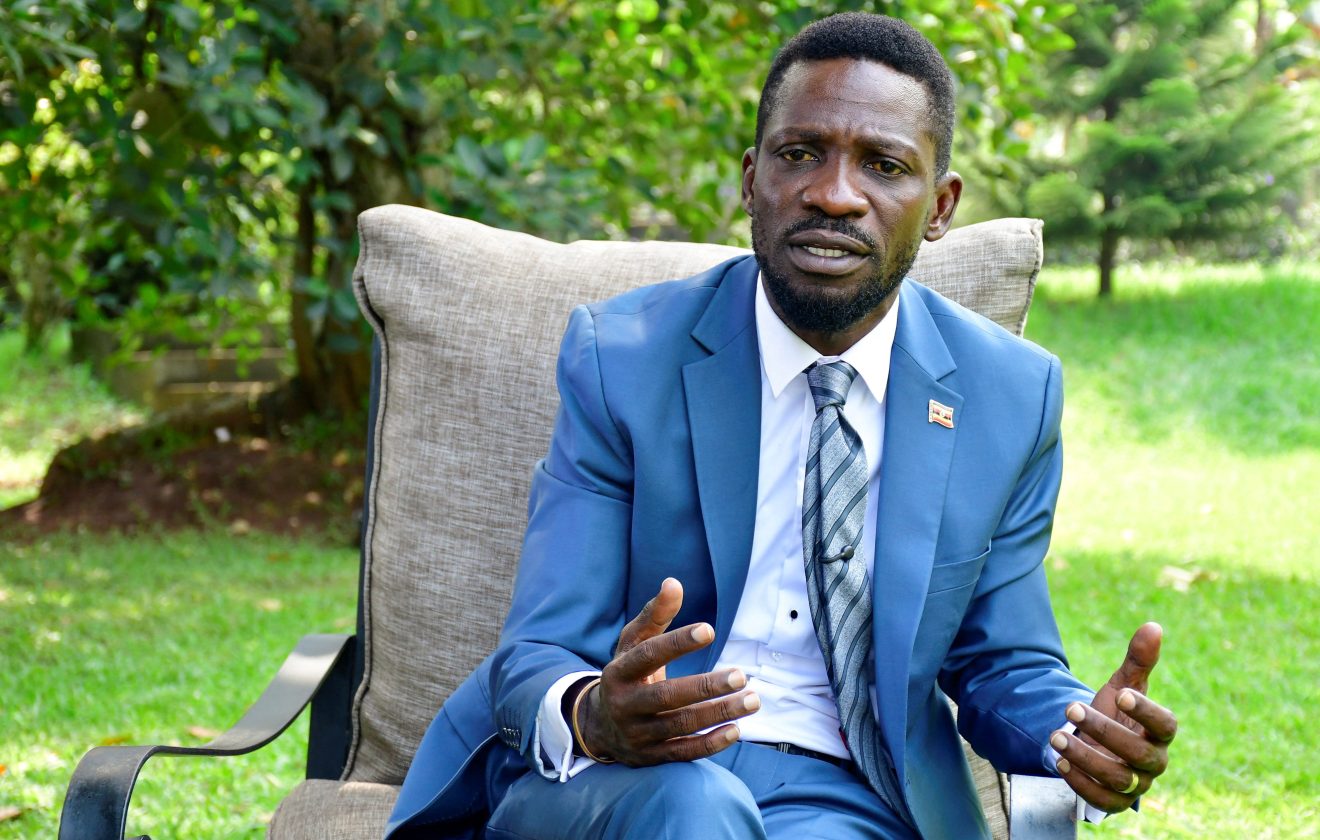
Uganda heads into one of its most tightly managed elections in decades as opposition leader Robert Kyagulanyi, popularly known as Bobi Wine, urges supporters to “protect the vote” amid widespread fears of violence, arrests, and post-election repression. The phrase has become both a rallying cry and a warning, reflecting the belief among opposition figures that the contest will be decided not only at the ballot box, but also through control of streets, institutions, and fear.
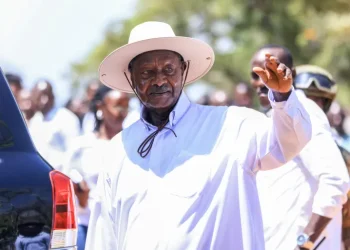
President Yoweri Museveni, who has ruled Uganda since 1986, is seeking another term that would extend his grip on power toward five decades. While Museveni is widely expected to win, the election has exposed deep tensions within Ugandan society and raised questions about whether stability built on force can endure.
From Optimism to Survival Mode
When Bobi Wine launched his campaign in October, the mood among supporters felt cautiously hopeful. Appearing in tailored suits, he greeted crowds with ease and spoke of peaceful political change. For many young Ugandans, his candidacy symbolised the possibility of generational renewal in a country where most citizens have never known another president.
That optimism faded quickly. By December, Bobi Wine no longer appeared in public without a bulletproof vest and helmet. His campaign events increasingly resembled security operations rather than political rallies. Roads were sealed off without warning. Supporters scattered as tear gas filled the air. Arrests became routine.
For many Ugandans, the transformation of Bobi Wine’s public image reflects the shrinking space for opposition politics. It also signals the level of force the state is prepared to deploy to control the electoral environment.
A Campaign Marked by Calculated Repression
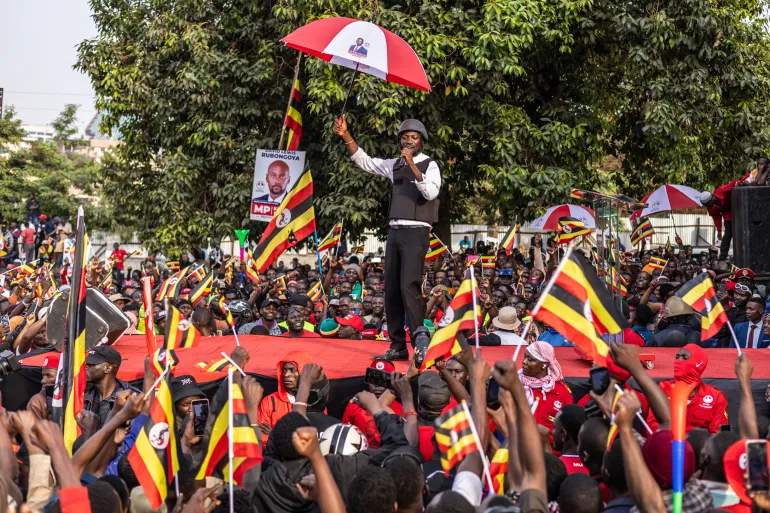
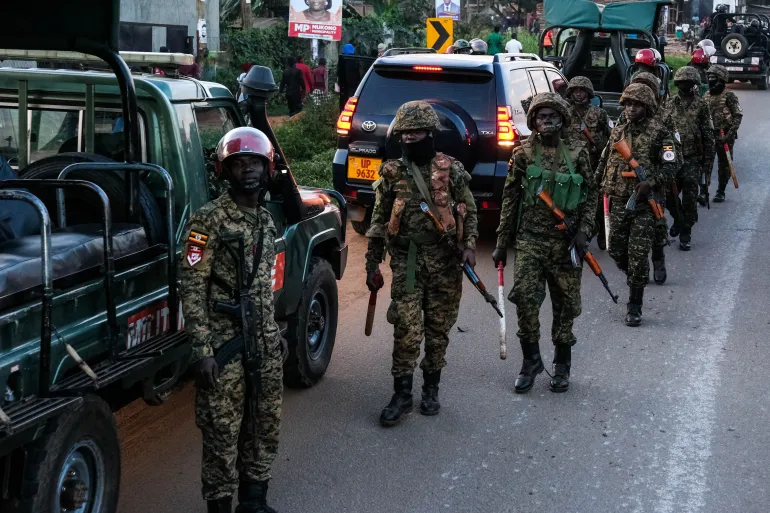
Unlike the explosive violence of the 2020–2021 election period, analysts say the current campaign has followed a more controlled strategy. Security agencies appear focused on preventing mass mobilisation rather than reacting to it.
During a campaign stop in Gulu in northern Uganda, Bobi Wine and his aides were attacked by security forces and plainclothes individuals armed with sticks. Campaign equipment was destroyed. Several people were injured. One later died.
In Mbarara, western Uganda, police arrested dozens of Bobi Wine supporters during a dispute over campaign routes. Many remain in detention months later. Across the country, opposition convoys faced roadblocks, surveillance, and frequent disruption.
Political analysts describe the repression as systematic rather than spontaneous. The aim, they argue, is to exhaust the opposition and limit its ability to communicate, organise, and monitor the vote.
Threats From the Apex of Power
Fear surrounding the election deepened following public threats by Muhoozi Kainerugaba, Museveni’s son and the commander of Uganda’s army. In the months before campaigning began, Kainerugaba posted messages threatening Bobi Wine, including remarks about beheading him.
He also claimed responsibility for the abduction and torture of Bobi Wine’s bodyguard, Edward Ssebuufu, who remains in detention. Although the most extreme threats did not materialise, opposition figures say they created an atmosphere in which violence felt sanctioned from the highest levels.
The presence of Museveni’s son at the centre of the security apparatus has further blurred the line between state authority and family power.
Pressure Beyond the Presidential Race
The crackdown has extended to parliamentary contests held alongside the presidential vote. Candidates backed by Bobi Wine’s National Unity Platform have faced intense pressure, particularly outside central Uganda.
Several candidates withdrew from races, publicly denounced Bobi Wine, and joined the ruling party. Most defections were coordinated by senior parliamentary figures and occurred almost daily during the campaign’s final weeks.
Bobi Wine alleges bribery. The government insists the defections were voluntary. Analysts describe the process as transactional politics, long embedded in Uganda’s system, but unusually organised during this election.
The Electoral Commission as a Gatekeeper
The Electoral Commission of Uganda has also played a central role. It disqualified multiple opposition-aligned parliamentary candidates, citing technical nomination failures.
Legal experts say some of the disqualifications lacked clear legal basis. They argue the commission then obstructed appeals by delaying formal notifications, making it nearly impossible for candidates to challenge decisions in court.
Critics say the result has been the creation of unopposed ruling-party candidates in several constituencies.
Money, Patronage, and the Soft Offensive
Alongside coercion, Museveni has deployed economic incentives. In opposition strongholds across central Uganda, he distributed cash to informal-sector groups such as boda boda riders, taxi drivers, salon workers, and street vendors.
Supporters frame the payments as poverty alleviation. Critics describe them as structured vote-buying. Political historians note that patronage has long shaped Ugandan elections, but this cycle stands out for its scale and targeting.
For many recipients, the choice is pragmatic rather than ideological. Economic survival often outweighs political loyalty.
Election Day Fears and the Call to ‘Protect the Vote’
As voting approaches, Bobi Wine has warned supporters that the state plans to arrest him and abduct key organisers involved in monitoring polling stations.
He issued detailed safety advice: disable phone location services, avoid predictable routes, limit time spent in one place, and flee if followed by unfamiliar vehicles, particularly Toyota Hiace vans widely associated with state abductions.
Another flashpoint is Bobi Wine’s call for voters to remain near polling stations after voting to “protect the vote.” Ugandan law allows voters to stay at least 20 metres away, but security agencies and election officials have urged people to leave immediately.
Authorities frame the issue as maintaining order. Opposition figures see an attempt to prevent public oversight of vote counting.
A Public Torn Between Change and Peace
Despite elite confrontation, many Ugandans express a desire for peace above all else. Memories of the 2020–2021 election violence, when more than 50 people were killed, remain vivid.
In Kampala, casual workers, traders, and business owners say unrest would devastate livelihoods. Supporters of both Museveni and Bobi Wine express fear of violence spiralling out of control.
For many voters, the election is less about hope than about avoiding chaos.
The Likely Endgame
Analysts predict a familiar pattern. The Electoral Commission will declare Museveni the winner. Bobi Wine will reject the result. Security forces will restrict opposition leaders’ movements, likely placing Bobi Wine under house arrest, as has occurred repeatedly since 2011.
Large-scale protests appear unlikely under current conditions. Heavy militarisation, surveillance, and fear limit the opposition’s ability to mobilise.
Some analysts argue that Bobi Wine’s strategy now extends beyond winning the presidency. Instead, it focuses on consolidating opposition identity, retaining parliamentary influence, and positioning for a post-Museveni transition.
Beyond This Election
Uganda’s deeper dilemma lies in succession. Museveni’s age has intensified uncertainty about what comes next. His son’s prominence has unsettled elites within the ruling system, raising the risk of fragmentation once Museveni eventually exits.
Each extension of Museveni’s rule delays that reckoning rather than resolving it.
For now, power manages dissent through control rather than consent. The call to “protect the vote” captures both the opposition’s determination and its constraints.
This election may not change Uganda’s leadership. But it reveals a political system under strain, a youthful population pressing against narrowing limits, and a future whose stability remains increasingly uncertain.
ALSO READ:Uganda at a Crossroads as Museveni Seeks to Extend an Era
ALSO READ:Uganda Votes in Tense Election Seen as Test of Museveni’s Strength