
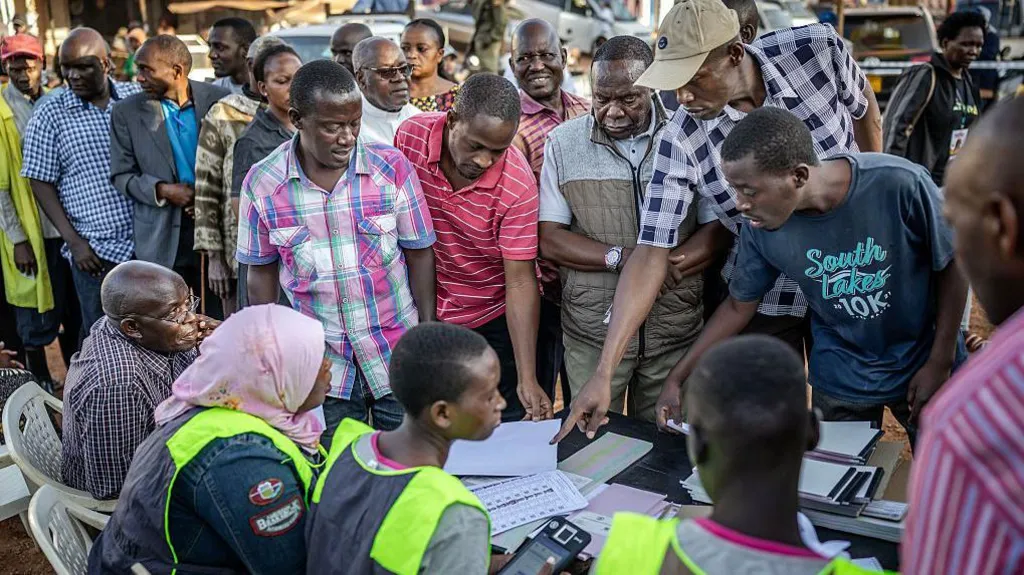
Uganda’s presidential and parliamentary elections descended into disorder on Thursday as widespread logistical failures, malfunctioning biometric systems, and a nationwide internet shutdown disrupted voting across large parts of the country. More than 21 million registered voters were expected to take part in what is one of the most consequential elections in Uganda’s modern history, but many were left frustrated by long delays and uncertainty at polling stations.
From the capital Kampala to rural districts across the country, voting was delayed by several hours in some locations, with polling stations failing to open on time and electoral materials arriving late. Observers described scenes of confusion and anger as voters queued in the early morning only to discover that voting could not begin as scheduled.
Long Queues and Growing Voter Frustration
Journalists on the ground reported delays of up to four hours in some polling stations, particularly in Kampala. Many voters waited from early morning without clear communication from election officials about when voting would start. Some eventually left without casting their ballots, citing work commitments, fatigue, or a loss of confidence in the process.
“I am very angry because we were supposed to start voting at seven in the morning, but nothing is happening,” said Kaweesi Ismail, a voter in Kampala. “The ballot papers are not even here. I don’t know what to say anymore.”
Such frustrations were echoed in other parts of the country, where voters complained that electoral officials appeared overwhelmed by equipment shortages and technical failures.
Biometric Machines at the Center of the Crisis
At the heart of the disruption were failures in biometric voter verification kits, commonly referred to as BVVK machines. These devices are designed to verify voters’ identities using fingerprints and facial recognition. However, in many polling stations, the machines either failed to power on, could not read fingerprints, or experienced software problems.
Election officials acknowledged the challenges, with some stations resorting to manual verification using the national voters’ register to prevent further delays. The Electoral Commission of Uganda apologised for what it described as “technical glitches” and said teams were deployed to fix faulty equipment and deliver missing materials.
Despite these assurances, the scale of the failures raised serious concerns about preparedness and the integrity of the voting process.
Internet Shutdown Compounds the Chaos
The situation was further complicated by a nationwide internet shutdown imposed days before voting. The Uganda Communications Commission said the blackout was necessary to prevent misinformation, electoral fraud, and the incitement of violence during the polls.
However, the decision drew sharp criticism from civil society groups, opposition parties, and international observers. The United Nations Human Rights Office described the shutdown as “deeply worrying,” warning that it undermined transparency, freedom of expression, and the public’s ability to monitor the electoral process.
With internet access cut, journalists and election observers struggled to report developments in real time, while opposition groups said they were unable to document and share alleged irregularities.
Museveni and Wine: A High-Stakes Contest
The election is widely seen as a two-horse race between long-serving President Yoweri Museveni, 81, and opposition leader Bobi Wine, a 43-year-old pop star turned politician whose real name is Robert Kyagulanyi.
Museveni, who has ruled Uganda since 1986, is seeking a seventh consecutive term after constitutional amendments removed both age and term limits. He has campaigned on a message of stability, security, and economic progress, portraying himself as the only leader capable of holding the country together.
Wine, on the other hand, has mobilised large numbers of young voters by promising to tackle corruption, reform state institutions, and end what he describes as decades of authoritarian rule.
Allegations of Irregularities and Arrests
As voting got underway, Wine accused state agencies of interfering with the election. In posts shared on X, he claimed that biometric machines had “failed everywhere” and alleged widespread ballot stuffing, arrests of his party officials, and the intimidation of polling agents.
“Our agents are being arrested and chased away from polling stations,” Wine said, adding that several senior figures in his National Unity Platform had been detained.
Ugandan authorities did not immediately respond to the allegations. Police spokesperson Kituuma Rusoke later dismissed opposition claims, accusing some NUP supporters of disrupting the voting process.
Museveni Also Affected by Machine Failure
In a rare twist, President Museveni himself encountered biometric verification problems while voting in his home village of Rwakitura in western Uganda. He told journalists that the fingerprint scanner failed to recognise him, although facial recognition technology eventually allowed him to vote.
“I put my thumbprint on the machine, but it did not accept it,” Museveni said. “However, my face was accepted instantly.”
He added that the incident raised concerns that needed investigation, suggesting that the failure could point to deeper problems within the system.
Electoral Commission Orders Contingency Measures
Responding to the widespread technical failures, Electoral Commission chairperson Simon Byabakama ordered polling officials to rely on the national voters’ register wherever biometric machines failed. He stressed that no eligible voter should be disenfranchised because of equipment problems.
Ugandan law allows polling hours to be extended in the event of disruptions. Byabakama said that voters who were already in line by 4:00 pm local time would be allowed to cast their ballots, although he stopped short of announcing a nationwide extension of polling hours.
Broader Concerns About Democracy and Rights
The election has taken place against a backdrop of heightened political tension and allegations of human rights abuses. During the campaign period, security forces were accused by local and international rights groups of harassing, arresting, and violently dispersing opposition supporters.
Amnesty International described the pre-election period as a “brutal campaign of repression,” citing the use of tear gas, pepper spray, beatings, and arbitrary arrests against opposition activists.
Many voters said economic issues were their primary concern, particularly unemployment among young people, rising living costs, and inadequate access to quality healthcare and education. Uganda has one of the youngest populations in the world, with the majority under the age of 30.
What Happens Next
Alongside the presidential vote, Ugandans are also electing a new parliament, with 353 seats up for grabs. Six other presidential candidates are contesting the race, although analysts say the outcome is likely to be decided between Museveni and Wine.
The Electoral Commission has said final presidential results are expected by Saturday afternoon. As the count approaches, observers warn that the credibility of the election will depend not only on the final tally but also on how authorities address the widespread delays, technical failures, and allegations of misconduct that have defined election day.
For many Ugandans, Thursday’s events have deepened long-standing doubts about whether elections can deliver genuine political change. As one voter in Kampala put it, “We came to vote peacefully, but the system itself seems broken.”


