
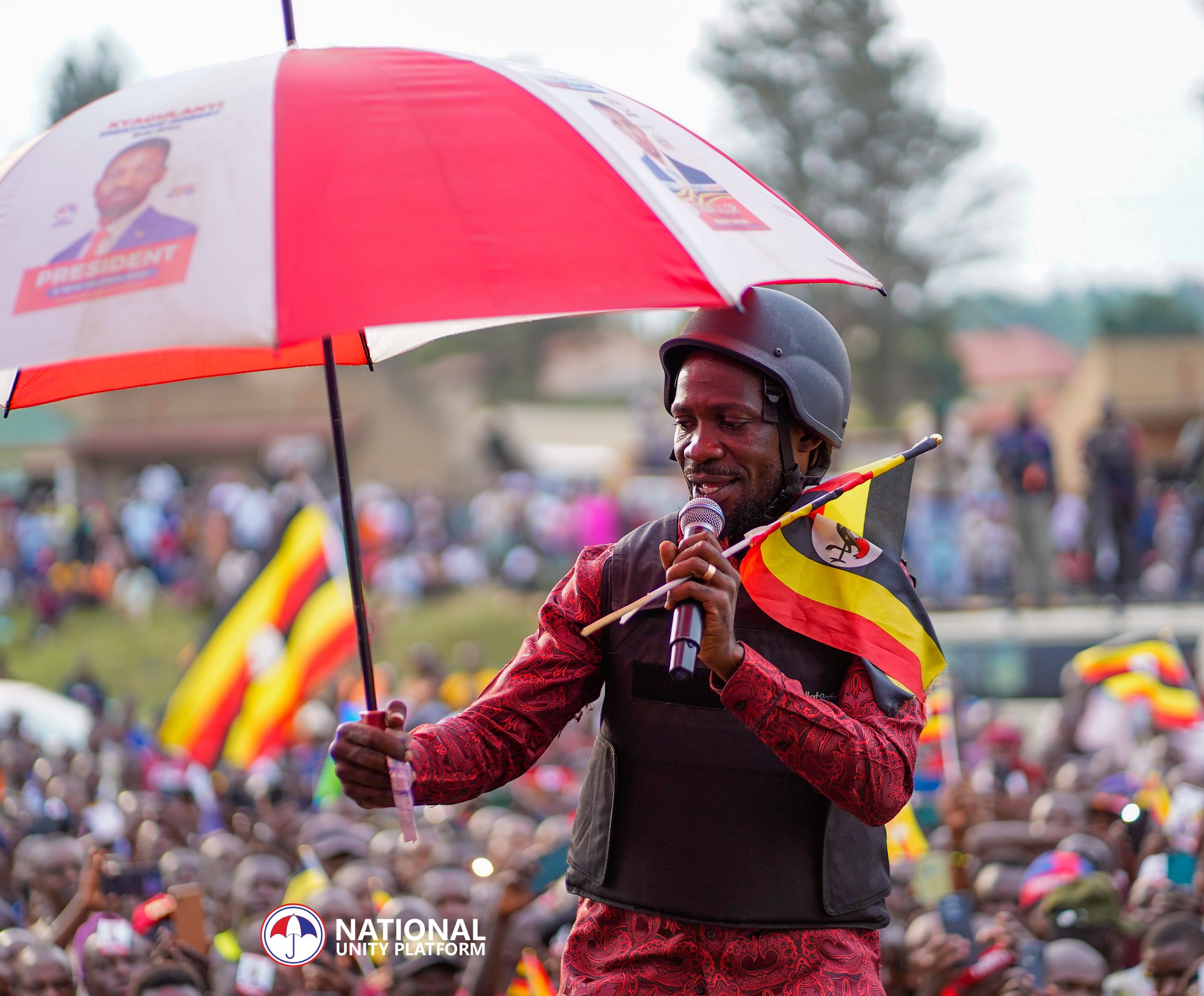
As Uganda’s presidential election kicked off on Thursday, opposition leader Bobi Wine leveled serious accusations of electoral fraud, claiming widespread ballot stuffing and the arrest of several members of his National Unity Platform (NUP). These claims have intensified the scrutiny on Uganda’s election process, which has faced significant challenges since the start of voting.
In a statement posted on X (formerly Twitter), Wine accused the government of interfering with the election process, specifically targeting opposition leaders and blocking citizens and international observers from witnessing the events due to the government’s decision to shut down internet services on election day.
Allegations of Widespread Ballot Stuffing and Arrests
Wine reported “massive ballot stuffing” at multiple polling stations, which he claimed were part of an effort to skew the results in favor of President Yoweri Museveni, who has been in power since 1986. In addition, Wine alleged that several NUP officials, including the Deputy President for Western Region, were arrested, and some of his party’s polling agents and supervisors were “abducted” or forced to leave polling stations.
“The world needs to know what is happening in Uganda on Election Day,” Wine said, emphasizing the malfunctioning BVVK biometric voter verification machines that he claimed were “failing everywhere.” Although this claim has yet to be independently verified, it has added to the growing concerns about the credibility of the electoral process.
The Election’s Controversial Context
Uganda’s elections have historically been fraught with allegations of fraud, and this year’s contest is no different. Wine, who has positioned himself as the leader of a movement against Museveni’s long-standing rule, has criticized the government for its handling of opposition candidates. The election marks Museveni’s attempt to extend his 40-year rule, with the veteran leader seeking a seventh consecutive term.
Wine’s accusations of voter manipulation and the arrests of his supporters are seen as part of a broader pattern of political suppression. Although no official response has come from the government yet, the political tensions between Museveni’s government and the opposition are escalating, as accusations of corruption and electoral malpractice continue to surface.
Voting Delays and Technical Failures
Voting began early on Thursday, but there were significant delays at several polling stations in Kampala, Uganda’s capital. Reports indicated growing frustration among voters as polling was delayed due to technical issues, particularly with biometric identification kits. BBC reported that the delays were linked to failures in the biometric machines, network outages, and insufficient equipment at some locations, further complicating the voting process.
The Electoral Commission apologized for the disruptions, with Electoral Commission chairperson Simon Byabakama assuring the public that the situation was being resolved. He emphasized that efforts were being made to ensure that no voter was disenfranchised due to the failures, with the use of the national voters’ register where the biometric machines were not functional.
Internet Shutdown and Criticism
Ahead of the election, the Ugandan government imposed an internet blackout, which it justified as a measure to prevent misinformation, fraud, and the incitement of violence. However, the move was heavily criticized by the United Nations Human Rights Office, which called it “deeply worrying” and raised concerns about transparency in the election process.
The internet shutdown meant that journalists, voters, and international observers faced challenges in monitoring the election in real-time. This has added to fears of a lack of transparency and fairness in the election.
What’s at Stake for Uganda?
As Museveni seeks another term, this election has become a significant point of contention for the future of Uganda’s democracy. With Bobi Wine leading the opposition charge, the election is expected to be closely watched both locally and internationally. The accusations of fraud, ballot manipulation, and state interference have cast a shadow over the legitimacy of the election, and it remains to be seen how the process will unfold.
Both local and global observers are calling for a transparent and fair process, emphasizing the need for all Ugandans to have the ability to freely cast their vote without fear of intimidation or suppression. As the election continues, it is clear that Uganda’s political future hangs in the balance.
Related Article
Fingerprints Not Found: Voting Machine Fails Museveni as Uganda Polls Hit by Biometric Glitches


