
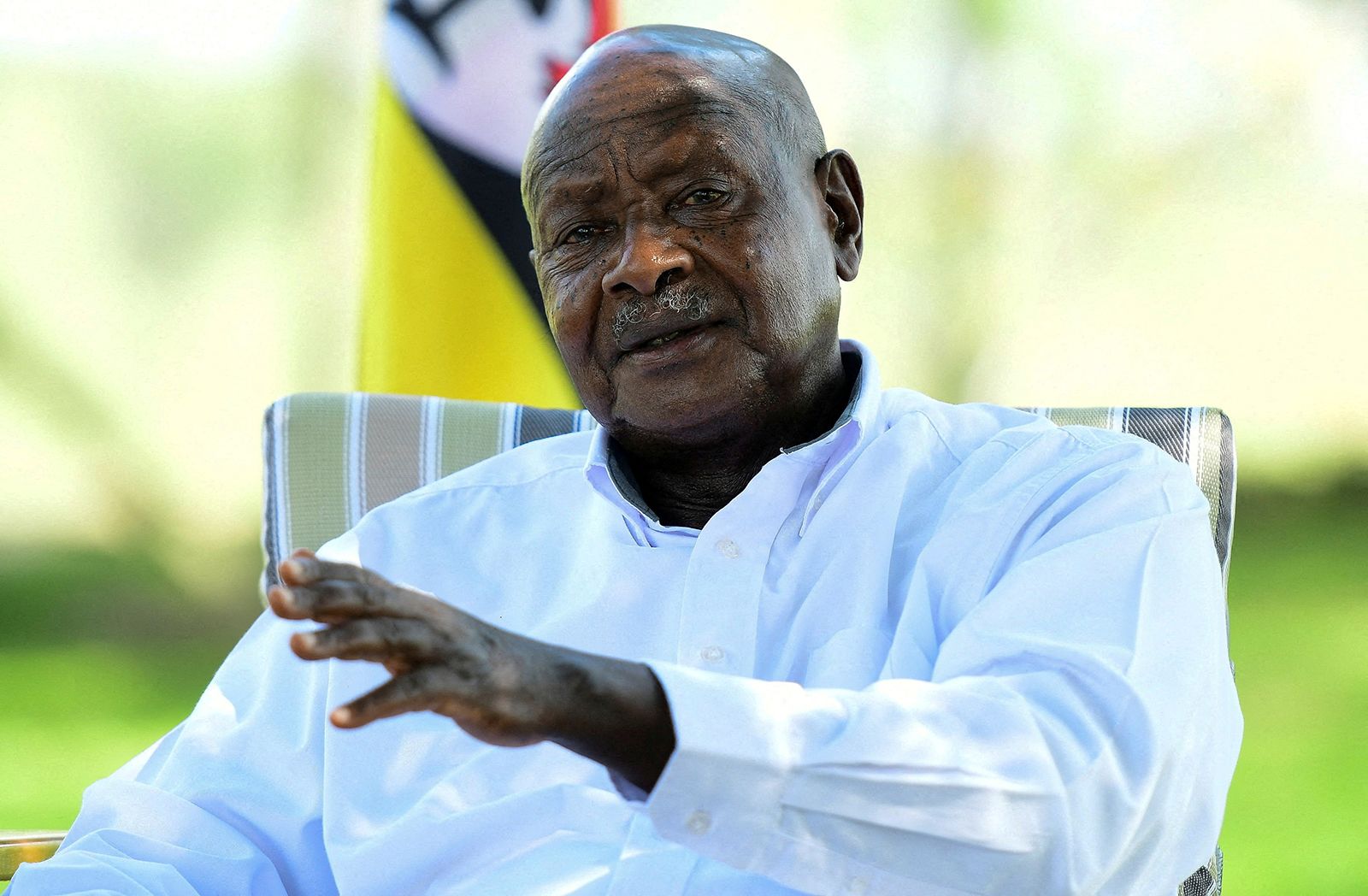
Uganda’s 2026 general election faced renewed scrutiny on Thursday after a biometric voter verification machine failed to recognise the fingerprints of President Yoweri Museveni, briefly preventing him from casting his ballot and highlighting technical challenges reported across the country.
The incident occurred at Museveni’s polling station, where election officials attempted multiple fingerprint scans without success. After the system failed to authenticate him using both hands, officials were forced to switch to facial recognition technology, which eventually cleared the president to vote.
“I put my right fingerprints on the machine, it did not work. I put my left fingerprints, it did not accept,” Museveni told journalists shortly after the incident. “It could be they took them at a different angle. But my face was scanned and accepted by the machine.”
A High-Profile Failure Mirrors Nationwide Complaints
The president’s experience mirrored problems faced by many ordinary voters nationwide, where biometric voter identification kits reportedly malfunctioned or failed to operate altogether. In several polling stations, officials reverted to manual verification using the national voters’ register after delays mounted.
The technical failures have intensified debate over the reliability of Uganda’s biometric voting infrastructure, which was introduced to curb fraud and streamline the electoral process. Instead, the glitches caused late starts, long queues, and frustration among voters in both urban and rural areas.
Museveni himself said the failure raised serious questions. “I don’t know if this was an oversight or part of the manipulation. But we shall study all the factors. We are following it, and we will find out why,” he said.
Delays Observed in Kampala and Beyond
Early on Thursday morning, journalists from BBC observed growing voter frustration in parts of Kampala, where some polling stations had yet to begin voting hours after the official start time. Officials attributed the delays to failures in biometric kits, network-related challenges, and shortages of functional equipment in certain locations.
The Uganda Electoral Commission acknowledged the problems and issued an apology, describing them as “technical glitches” while assuring voters that corrective measures were underway.
Speaking to journalists, Electoral Commission chairperson Simon Byabakama directed presiding officers to rely on the national voters’ register wherever biometric machines failed.
“It is the primary duty of the Electoral Commission to ensure that no citizen is disenfranchised due to machine failure,” Byabakama said, emphasising that voters should not be turned away because of technical faults.
Problems Cut Across Political Strongholds
According to BBC reporting, the biometric failures were not limited to opposition strongholds. Instead, they affected areas considered pro-government as well as those seen as supportive of opposition candidates, complicating narratives of targeted interference.
Ugandan electoral law allows polling hours to be extended in cases where voting is disrupted. Byabakama confirmed that stations experiencing delays would remain open beyond the scheduled closing time.
“Polling stations will remain open until all registered voters who were in the queue by 4 pm have cast their votes,” he said.
Internet Shutdown Adds to Tension
The voting-day disruptions unfolded against the backdrop of a nationwide internet shutdown imposed ahead of the polls. The Uganda Communications Commission said the blackout was necessary to prevent misinformation, electoral fraud, and the incitement of violence.
However, the move drew sharp criticism from rights groups and international observers. The UN Human Rights Office described the shutdown as “deeply worrying,” warning that restrictions on access to information undermine transparency and public trust during elections.
A Symbolic Moment for Uganda’s Election Credibility
That the sitting president himself was affected by biometric failure has become one of the most symbolic moments of the 2026 election. While officials insist that contingency measures prevented disenfranchisement, the episode has reinforced calls for a comprehensive audit of Uganda’s electoral technology.
As vote counting proceeds, attention is now shifting from isolated incidents to broader questions about preparedness, accountability, and whether the systems designed to safeguard democracy may themselves be weakening public confidence in the process.
Meta description: Uganda’s 2026 election faced scrutiny after a biometric voting machine failed to recognise President Museveni’s fingerprints, forcing officials to use facial recognition amid nationwide glitches.
Related Articles
Uganda Votes in Election That Could Extend Museveni’s Four-Decade Rule Amid Rising Tensions


