
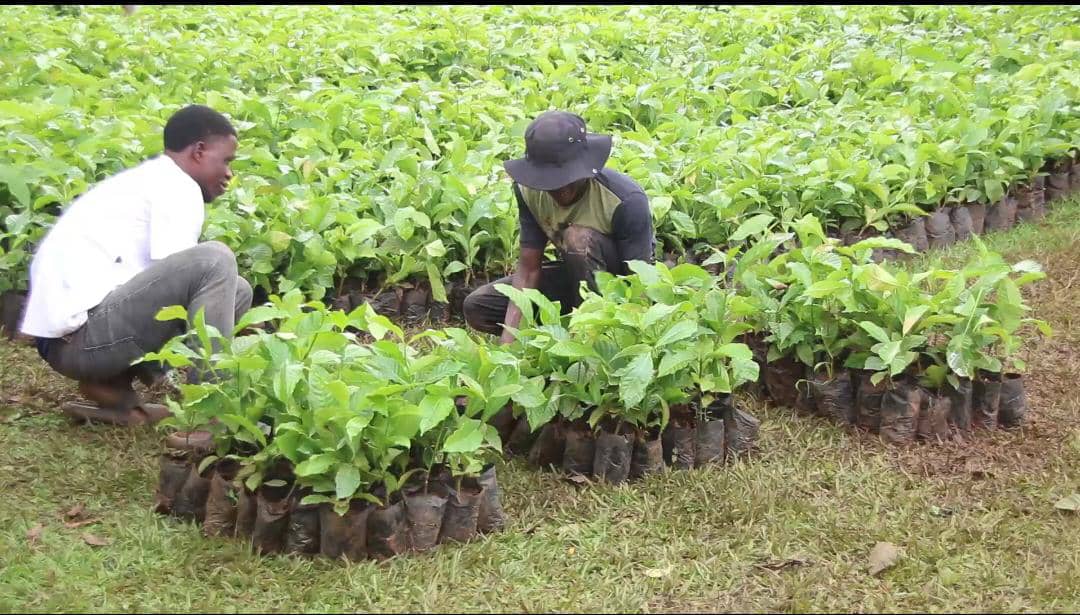
The Ugandan government has distributed 8,000 modern coffee seedlings to farmers in Masaka District, reinforcing its push to position coffee farming as a reliable pathway out of poverty. The initiative targets farmers in Kyannamukaaka and Kyesiiga sub-counties and forms part of broader national and cultural efforts to strengthen household incomes through agriculture.
The seedling distribution was carried out through the office of former vice president Edward Kiwanuka Ssekandi, underscoring continued collaboration between government institutions and local leadership in driving rural development. Officials say the program aligns with Uganda’s wider poverty eradication agenda and aims to empower farming communities with sustainable income sources.
Masaka District remains one of Uganda’s most important coffee-producing areas, with thousands of households relying on the crop to meet education, healthcare, and daily living needs. By providing improved seedlings, the government hopes to increase production volumes, enhance quality, and ultimately improve farmer earnings in the greater Masaka sub-region.
The initiative also supports the Buganda Kingdom’s long-running campaign “Emwanyi Terimba,” which encourages residents to adopt coffee farming as a stable and long-term economic activity. The campaign has been instrumental in promoting coffee as a cultural and economic pillar across central Uganda.
Speaking during the handover ceremony at Bulegeya Village in Kyannamukaaka Sub-county, Oscar Mutebi, an aide to Mr Ssekandi, emphasized that youth participation in agriculture remains a priority under President Yoweri Museveni’s development agenda. According to Mutebi, coffee growing offers young people a practical opportunity to secure their future while addressing unemployment and poverty.
“Government wants young people to take coffee seriously so that they can secure their future and move away from poverty,” Mutebi said, urging beneficiaries to view the seedlings as long-term investments rather than short-term gains.
Mutebi also called for expanded government support beyond seedlings, particularly the provision of affordable fertilisers to help farmers improve yields and maintain quality standards. He noted that consistent input support would significantly enhance productivity and farmer confidence in the sector.
In addition, he appealed for assistance to landless farmers through livestock distribution programs, arguing that diversified agricultural interventions would allow more households to benefit from government initiatives.
Joseph Kizito Kawonawo, who coordinates special duties in Ssekandi’s office, cautioned farmers against selling the seedlings, stressing that misuse would undermine the program’s intended impact. He urged recipients to plant and manage the seedlings properly to achieve sustainable economic benefits.
“Government has opened pathways for people to improve their livelihoods. These seedlings should be used for development, not quick money,” Kawonawo said.
Agricultural extension worker John Baptist Matovu advised farmers to work closely with trained agricultural officers to ensure correct planting and maintenance practices. He warned that poor farming methods could lead to losses, even with improved seedlings.
Farmers who received the seedlings welcomed the intervention, describing it as timely and potentially transformative. Many said the support would help them expand production, raise household incomes, and improve living standards within their communities.
However, beneficiaries also highlighted persistent challenges affecting the coffee sector. These include the spread of coffee wilt disease, high fertiliser prices, and the prevalence of counterfeit agro-inputs, which continue to undermine productivity and farmer confidence.
As government continues to promote coffee as a pillar of Uganda’s economy, farmers in Masaka have called for sustained technical support, stronger extension services, and stricter regulation of agricultural inputs. They say such measures are essential to ensure the sector remains profitable, resilient, and capable of delivering long-term economic growth.


