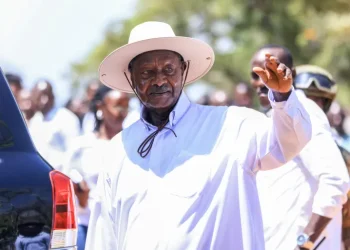
As Uganda prepares for its highly anticipated presidential election in January 2026, the government has introduced new restrictions on the importation of Starlink satellite internet equipment, sparking concerns about the potential for another internet blackout during the election period. The decision to curb the import of Starlink devices has drawn widespread attention and raised alarms, especially from opposition leaders who fear the government may once again attempt to suppress communication and stifle political opposition. This move comes just weeks before the January 15 vote, where President Yoweri Museveni, 81, will seek to extend his nearly half-century rule against popular opposition leader Bobi Wine, 43.
The Timing of the Restrictions
The announcement of the restrictions on Starlink equipment came to light through a leaked memo dated December 19, 2025, from the Uganda Revenue Authority (URA). The memo, which quickly circulated on social media, revealed that Starlink technology gadgets, along with other communication equipment and components, would now require clearance from Muhoozi Kainerugaba, the son of President Museveni and head of the military.
This new development has raised suspicions among opposition groups, who have long accused the Museveni administration of undermining democracy and using state power to silence critics. The timing of the restrictions, just weeks before an election where the opposition is already claiming unfair conditions, has only heightened concerns.
The government’s response to the leaked memo was to downplay the significance of the restrictions. According to the Uganda Revenue Authority, many countries regulate the import of communication technologies. However, the move to require military clearance for the importation of Starlink devices has been interpreted by many as a strategic step to control access to independent sources of internet during the election period.
Starlink’s Role in Uganda
Starlink, a satellite-based internet service operated by Elon Musk’s SpaceX, has become increasingly popular in Uganda, especially in rural areas where traditional internet infrastructure is lacking. Starlink’s ability to provide high-speed, reliable internet via satellites has made it an attractive option for Ugandans seeking access to information and connectivity. Despite Starlink not having an official license to operate in Uganda, many individuals and businesses have already been importing and using the equipment, bypassing the lack of regulatory approval.
The government’s move to restrict Starlink imports may be seen as an attempt to limit access to independent internet services, especially during a time of heightened political activity leading up to the election. Internet access has become a critical tool for both the government and opposition in organizing campaigns, disseminating information, and keeping the electorate informed about the election process. By limiting access to platforms like Starlink, critics fear the government could again block access to online resources, as it did during the 2021 election.
The 2021 Election and the Internet Blackout
During Uganda’s 2021 presidential election, the government imposed a nationwide internet blackout, leaving many Ugandans unable to access critical information during the voting period. The blackout was widely seen as a means to suppress the opposition’s ability to communicate with voters and share updates in real time. Bobi Wine, who was challenging Museveni for the presidency, accused the government of manipulating the election results and suppressing free speech. The internet blackout became a flashpoint in the dispute over the legitimacy of the election.
The Uganda Communications Commission (UCC) had ordered the shutdown of social media platforms and internet access across the country during the election period, and this move was seen by many as an attempt to limit the flow of information and prevent people from mobilizing against the government. Wine’s supporters were particularly vocal in condemning the blackout, arguing that it severely hindered their ability to monitor the election and organize peaceful protests.
As Uganda prepares for the 2026 election, the prospect of another internet shutdown is a key concern. Opposition leaders, including Bobi Wine, are calling on the international community to monitor the election and ensure that there are no efforts to block internet access or manipulate the results.
Bobi Wine’s Response to the Restrictions
Bobi Wine, whose real name is Robert Kyagulanyi, quickly responded to the new restrictions on Starlink imports. In a post on X (formerly known as Twitter), he called the move “ridiculous” and questioned why the government was so intent on restricting access to independent internet services during an election. Wine’s statement read: “If they’re not planning electoral fraud, why are they so scared of people accessing the internet during the electoral process?”
His comments reflect the growing frustration among opposition leaders and civil society groups in Uganda, who view the government’s actions as an attempt to control the flow of information during the election. Wine’s campaign has been heavily reliant on social media and other digital platforms to reach voters, and any attempt to curtail internet access could significantly hinder his ability to run a free and fair campaign.
The Government’s Rationale
The Ugandan government, however, has justified the restrictions on Starlink equipment as a necessary step to maintain national security. According to government officials, the military’s involvement in approving Starlink imports is part of a broader effort to ensure that communication technologies are not used for “subversive activities.”
President Museveni’s administration has long faced accusations of using state power to suppress opposition, and critics argue that these latest restrictions are part of a pattern of behavior aimed at stifling free expression and undermining democratic processes. Museveni, who has been in power since 1986, has made it clear that he intends to remain in office for as long as possible. The amendment of the Ugandan Constitution to remove term limits and age limits for the president has allowed him to extend his rule, and many believe that these constitutional changes were made to further entrench his power.
A Tense Election Ahead
As the election date approaches, the restrictions on Starlink imports are just one of many issues that will shape the political landscape. Bobi Wine and other opposition leaders are calling for international support to ensure that the election is free and fair, with no attempts by the government to manipulate the results. The possibility of another internet blackout during the election remains a significant concern, and opposition leaders are mobilizing their supporters to demand transparency.
In the meantime, the government continues to tighten its control over communication technologies, raising concerns about the future of free speech in Uganda. As the election draws closer, all eyes will be on how the government handles the flow of information and whether it will allow the people of Uganda to freely express their political will.
The restriction on Starlink imports in Uganda comes at a time of increasing political tension as the country prepares for its 2026 presidential election. The new regulations have sparked concerns among the opposition, who fear that the government will once again attempt to block internet access, just as it did in the 2021 election. With President Museveni seeking to extend his nearly half-century rule, the question of whether the election will be fair remains at the forefront of political debate in Uganda. The international community, along with local opposition leaders, will be closely monitoring the situation as the country heads to the polls.