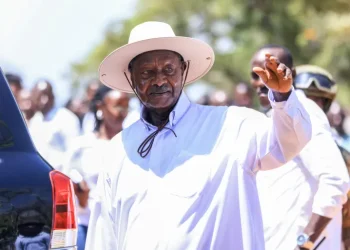
As Uganda approaches its crucial presidential elections on January 15, 2026, the political landscape is sharply divided between two dominant forces: President Yoweri Museveni, whose 40-year reign continues to shape the country’s political narrative, and Bobi Wine, the youthful opposition leader whose rise represents a challenge to the status quo. The campaign is marked by stark contrasts, from the continuity represented by Museveni and his regime’s claims of stability and progress to the rupture Bobi Wine promises with a fresh vision focused on systemic change and the aspirations of a frustrated youth.
With a nation grappling with economic uncertainty, stalled reforms, and widespread public dissatisfaction, the election is set to be a defining moment in Uganda’s political trajectory. This article explores the contrasting visions of Museveni and Bobi Wine, analyzing their strategies, policies, and the shifting dynamics as Uganda heads toward its January 2026 polls.
Museveni’s Steady Hand: Continuity Amidst Challenges
President Yoweri Museveni’s bid for a sixth term is built on a narrative of continuity and stability. Over the last four decades, Museveni has maintained a tight grip on power, steering Uganda through both periods of relative peace and moments of significant political and economic turmoil. His leadership, which began in 1986 after the National Resistance Army (NRA) ousted the government of Milton Obote, is often credited with bringing stability to Uganda after years of civil conflict.
However, this stability comes at a cost. Critics argue that Museveni’s government has become increasingly authoritarian, stifling political opposition, limiting press freedom, and curbing civil liberties. The ruling National Resistance Movement (NRM), under Museveni’s guidance, has dominated Uganda’s political sphere, with limited space for political rivals. Despite the government’s claims of development and modernization, the country faces significant challenges, including economic inequality, youth unemployment, and stagnant social reforms.
As Museveni campaigns for another term, his message is clear: Uganda’s stability is best ensured by his leadership. He has emphasized the achievements of his government in areas such as infrastructure development, healthcare, and education, claiming that he is the only one capable of maintaining Uganda’s growth and security. However, many Ugandans remain skeptical, questioning whether these promises are enough to overcome the country’s mounting frustrations with government corruption, lack of job opportunities, and limited social mobility.
Bobi Wine: A New Dawn or Political Disruption?
On the other side of the political spectrum stands Bobi Wine, the musician-turned-politician who has captured the imaginations of Uganda’s youth and disillusioned citizens. As leader of the People Power Movement, Bobi Wine has become the most prominent figure in Uganda’s opposition, advocating for democratic reforms, greater accountability, and a shift away from Museveni’s long-held grip on power.
Bobi Wine’s campaign is rooted in a promise of change. He has called for a total overhaul of Uganda’s political system, accusing Museveni of being out of touch with the realities faced by ordinary Ugandans. Bobi’s vision focuses on empowering the youth, promoting economic reforms, and tackling corruption head-on. His platform includes plans to decentralize power, encourage job creation, and implement more effective governance structures.
However, Bobi Wine’s rise to prominence has been met with strong resistance from the ruling government, which views him as a threat to the established order. The opposition leader has faced numerous arrests, harassment, and violent crackdowns by security forces, including a notorious incident in 2021 where he was detained by police during protests. Despite this, Bobi has managed to galvanize a significant following, particularly among the youth, who see him as a beacon of hope for a more democratic and transparent Uganda.
Bobi Wine’s appeal lies not only in his promises of systemic change but also in his ability to connect with the frustrations of Uganda’s young people. Generation Z, who make up a large portion of Uganda’s electorate, have grown up under Museveni’s rule and are eager for a new direction. Bobi’s ability to articulate their concerns has made him a symbol of resistance and reform in a country long governed by a single political elite.
The Campaign Landscape: Economic Anxiety and Public Frustration
As the election draws nearer, Uganda’s political climate is defined by economic anxiety and public frustration. While Museveni’s government touts economic achievements, such as improvements in infrastructure and agriculture, many Ugandans continue to face economic hardship. Poverty, unemployment, and inadequate healthcare remain persistent challenges, particularly among the youth.
In a country where 60% of the population is under the age of 25, Bobi Wine’s message resonates deeply. Young people are looking for leadership that addresses their needs for education, employment, and social mobility. Yet, the government has been slow to implement meaningful reforms to tackle these issues, and many citizens feel left behind. This sense of disenchantment is fueling Bobi Wine’s popularity, as he offers an alternative to the entrenched political elite.
Moreover, the lack of political freedom and crackdowns on dissent have left many questioning whether Uganda’s democratic progress has stalled. The opposition has been calling for reforms to the electoral process, as well as greater transparency in the conduct of political campaigns. However, allegations of vote-rigging and intimidation during previous elections have marred the country’s political system, making many voters skeptical of the fairness of the upcoming elections.
The Role of International Actors: A Tense Dynamic
Uganda’s election also has significant international implications, particularly in relation to foreign aid, trade relations, and regional security. President Museveni has long maintained strong ties with the West, particularly the United States and European Union, who view him as a key ally in the fight against terrorism in the region. However, his increasingly authoritarian tactics have strained these relationships, and many international observers are watching closely to see whether the election will be free and fair.
On the other hand, Bobi Wine has sought to position himself as a proponent of democratic values, seeking support from international organizations, human rights groups, and the African Union. His message of reform has earned him praise from those advocating for greater political freedoms in East Africa.
As Uganda moves toward the 2026 elections, the country’s geopolitical alliances may also play a role in the outcome, as both candidates seek to influence global actors to bolster their positions.
A Nation at a Crossroads
Uganda’s 2026 presidential elections are more than just a political contest between Museveni and Bobi Wine; they represent a pivotal moment in the country’s history. With Museveni’s government clinging to power through claims of stability and progress, and Bobi Wine promising a break from the past and a new vision for the future, the people of Uganda must decide which path to take.
The election is not just about a transfer of power but about Uganda’s future trajectory. Will the country continue under the rule of a regime that has lasted for four decades, or will it embrace a new direction led by the voices of its youth, demanding reform and accountability? As Uganda heads towards its polls in January 2026, the stakes are high, and the choices made at the ballot box will have lasting implications for the nation’s democracy and its future.