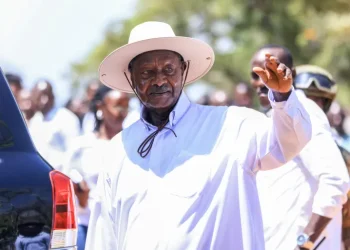


In a significant move to ensure that all Ugandans have the opportunity to fully participate in the upcoming presidential and parliamentary elections, President Yoweri Kaguta Museveni has declared January 15 and 16, 2026, as public holidays. This announcement comes ahead of the elections, which are expected to be a closely watched event, following a period of intense presidential campaigns. The declaration allows citizens across the country to cast their votes without work-related distractions or interruptions, ensuring a smooth electoral process.
Purpose of the Public Holiday
The announcement was made through a Legal Notice issued by President Museveni, under the Public Holidays Act, Cap. 174. This was formally gazetted by the government ahead of the polls, as Uganda prepares for one of the most anticipated elections in recent history. In the notice, Museveni explained that the two-day break was being granted to enable voters to travel to their respective polling stations, stand in queues, and cast their ballots without the burden of work commitments.
“In exercise of the powers conferred upon the President by Section 2 (2) of the Public Holidays Act, I declare 15th and 16th January, 2026, to be observed as public holidays throughout Uganda for the purpose of enabling citizens to participate in the Presidential and Parliamentary elections,” the notice read.
The public holiday applies nationwide, encompassing both public and private institutions, ensuring that all sectors of society can freely participate in the electoral process.
Uganda’s Election Landscape: A Contest for the Presidency and Parliament
Uganda’s 21.6 million registered voters will have the opportunity to participate in three separate elections on January 15 and 16, 2026. These include the presidential election, the election of 353 constituency Members of Parliament (MPs), and the selection of 146 women representatives, one from each district across the country.
President Museveni, who has held power since 1986, is seeking re-election, while his main rival, opposition leader Bobi Wine, is making his second attempt to contest the presidency after facing off against Museveni in the 2021 elections. The outcome of this race is crucial, as it will determine the future leadership of the country and the composition of Uganda’s legislative body.
A Historic Showdown: Museveni vs. Bobi Wine
The presidential contest will see Museveni, now 81 years old, fighting for another term in office. In the 2021 presidential elections, Museveni won with 58% of the vote, while Bobi Wine secured 35%, but the election was marred by allegations of rigging and a violent crackdown on opposition supporters. Despite the controversy, Museveni’s victory solidified his long-standing grip on power.
Now, with the 2026 elections fast approaching, Bobi Wine is once again the main challenger, hoping to unseat Uganda’s longest-serving leader. Tensions remain high as many Ugandans express concerns about the fairness and credibility of the electoral process. Under Ugandan law, a presidential candidate must win 50% + 1 vote in the first round to avoid a runoff, making this a critical race for both major candidates.
The Broader Implications
The upcoming election also comes on the heels of elections in neighboring Tanzania, where President Samia Suluhu won a highly controversial race in November 2025. The Tanzanian election was marred by allegations of electoral malpractice, as opposition candidates were disqualified or imprisoned. With tensions high in the East African region, all eyes are on Uganda to see how the electoral process unfolds and whether it will be conducted fairly.
The Election Context: A Long Road Ahead
Uganda’s electoral landscape has been shaped by a history of political tension, with concerns over election integrity and the use of state machinery to suppress opposition. While the government has promised a free and fair election, doubts remain among many Ugandans about the independence of the Electoral Commission and the fairness of the process.
As the two-day public holiday approaches, citizens are preparing for what will undoubtedly be a pivotal moment in Uganda’s democratic journey. The significance of these elections cannot be overstated, as they will not only determine the leadership of the country but also the direction in which Uganda’s political future will unfold.
A Nation at the Crossroads
The declaration of January 15 and 16, 2026, as public holidays by President Museveni is an important step in ensuring that all Ugandans have the chance to participate in the country’s historic elections. As the presidential race heats up between Museveni and Bobi Wine, the upcoming elections will be closely scrutinized both locally and internationally.
With the holiday providing ample time for voters to engage in the democratic process, all eyes are on Uganda as it moves closer to determining its next president and parliamentary leaders. Will Museveni secure another term in office, or will Bobi Wine emerge victorious in this high-stakes contest? The outcome of this election will have far-reaching implications for Uganda’s future, and the entire country stands at a historic crossroads.
Also Read:Uganda’s 2026 Election: Museveni, Bobi Wine, and the Diverging Paths to State House