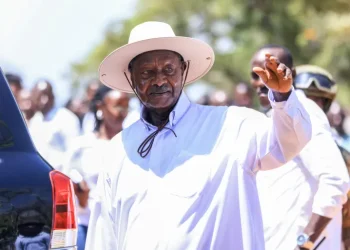
Uganda entered election day under heavy tension as voting began amid fears of violence, a nationwide internet blackout, and an intense security crackdown. Authorities opened polls on Thursday with President Yoweri Museveni widely expected to extend his nearly four-decade rule.
The election comes at a critical moment for the East African nation. Political divisions have deepened, while human rights groups warn of shrinking democratic space. The government’s decision to block internet access has further heightened concerns.
Polls Open Slowly Under Heavy Security
Polling stations opened slowly across much of the country, a recurring feature of Ugandan elections. In some areas, voting started shortly after 7 a.m. local time.
In suburbs of Kampala, journalists observed voters lining up early despite delays. Security forces patrolled streets and guarded polling centers. In the eastern town of Jinja, police and army units conducted visible patrols throughout the morning.
Authorities said the deployments aimed to maintain order. However, opposition figures described the security presence as intimidating.
Internet Shutdown Sparks Global Alarm
Uganda’s communications regulator ordered mobile network operators to block public internet access starting Tuesday evening. The government said the move would curb misinformation, electoral fraud, and incitement.
Critics strongly disagreed. Rights groups and opposition leaders called the blackout a deliberate attempt to suppress transparency. The shutdown disrupted banking, mobile money services, media reporting, and election monitoring.
The UN Human Rights Office warned that the restrictions undermine democratic participation.
“Open access to communication and information is key to free and genuine elections,” the office said.
The UN stressed that all Ugandans must be able to shape their political future without fear or restriction.
Millions Registered as Youth Face Economic Pressure
More than 21.6 million voters registered for the election. Uganda has one of the youngest populations in the world, with about 70 percent under the age of 35.
Youth unemployment remains a central issue for first-time voters. Many young Ugandans say economic opportunity matters as much as political reform. Rising living costs and limited job prospects dominate conversations at polling stations.
Analysts say youth frustration has reshaped Uganda’s political landscape in recent years.
Museveni Seeks to Extend Four-Decade Rule
President Museveni, now 81, has governed Uganda since 1986. His leadership has brought long-term stability, according to supporters. Critics argue that his rule has weakened democratic institutions.
During the campaign, Museveni promised to maintain security and economic growth. He urged voters to reject what he described as disorder and indiscipline.
Opposition leaders accuse his government of silencing critics through arrests, intimidation, and restrictive laws.
Bobi Wine Campaign Faces Crackdown
Museveni’s main challenger is Robert Kyagulanyi, widely known as Bobi Wine. The former pop star has become a symbol of resistance for young and urban voters.
Authorities repeatedly disrupted his campaign rallies. Security forces arrested hundreds of his supporters in the weeks leading up to the vote.
Bobi Wine appeared at rallies wearing a flak jacket. He described the election as a “war” and accused the government of planning violence and vote rigging.
“They don’t want the world to see what is happening,” he told AFP.
Fear of Unrest Grips the Country
Concerns about post-election violence have spread across the country. Uganda’s leading daily newspaper published a full-page guide advising citizens on how to “election-proof” their homes.
The guide urged families to reinforce doors, secure windows, and identify safe rooms. Such warnings reflect deep public anxiety shaped by past election-related unrest.
Many businesses reduced operating hours, while residents stocked up on essentials.
Civic Space Shrinks as Groups Are Suspended
Authorities suspended several civil society organizations during the campaign period. Officials accused some groups of threatening national security.
Media watchdogs and rights groups said the suspensions targeted independent voices. They warned that limiting civic oversight weakens electoral credibility.
Journalists also faced restrictions. Several reported harassment and limited access to polling information due to the internet shutdown.
UN Warns of Widespread Repression
The UN Human Rights Office last week warned that Ugandans would vote amid “widespread repression and intimidation.” The warning cited actions against opposition figures, journalists, and human rights defenders.
International observers say these conditions place Uganda’s democratic reputation at risk. They stress that credible elections require transparency, accountability, and open communication.
What Comes Next for Uganda
Partial results are expected after polls close later in the day. The constitution requires final results within 48 hours.
Attention will now shift to vote counting and result transmission. Observers say these stages will determine whether the process earns public trust.
For many Ugandans, this election is more than a political contest. It represents a defining struggle over freedom, governance, and the country’s future direction.
ALSO READ:Uganda Votes in Tense Election Seen as Test of Museveni’s Strength
ALSO READ:Voting Begins Amid Delays and Internet Blackout
ALSO READ:Uganda Election: Museveni Will Win, but the Political Landscape Has Changed
ALSO READ:Uganda Election Chief Raises Alarm Over Threats as Vote Counting Begins